AF099 · Lesson 28 of 71
Healthy Lifestyles
Table of ContentsShow
- Overview
- Healthy Lifestyle Choices
- Hearing Conservation Training
- Noise-induced hearing loss
- Avoiding Tobacco Products
- All tobacco products are bad for you
- Health problems
- Prevention
- Positive effects of tobacco cessation (quitting)
- Help to quit
- Alcohol Consumption
- Hazardous and harmful alcohol use
- Short-term effects of alcohol consumption
- Long-term effects of alcohol consumption
- Alcohol misuse and disorders
- Help to quit
- Avoiding Drugs
- Drug abuse
- Air Force Alcohol and Drug Abuse Prevention and Treatment (ADAPT) Program
- Identifying Substance Abusers
- Self-Identification
- Commander's Identification
- Medical Care Referrals
- Consequences of Substance Abuse
- Sexually Transmitted Infections (STIs)
- Treatment and cure
- Healthy Sexual Lifestyle
- Contraception
- Types
- Actions to Take If You Think You Have an STI
- Summary
Heads up: This section touches on alcohol, tobacco, drug abuse, and sexually transmitted infections. If you or someone you know is struggling with substance use, reach out to your chain of command, MTF, or - confidentially - Alcoholics Anonymous (AA).
Accomplishing the Air Force mission requires alert men and women who can use sound judgment in any situation and be accountable for their actions. Physically and mentally fit service members are more resistant to illness and the influence of stress, less prone to injury, and recover quicker when illness or injury occurs.
Following the Core Value of Service Before Self keeps you on the right path - reminding you of the noble profession you embarked upon when it feels like a struggle to maintain a healthy lifestyle.
This section covers healthy lifestyle choices, hearing conservation, tobacco, alcohol, drugs, the ADAPT Program, Sexually Transmitted Infections (STIs), healthy sexual lifestyle, and contraception.
Overview
Objective: Identify basic facts about living a healthy lifestyle.
Learning Outcomes
- Discuss the term lifestyle and how it relates to making healthy lifestyle choices.
- Understand hearing conservation and how to prevent hearing loss.
- Understand the health concerns associated with tobacco products and alcohol consumption.
- Recognize why avoiding drugs is important to good order and discipline.
- Recall the purpose of the Alcohol and Drug Abuse Prevention and Treatment (ADAPT) Program.
- Point out the three methods to identify substance abusers.
- Recall basic facts regarding consequences of substance abuse.
- Discuss the concerns with contracting Sexually Transmitted Infections (STIs).
- Outline ways to promote a healthy sexual lifestyle.
- Identify types of contraception.
- Describe the actions to take if you think you have an STI.
Foundational Competencies
- Accountability - Accepts full responsibility for self and team; displays honesty and truthfulness.
- Decision Making - Makes well-informed, effective, and timely decisions.
- Influence - An intent to persuade, convince, or impress others to elicit support, make impacts, or achieve effects on others.
Summary
- Healthy Lifestyle Choices
- Hearing Conservation Training
- Avoiding Tobacco Products
- Alcohol Consumption
- Avoiding Drugs
- Air Force ADAPT Program
- Identifying Substance Abusers
- Consequences of Substance Abuse
- Sexually Transmitted Infections
- Healthy Sexual Lifestyle
- Contraception
- Actions to Take If You Think You Have an STI
Healthy Lifestyle Choices
A lifestyle is the way a person, group, or culture lives based on identifiable patterns of behavior - including social relations, entertainment, activities, interests, and opinions. It typically reflects certain attitudes, values, and views of the world.
Making healthy lifestyle choices is critical to your success in the AF. The development and maintenance of a healthy and fit force is ongoing. You sustain a healthy lifestyle by:
- Exercising, eating right, and getting adequate quality sleep.
- Avoiding tobacco products.
- Avoiding illegal drugs or the illegal use of prescription drugs.
- Consuming alcohol in moderation, if at all.
- Seeking help for mental or emotional problems, if needed.
- Getting regular medical and dental checkups.
Hearing Conservation Training
Noise-induced hearing loss
Noise-induced hearing loss is the #1 occupational disability according to the National Institutes of Safety and Health. Hearing loss is painless, progressive, and permanent. There's no medical or surgical treatment to correct the problem - but it is preventable.
Permanent damage to the auditory system may include loss of the ability to hear high-pitched sounds. Often tinnitus (ringing or buzzing sounds in the ear) accompanies hearing loss.
Hearing protection devices (HPDs) reduce harmful and annoying sound effects. The best type of hearing protection is the one worn appropriately and used consistently. Wear hearing protection during recreational and occupational noise exposure
- lawn mower, snowblower, snowmobiles, motorcycles, power tools, concerts, etc.
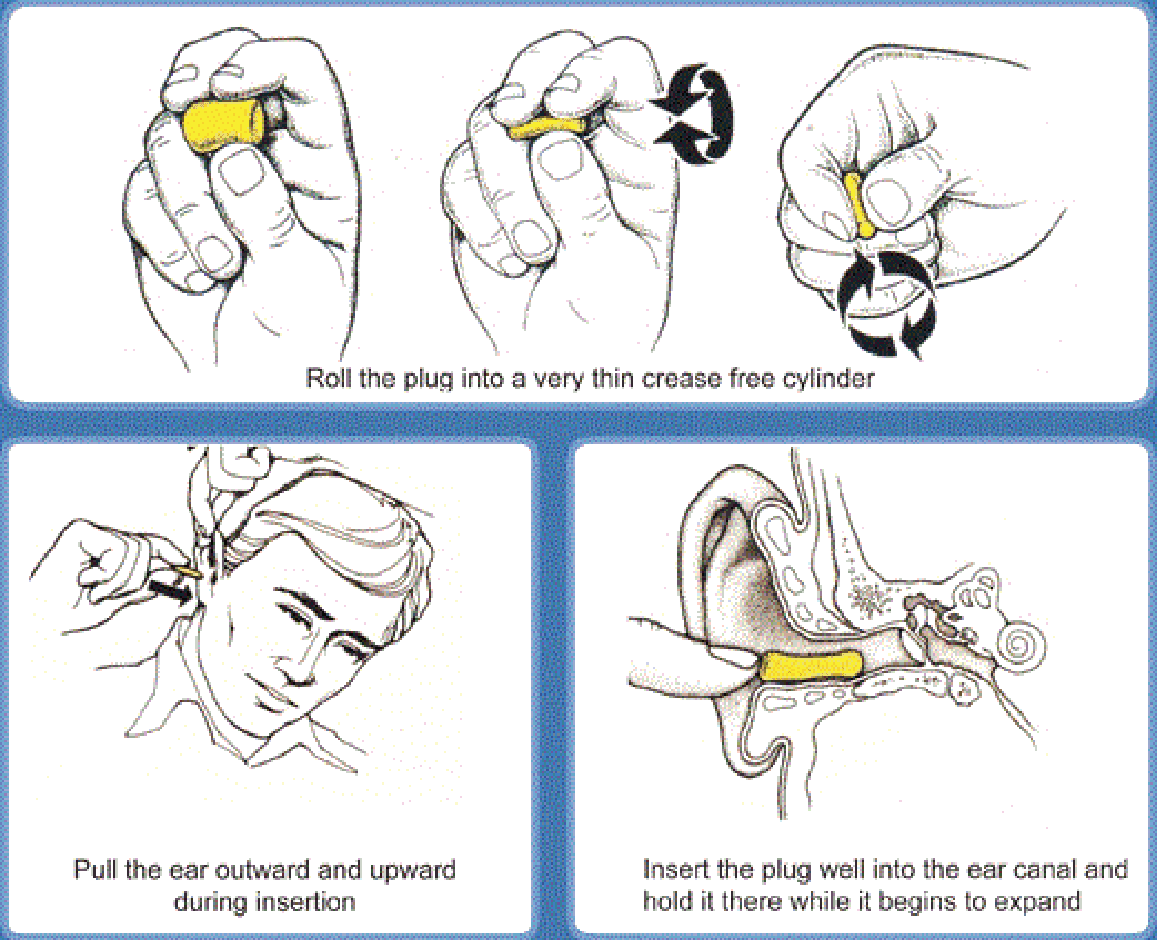
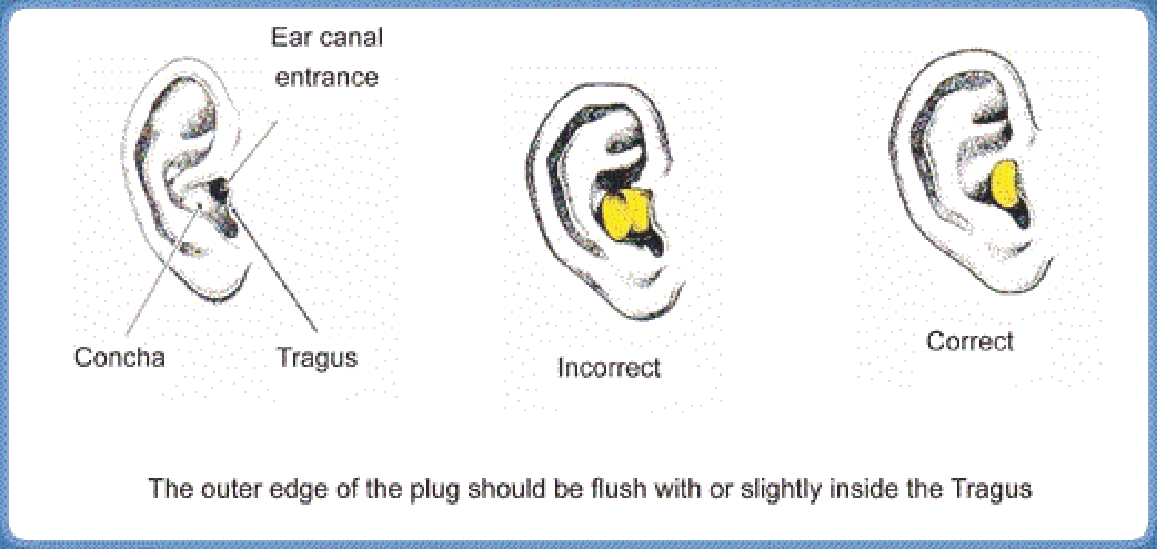
Hearing-protection insertion (top) and fit guide (bottom).
Avoiding Tobacco Products
All tobacco products are bad for you
Tobacco can come in the form of cigarettes, cigars, and smokeless (chewing) tobacco. The main ingredient in all forms is nicotine - an addictive drug. Tobacco use decreases strength, stamina, endurance and can weaken your immune system. You'll never reach peak performance if you use any type of tobacco.
Health problems
Tobacco is the primary cause of cancers of the:
- Esophagus (tube connecting mouth to stomach)
- Oral cavity (lips, tongue, and mouth)
- Pharynx (throat)
Tobacco smoke is responsible for 87% of all lung cancer deaths and at least 30% of all cancer deaths.
Prevention
Smoking isn't currently prohibited in the military, but the DoD is setting goals to become tobacco free. Smoking and using other tobacco products - including e-cigarettes, water pipes, hookahs, vaporizers, and smokeless - is prohibited in BMT. Tobacco use at installation recreational facilities is banned, and so is tobacco use in a privately owned vehicle with a child under 14 years of age present.
Positive effects of tobacco cessation (quitting)
The amazing human body begins to repair itself within 20 minutes of the last cigarette. Effects of quitting on the body over time:
| Time after quitting | Positive effect |
|---|---|
| 20 minutes | Blood pressure drops to a rate close to what it was before the last cigarette; hand/foot temperature increases to normal. |
| 8 hours | Blood-level carbon monoxide drops to normal. |
| 24 hours | Decreased chance of heart attack. |
| 3 months | Up to 30% increase in lung function; improved circulation. |
| 1-9 months | Decrease in coughing, sinus congestion, fatigue, shortness of breath. Cilia (tiny hair-like structures) regain normal function - handle mucus, clean the lungs, reduce infection. |
| 1 year | Excessive risk of coronary heart disease is half that of a smoker's. |
| 5 years | Stroke risk reduced to that of a non-smoker. |
| 10 years | Lung cancer death rate is half that of a continued smoker; decreased risk of cancer (oral cavity, esophagus). |
| 15 years | Coronary heart disease risk is that of a non-smoker. |
Help to quit
Make an appointment in Family Health at the medical facility for nutrition and fitness info, plus tobacco cessation classes. Various smoking-cessation patches and gums are available at no charge. For more resources, speak to your Primary Care Manager at your first duty station.
Alcohol Consumption
Alcoholic beverages are part of society. Beer, wine, and hard liquor are all alcoholic beverages. If you choose to consume alcohol, the risk for problems is lowest when you keep consumption to a moderate level or less.
One drink equals each of:
- One 12-oz bottle of regular beer (5% alcohol)
- One 5-oz glass of wine (12% alcohol)
- 1.5 oz of 80-proof hard liquor (40% alcohol)
Hazardous and harmful alcohol use
Hazardous alcohol use increases the risk of serious negative consequences. Forms include:
- Binge drinking - 5+ drinks on one occasion for men, 4+ drinks for women.
- Heavy drinking - binge drinking at least once per week.
Even lower levels of alcohol consumption can be harmful. Examples: drinking under the legal age limit, driving under the influence, or using alcohol at work.
Short-term effects of alcohol consumption
Most consumed alcohol is metabolized in the liver, which can only metabolize a certain amount per hour. The remaining unprocessed alcohol becomes toxic to the body - causing dehydration, headaches, nausea, sensitivity to light and noise, blurred vision, vertigo (spinning room), slurred speech, and coordination problems. It can take up to 7 days for all alcohol byproducts to clear your bodily systems.
Long-term effects of alcohol consumption
For most moderate drinkers, the risk of long-term consequences is low. Even moderate drinkers, though, are at risk for adverse consequences from a single bout of drinking - like alcohol-related crashes.
Alcohol's effects on the mind and central nervous system
An otherwise calm, rational person can become aggressive, irrational, nervous, depressed, argumentative, or violent. The central nervous system can be affected - numbness, tingling, impaired sensations, trembling hands, painful nerves, memory loss. Heavy drinkers may become more susceptible to colds and have a less effective immune system.
Alcohol's effects on the organs
The liver is one of the most commonly damaged organs - cirrhosis or liver failure can occur. Other risks include ulcers, malnutrition, and cardiovascular disease (heart attacks, high blood pressure). In men, heavy drinking can lead to impaired sexual performance. Pregnant women should not drink - high risk of giving birth to deformed, mentally handicapped, or low-birth-weight babies.
Alcohol misuse and disorders
Alcohol misuse = drinking that results in adverse personal, family, social, occupational, financial, or health consequences. Often associated with alcohol-related misconduct - behavior contrary to good order and discipline. Inconsistent with the high standards of performance, discipline, safety, public image, personal reliability, and readiness expected for military units.
People involved in alcohol-related misconduct may face legal action through civilian or military courts.
As an Air Force member, you have the ability to help prevent some alcohol-related misconduct by being an active bystander and wingman. If you see another Airman engaging in harmful alcohol consumption, step up, act responsibly, and try to stop the situation. Example: an Airman is about to get in their car and drive off and you know they're intoxicated - take their keys, call a cab, or have a friend take them home.
Alcohol use disorders are clinical diagnoses based on specific medical criteria - may require detoxification and treatment via outpatient clinic, inpatient hospitalization, or both. Severity ranges from mild → moderate → severe.
Alcohol Use Disorder, Mild
Also called problem drinking - a pattern of drinking that can be treated and cured. The Air Force defines alcohol abuse as any substandard behavior or performance in which alcohol consumption is a primary contributing factor.
Alcohol Use Disorder, Moderate / Severe
Also called alcoholism - a disease that can be treated but may be more difficult to treat or require more intensive regular treatment. The Air Force defines alcoholism as a primary, chronic disease with genetic, psychosocial, and environmental factors influencing development. It differs from alcohol abuse in three critical ways: it is chronic, progressive (non-drinker → social drinker → habitual drinker → addicted drinker), and potentially fatal.
While difficult to treat, it can be prevented by recurring education and treatment. Because of preventive measures available, the Air Force recognizes alcoholism as a non-compensable disease - meaning you can't expect medical care or VA benefits after discharge for injuries or illnesses resulting from alcoholism.
Help to quit
Every military base has a Medical Treatment Facility (MTF). Discussing your drinking with your healthcare provider is a good place to start. Another option: Alcoholics Anonymous (AA) - a non-profit, not affiliated with the military or any other organization, no fees, discreet, fellowship-based.
Avoiding Drugs
To ensure military readiness, safeguard the health and wellness of the force, and maintain good order and discipline, the knowing use of any intoxicating substance (other than the lawful use of alcohol or tobacco) - inhaled, injected, consumed, or introduced in any manner to alter mood or function - is prohibited.
The use of illegal and illicit drugs, or misusing prescription or over-the-counter medication, is strictly prohibited!
For federal employees, this includes the legal recreational and/or medical prescription use of marijuana and its derivatives like cannabidiol (CBD) or hemp oil/products.
Drug abuse
Drug abuse is the illegal, wrongful, or improper use, possession, sale, transfer, or introduction of any controlled substance with the specific intent to alter mind or mood.
"Wrongful" means without legal justification or excuse - including using medication contrary to manufacturer or provider directions, or in excess of prescribed dosage, and the use of intoxicating substances not intended for human ingestion. These drugs include:
- Illegal and illicit drugs
- Controlled substance substitutes (the designer drug "spice")
- Inhalants, propellants, solvents, household chemicals, and other "huffing" substances
- Prescription and over-the-counter medications
- Naturally occurring intoxicating substances (Salvia divinorum)
The following are true about drug abuse:
- Incompatible with AF standards of conduct and Core Values.
- A serious breach of discipline.
- Automatically places an Air Force career in jeopardy.
- Violates Article 92, Failure to Obey an Order or Regulation of the UCMJ.
- Can lead to criminal prosecution resulting in punitive discharge or administrative actions, including separation or discharge under other-than-honorable conditions.
Anyone subject to the UCMJ must not use, possess, manufacture, distribute, or introduce any illegal drugs into a military unit, base, station, post, ship, or aircraft. Ingestion of hemp seed oil or products made with hemp seed oil is also prohibited.
Air Force Alcohol and Drug Abuse Prevention and Treatment (ADAPT) Program
The Air Force's commitment to its members is shown through the ADAPT Program. This program identifies and offers treatment and education to members needing help. The ultimate goal: to return individuals to full duty status.
Identifying Substance Abusers
The Air Force uses three identification methods: self-identification, commander's identification, and medical care referral.
Self-Identification
Members must voluntarily reveal the nature and extent of their substance abuse before being apprehended, investigated, ordered to give a urine sample, or advised of a recommendation for administrative separation for substance abuse.
Commander's Identification
Commanders can place individuals into the evaluation process if they suspect substance abuse to be a contributing factor in any of the following:
- Any type of alcohol misuse covered earlier.
- Positive drug test.
- When notified by medical personnel.
Medical Care Referrals
Medical personnel must notify the unit commander and the ADAPT Program Manager when a member has any of the following occur:
- Observed, identified, or suspected to be under the influence of alcohol or drugs.
- Receives treatment for an injury or illness that may result from substance abuse.
- Admitted as a patient for alcohol or drug detoxification.
- Test results of any medical examination conducted for a valid medical purpose - including emergency care, yearly physical examination, and other examinations necessary for diagnostic or treatment purposes.
Members can self-ID to their PCM or other medical personnel, and command notification may not be required. If none of the above conditions are met, a member can self-ID and request help - the results will be a medical referral, but treated as self-ID.
Consequences of Substance Abuse
Substance abusers, if not self-identified/treated or if illegal, may face the following administrative actions:
- Letter(s) of Admonishment
- Counseling and reprimands
- Denial of reenlistment
- Removal from Nuclear Weapons Personnel Reliability Program
- Removal from duties involving firearms
- Removal from flying status or sensitive duties
- Suspension of security clearance
- Removal of restricted area badges
The Air Force disciplines or discharges those who use or promote illegal use of drugs. All AF personnel should encourage individuals with substance abuse problems to seek help. All members must report any known or suspected use of drugs to their immediate supervisor, first sergeant, commander, Security Forces, the Air Force Office of Special Investigations, or other appropriate agencies.
Sexually Transmitted Infections (STIs)
Who needs to be concerned about contracting STIs? Everyone who is sexually active.
STIs can be spread sexually, non-sexually, or both, depending on the specific type:
- Sexually - oral, vaginal, and anal sex.
- Non-sexually - contact with infected blood or needles; physical contact with an infected person; sharing items like razors or toothbrushes; and mothers can pass it to their newborns during birth.
Many different types of STIs exist. Some are easier to prevent than others; some are easier to treat. More importantly, some are fatal.
Treatment and cure
Multiple treatments exist for Chlamydia, Gonorrhea, Human Papilloma Virus (HPV), Genital Herpes Simplex Virus, Trichomoniasis (Trich), and Pubic Lice (Crabs).
There is no known cure for HPV, Hepatitis B, HIV, and AIDS.
Healthy Sexual Lifestyle
- Abstinence is the only way to truly prevent STIs through sexual contact and provide 100% effective protection. It is thereby the most effective risk-reduction strategy.
- Only have sex when in a long-term, mutually monogamous relationship with a partner who has been tested and is uninfected.
- One tip to help prevent STIs is to choose your partner very carefully.
- You put yourself at risk if you don't.
- Before having sex, talk with your partner about safe sex, intravenous (IV) drug use, previous STIs, and past sexual partners.
- The greater the number of sex partners you have, the greater the risk of being infected.
- Avoid high-risk sexual practices such as anal sex.
- Correct and consistent use of latex condoms or dental dams from start to finish every time you have sexual contact is a highly effective way to reduce many types of STIs. However, using condoms is not 100% effective in preventing STIs and doesn't protect against all types. Check the expiration date on the condom package.
While you're here during BMT, there's a walk-in clinic at Reid for Patients In Need of Contraception (PINC):
- Implants for trainees in the 4WOT or later.
- IUDs are offered for tech training students only.
- Pills, patches, rings, and Depo shots are available to BMT and Tech Training students in all weeks of training.
- Emergency contraception is also available - best if used within 72 hours of unprotected intercourse.
Walk-in clinic days/times are left blank for trainees to fill in locally - check with your MTI for current hours.
Contraception
Types
- Intrauterine devices (IUDs) and devices such as subcutaneous (under the skin) - 99% effective, last several years, long-acting, reversible.
- Medications - birth control pills, patches, vaginal rings, Depo-Provera injections - more than 90% effective when used correctly.
- Barriers - condoms, cervical caps, diaphragms, cervical sponges. Must be used for every sexual intercourse - 70-85% effective.
- Surgical contraception - vasectomy (men) or tubal ligation (women); may be able to conceive later but usually permanent options for pregnancy contraception.
- Contraception methods generally do not protect against STIs.
When selecting the best method, consider pregnancy prevention, ease of use, side effects, and other benefits (menstrual cycle regulation, cramping control, acne control, etc.). Your healthcare provider can help select the best method.
Actions to Take If You Think You Have an STI
- Get tested and treated during regular checkups, and encourage your partner to do the same. Do this even if you don't show symptoms - you may not have visible symptoms with all STIs. The earlier you seek treatment, the less likely the disease will do long-term damage.
- Sexually active women should get tested for chlamydia annually.
- Women should be screened for cervical cancer starting at age 21, regardless of sexual activity.
- Notify past and present sexual partners if you acquire an STI so they can be tested and treated. Otherwise, you could end up passing the infection back and forth.
- Make a medical appointment with your provider as soon as you notice anything unusual. Blood tests, urine samples, swabs of an infected area, or other tests may be needed.
- PAP smears may be performed on females over 21 according to healthcare protocols. PAPs alone do not detect most STIs.
- Be honest with your provider - tell them about all signs and symptoms. Take all medications, follow instructions, and keep follow-up appointments.
- Abstain from sex until you and your partner have completed treatment.
Summary
The Air Force expects all members to do their jobs in any situation. Personnel must be able to carry out the duties entrusted to them to support the defense of our nation. Service members must be physically and mentally fit. Living a healthy lifestyle includes proper nutrition, regular exercise, avoiding tobacco products, drinking within moderation, and avoiding any type of substance misuse. The only effective way to prevent STIs is abstinence. There may be times when it's difficult to live all aspects of a healthy lifestyle - but following the Core Values can give you the power to achieve it.