1Z4X1 · Operations
Special Reconnaissance
Also known as: Combat Weather
Last updated
At a glance
- ASVAB minimums
- G 49
- Security clearance
- Top Secret
- Tech school
- Fairchild, Washington · JBSA Lackland, Texas · Keesler, Mississippi · Pope, North Carolina · Fort Benning, Georgia · 1320 days
- Career field size
- 116 Airmen
- Possible bases
- 8 stateside · 0 overseas
- Civilian equivalent pay
- $36k–$164k
- Special warfare / operational
- U.S. citizenship required
Table of ContentsShow
What does the Special Reconnaissance career field do?
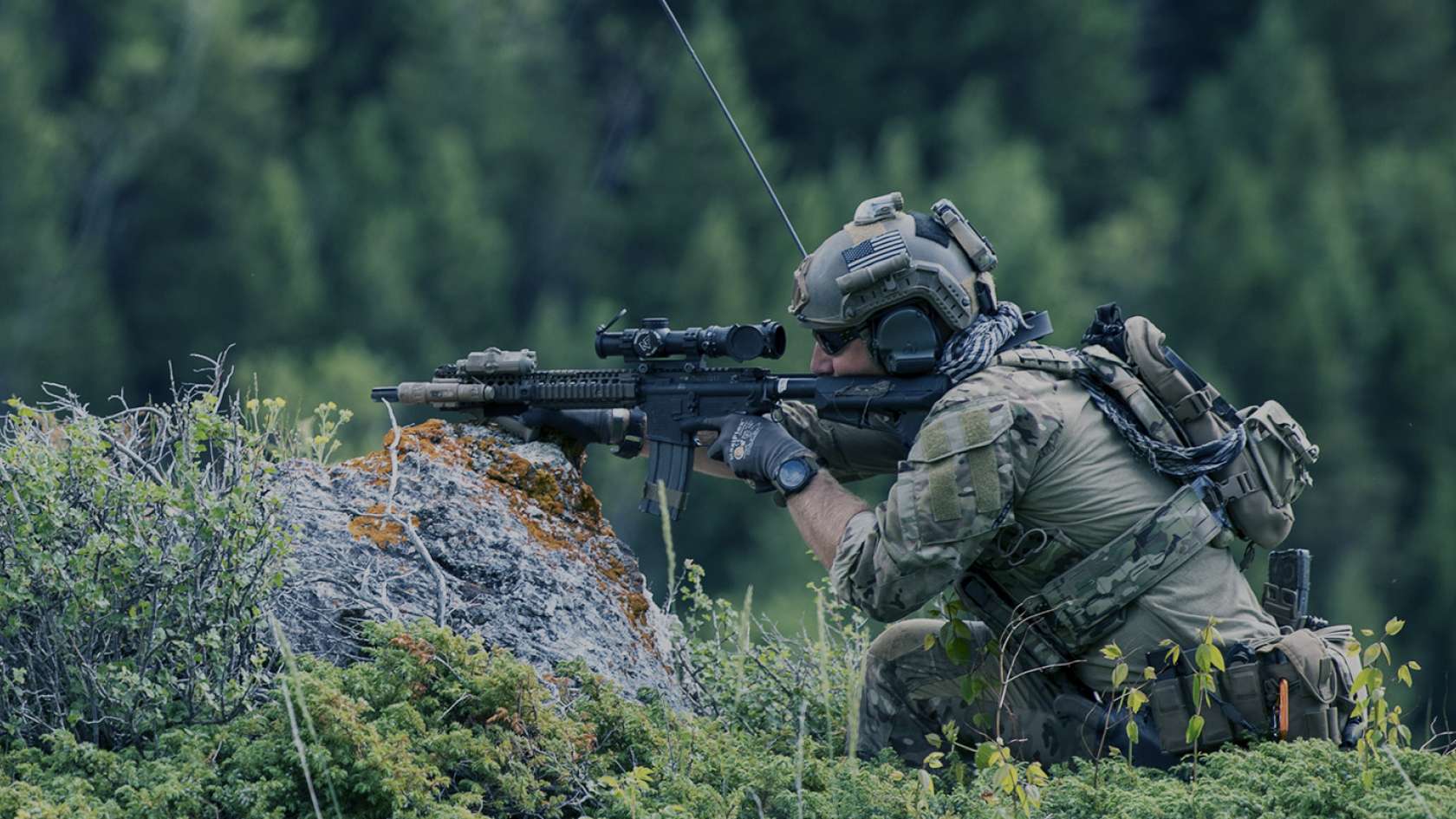
Plans, performs, supervises, and leads multi-domain reconnaissance and surveillance (R&S) with focus on electromagnetic spectrum operations (EMSO) to answer information and intelligence requirements, enhance joint intelligence preparation of the environment (JIPOE), and enable lethal and non-lethal air-to-ground integration of airpower. May be employed alone or as part of an Air Force, joint, interagency, or coalition force, to conduct R&S operational preparation of the environment, ensure global battlespace awareness, enable global access, and effect air, space, cyberspace, and information superiority for the successful execution of joint force objectives. Conducts time-sensitive special operations across the continuum of competition, in all environments and threat levels. Acquires placement and access to perform direct action (DA) through long range precision engagement when required. Utilizes indigenous sources, organic sensing, electronic warfare/attack equipment, and remote-controlled technology to obtain, transmit, and action strategic, operational, and tactical intelligence information. Integrates aviation-related special operations core function of special reconnaissance (SR) into joint planning process (JOPP) to maximize combat power. Related DoD Occupational Subgroup: 101100.
Duties and responsibilities
- Plans, coordinates, conducts, and manages collection, verification, and transmission of time-sensitive, multi-domain reconnaissance and surveillance with focus on lethal and non-lethal air-to-ground integration of airpower. Reconnoiters and surveils activities of actual or potential enemies and enemy assets, routes, potential assault zones, targets, objectives, areas of interest, potential cache sites, recovery corridors, and infrastructure.
- Plans, coordinates, and conducts Operational Preparation of the Environment (OPE) activities to develop knowledge of the environment, establish, develop, or verify human and physical infrastructure, and enable reception, staging, and onward movement, and integration (RSOI) of forces.
- Plans, organizes, supervises, and conducts reconnaissance, technical, and physical surveillance, and mission rehearsals for target development and near-term DA. Refines location of identified targets and performs organic long-range precision engagement and target interdiction with focus on suppression of enemy air defenses.
- Utilizes organic sources, and advanced technologies - including indigenous sources, sensing equipment, tactical (man-packable) cyber operations (CO) equipment, electronic warfare/attack equipment (EW/EA), and small unmanned aerial systems (SUAS). Reports current information relevant to the operating environment.
- Performs collection of identity attributes and physical materials, and their processing and exploitation to support identification, - characterization, and tracking of threat actors and networks with focus on countering anti-access/area denial (A2/AD) threats. SR identity activities enable Joint Force Commanders’ ability to protect personnel and property, identify threats, and identify personnel who are authorized access to critical infrastructure, key assets, and cultural properties.
- Plans, coordinates, and conducts environmental reconnaissance (ER). Observes, reports, and provides limited prediction of environmental factors related to surface weather, mountain/avalanche zones, littoral zones, riverine zones, and terrain traffic-ability. Organizes, establishes, and maintains weather reporting networks using all variety of sensors, and through training/equipping host-nation, partner-force, resistance-force, and other indigenous personnel. Integrates ER with R&S, PE, and SUAS functionality to maximize collection.
- Performs tactical mission planning and preparation. Understands special operations tactics, techniques, and procedures.
- Deploys into permissive, hostile, denied, or politically and/or diplomatically sensitive environments, and forward operating locations by land (mounted, special purpose vehicle or dismounted), sea (surface or subsurface naval vessel, small watercraft, self-contained underwater breathing apparatus [SCUBA], closed-circuit underwater breathing apparatus [CCUBA], or surface swim) or air (parachute, airmobile, air-land) to participate in the full spectrum of military operations to include air expeditionary force, force projection, DA, countering weapons of mass destruction (CWMD), counterterrorism (CT), unconventional warfare (UW), foreign internal defense (FID), security force assistance (SFA), hostage rescue and recovery (HR), counterinsurgency (COIN), humanitarian assistance and disaster relief, counter narcotic (CN), personnel recovery (PR), noncombatant evacuation operations (NEO), operational and intelligence preparation of the environment (OPE, IPE), and fire support operations. Uses demolitions to create or remove obstacles to maneuver and to prepare tactical sites. Maintains qualification on assigned primary, foreign, and crew served weaponry, with emphasis on long-range rifle target interdiction.
Specialty qualifications
Knowledge. This specialty requires knowledge of: joint principles of warfare including traditional, irregular, and unconventional; joint service operations; JPP and mission planning/preparation; joint and Air Force Special Operations doctrine and utilization; R&S fundamentals, principles, tactics, techniques, and procedures (TTP); intelligence community doctrine, structure, and processes, and principles of JIPOE including human intelligence principles; OPE principles; joint and Department of the Air Force publication use; military weapons systems; small arms to include long-range precision engagement and target interdiction equipment, and crew served weaponry; topography and navigation techniques; movement and route selection; infiltration, insertion, extraction, and exfiltration methods; night vision equipment, GPS and other operational equipment; small unit tactics; survival techniques; vehicle operations including mounted and special purpose vehicles; amphibious and water operations; air operations including parachute procedures and equipment; demolition applications; antenna theory; communications and signaling to include tactical EMSO, CO, and EW/EA; operation and operator maintenance of R&S, EMSO, CO, and ER data collection and communications systems; utilization/integration of R&S, EMS, cyber, and environmental information; use of intelligence, EMS, cyber, and environmental products from operational and strategic centers.
Education. Courses in physics, chemistry, earth sciences, geography, computer sciences, electronics, and mathematics are desirable.
Training. For award of AFSC 1Z431, completion of the following formal courses is mandatory:
- Special Warfare Preparatory Course.
- Special Warfare Assessment and Selection Course.
- SERE Level-C Training.
- USAF Underwater Egress Training.
- US Army Airborne Parachutist Course
- Military Freefall Parachutist.
- Special Reconnaissance Apprentice Course.
Experience. The following experience is mandatory for award of the 1Z4XX AFSC indicated:
- 1Z451. Qualification in and possession of AFSC 1Z431. Experience performing SR duties.
- 1Z471. Qualification in and possession of AFSC 1Z451. Experience performing and supervising SR duties.
- 1Z491. Qualification in and possession of AFSC 1Z471. Experience performing and managing SR functions as a Special Tactics (ST) team leader.
Other. The following are mandatory as indicated:
- For entry into this specialty:
- Air National Guard (ANG) SR candidates must complete the ANG “SR ONE LEVEL PROGRAM” for selection consideration.
- See attachment 4 for additional entry requirements.
- The following are additionally mandatory entry requirements for Active Duty retraining candidates:
- Successful completion of the AFSPECWAR Initial Fitness Test (IFT) within 60 days of EAD.
- Grade of E-6 or below with less than 10 years Total Active Federal Military Service who has not been eliminated from an AFSPECWAR pipeline course within the last 24 months. Exceptions must be approved by the 1Z4 Career Field Functional Manager.
- Current commander's written recommendation.
- Completion of the SR retraining process, and selection by the SR retraining Assessment (AD Only). AFPC will provide requirements upon retraining approval, includes passing a second IFT within 60 days of course of initial entry start date.
- For entry, award, and retention of these AFSCs:
- Meet qualification standards to bear firearms IAW AFI 31-177, Arming and Use of Force by Air Force Personnel, AFI 36-2654, Combat Arms Program, and AFMAN 36-2655, USAF Small Arms and Light Weapons Qualification Programs.
- Meet physical qualification for Special Warfare as outlined in DAFMAN 48-123, Medical Examinations and Standards, and the accompanying Medical Standards Directory (MSD), Special Warfare column. Applicants must also meet physical qualifications for entry into sister service schools such as Army Jump, Freefall, and Navy Dive, as applicable.
- Must possess a valid state driver's license to operate government motor vehicles (GMV) in accordance with AFI 24-301, Vehicle Operations
- For award and retention of AFSCs 1Z431/1Z451/1Z471/1Z491:
- Qualification, currency, and proficiency as a static line and military freefall parachutist.
- Passing completion of the AFSPECWAR OFT.
- For award and retention of these AFSCs:
- Must maintain local network access IAW AFI 17-130, Cybersecurity Program Management and AFMAN 17-1301, Computer Security.
- Specialty requires routine access to Top Secret material or similar environment including SAPs. Award and retention of AFSCs requires completion of a Tier 5 (T5) background investigation according to AFMAN 16-1405, Personnel Security Program Management. NOTE: Award of the entry level without a completed T5 Investigation is authorized provided an interim Top Secret security clearance with eligibility has been granted according to AFMAN 16-1405.
Civilian career paths
Comparable civilian careers for this field pay roughly $36,190 to $164,070 per year (median salaries; varies by role and location):
- Administrative Services Managers: $103,330
- Air Traffic Controllers: $132,250
- Athletes and Sports Competitors: $94,270
- Bailiffs: $49,100
- Broadcast Technicians: $60,700
- Captains, Mates, and Pilots of Water Vessels: $95,210
- Career/Technical Education Teachers, Postsecondary: $59,840
- Cartographers and Photogrammetrists: $71,890
- Coaches and Scouts: $44,890
- Computer and Information Systems Managers: $164,070
- Computer Network Support Specialists: $68,050
- Computer Systems Analysts: $102,240
- Construction Laborers: $40,750
- Correctional Officers and Jailers: $49,610
- Data Entry Keyers: $36,190
- Database Administrators: $99,890
- Detectives and Criminal Investigators: $86,280
- Dispatchers: $44,830
- Electrical and Electronics Repairers, Commercial and Industrial Equipment: $64,030
- Emergency Management Directors: $79,180
- Emergency Medical Technicians: $36,680
- Equal Opportunity Representatives and Officers: $71,690
- Explosives Workers, Ordnance Handling Experts, and Blasters: $56,670
- Firefighters: $51,680
ASVAB requirements
To qualify for 1Z4X1, you need:
Enter your scores in the AFSC explorer and this section will check each requirement for you.
Entry requirements
Medical profile (PULHES)ShowHide
PULHES scale: lower numbers mean a stricter medical standard. Tap a letter for what it measures.
Vision requirementsShowHide
Medical disqualifiersShowHide
These screened conditions disqualify a candidate for this AFSC:
Physical requirementsShowHide
Security & backgroundShowHide
Where you could be stationed
Stateside (8)
- Cannon, New Mexico
- Fort Benning, Georgia
- Hurlburt Field, Florida
- JBSA Lackland, Texas
- JBSA Randolph, Texas
- Joint Base Lewis-McChord, Washington
- Pope, North Carolina
- Yuma Proving Ground, Arizona
Badges & identifiers
Duty badges
The occupational badges worn by Airmen in this career field.
- Military Freefall Parachute (HALO) Badge
- Parachutist Badge
- Special Reconnaissance Beret
Duty identifiers
Special duty patches and identifiers associated with this AFSC.
- SR Duty Identifier
Degrees & training plan
While serving in 1Z4X1 you can earn an associate degree through the Community College of the Air Force:
- Meteorology
- Career Field Education & Training Plan (CFETP)View CFETP (PDF, opens in a new tab)
The CFETP is the official Air Force document describing this career field's full training pipeline, from tech school through advanced skill levels.
Videos, Reddit & resources
1Z4X1 videos(12)
These do not reflect official U.S. Air Force views and may contain inaccuracies — negative opinions are often overrepresented online.
Air Force Special Warfare Training Wing: An Inside Look
SOCOM Athlete · 7/9/2025
1 of 12 videos
Reddit discussions(1)
These do not reflect official U.S. Air Force views and may contain inaccuracies — negative opinions are often overrepresented online.
Official links & resources(1)
Researching other jobs too? Every career field's videos and discussions are collected the same way — browse all AFSCs.
Frequently asked questions
- What ASVAB score do you need for Special Reconnaissance (1Z4X1)?
- You need General 49+ on the ASVAB to qualify for 1Z4X1.
- Where can Special Reconnaissance Airmen get stationed?
- 1Z4X1 Airmen serve at 8 bases: 8 stateside and 0 overseas.
- Does 1Z4X1 require a security clearance?
- Yes — Special Reconnaissance requires a Top Secret clearance.
- How long is tech school for Special Reconnaissance?
- Tech school for 1Z4X1 runs about 1320 days at Fairchild, Washington · JBSA Lackland, Texas · Keesler, Mississippi · Pope, North Carolina · Fort Benning, Georgia.
Where this data comes from
Most of the data on this page comes from the Air Force Enlisted Classification Directory (AFECD) and recruiter TTMS readouts, which are no longer released publicly. Pulling it together and keeping it accurate takes real time, so I update these pages as often as I can.
Requirements do change between updates. Before you make any decisions, confirm the details with your recruiter. They always have the latest word.