1A1X4 · Operations
Multi-domain Operations Aviator
Also known as: Airborne Mission Systems Specialist (1A3X1), Sensor Operator (1U0X1)
Last updated
At a glance
- ASVAB minimums
- E 65
- Security clearance
- Top Secret
- Possible bases
- 25 stateside · 6 overseas
Table of ContentsShow
What does a Multi-domain Operations Aviator do?
The Lead-MAJCOM for aircraft and mission set will determine the Multi-domain Operations Aviator (MOA) performance tasks as outlined in Master Training Tasks/Task Training Lists associated with Mission Design Series crew positions. Performs preflight and post-flight requirements of aircraft and aircraft systems. Performs duties as an aircrew member on manned aircraft or Remotely Piloted Aircraft (RPA). Integrates air, space, and cyber domains at the operational level to plan, coordinate, allocate, task, assess, and monitor mission systems to ensure lethal and non-lethal application of airpower. Performs surveillance, combat identification, weapons control, tactical data link management, communications, and airborne network management. Performs mission planning of aircraft and aircraft systems in accordance with aircraft technical orders, applicable Air Force Instructions (AFIs), and Unified Combatant Commands’ theater Rules of Engagement (ROE). Detects, analyzes and discriminates between valid and invalid targets using radar systems, electro-optical, low light, infrared full motion video imagery, and other active or passive target acquisition and tracking systems. May be responsible for terminal guidance of precision guided munitions. Supervises and instructs personnel on the operation, maintenance, repair, and test procedures of airborne and ground based aircraft systems. Establishes, manages, and supervises aircrew training. Coordinates with maintenance, communication technicians, and intelligence units to satisfy unit training requirements, including weapons and tactics programs. Evaluates aircrew academic, simulation, in-flight performances, and systems capabilities and recommends improvements. Related DoD Occupational Subgroup: 120100.
Duties and responsibilities
- Duties include operating, maintaining, repairing, and testing airborne and RPA systems to include communications, electro-optical sensors, radar, computers, navigation, electronic warfare (EW), tactical datalinks, electromagnetic spectrum operations (EMSO) and airborne network systems. Collects and interprets mission data, employs sensors to actively and/or passively acquire, track, and monitor airborne, maritime, and ground objects. Mission types may include air interdiction (AI), air operations in maritime surface warfare (AOMSW), close air support (CAS), personnel recovery (PR), and conducts intelligence, surveillance and reconnaissance (ISR).
- Supports air and ground-based operations to validate targets and threats using various sensors, systems, and munitions to conduct multiple mission sets. Monitors radio communications and analyzes intelligence data to direct aircraft position to assist in navigation and fire control planning. Interprets charts, imagery, and video data supporting relay of information to various agencies to provide real-time mission data, threat, and target updates. Coordinates with airborne, ground, and maritime agencies in relaying identification data of operational targets or threats.
- Plans and operates datalink operations for the area of responsibility to create a single integrated common operating picture. Performs surveillance, identification, tactical data link, and data management functions. Interprets radar data presentation to generate console displays. Compares and reports track positions based on flight data. Maintains logs, forms, and database files of aircraft and missions.
- Performs interior and exterior aircraft scanner duties. Performs and supervises operations and maintenance of airborne mission equipment. Establishes and maintains voice and data communications circuits and links. Manages systems including radio, audio distribution, switching, data, cryptologic, anti-jam, satellite communications, radar, identification friend or foe, recording and playback, multiplex, intercept, analysis, recording, broadcasting, imaging, computer, and network equipment (including ancillary equipment). Monitors mission equipment status and troubleshoots malfunctions. Configures systems for mission control and monitors aircraft, ensuring adherence to procedural checklists and regulations. Responsible for crew and passenger safety. Reports aircraft status to the aircraft commander. May also complete required aircraft servicing in austere locations.
- Establishes and directs aircrew training. Supervises, instructs and evaluates aircrew members. Develops instruction for equipment operations, maintenance, and troubleshooting, ensuring standardized procedures. Identifies training needs, oversees training programs, validates instructional methods and arranges remedial and continuation training.
- Manages operational and maintenance functions. Maintains records, solves complex operational problems, and recommends maintenance and operational enhancements. Advises developers on system operations and maintenance to support acquisition, development, and updates of aircraft systems.
Specialty qualifications
Knowledge Requirements. Mandatory knowledge includes electronics, sensor and radar systems, electro-optical sensors, airborne battle management systems and surveillance. Understanding of imagery interpretation, target detection, recognition, tracking, and elimination via air weapons is essential. Familiarity with Tactics, Techniques, and Procedures (TTPs) for friendly and enemy Air Order of Battle (AOB) assets, airborne sensors, armaments, aircraft control, flight procedures, and computer-generated displays is required. Must be able to leverage emerging technology to enhance mission capabilities and connectivity. Required skills include interpreting technical orders, AFIs, schematics, radar theory, digital techniques, networking, communications systems, electronic test equipment, and software diagnostics. Knowledge of Federal Aviation Regulations, Air Force General Flight Rules, emergency procedures, and technical orders that govern aircraft and weapons systems in flight is crucial.
Education. For entry into this specialty, completion of high school with courses in physics, mathematics, computer principles, typing, speech, and English is desirable.
Training. Completion of the following training is mandatory for the award of the AFSC indicated:
- 1A114. Completion of Enlisted Undergraduate Flying Training.
- 1A134 Completion of Initial Qualification Training for the assigned aircraft/crew-position and Initial Qualification Course and accompanying Certificate of Aircrew Qualification AF Form 8 in Mission Design Series.
Experience. The following experience is mandatory for award of the AFSC indicated:
- 1A154. Qualification in and possession of AFSC 1A134. Also, experience is mandatory in functions such as operating and maintaining airborne communications, test, radar and electro-optical sensor systems, computer, and EP systems. Certify and maintain Mission Ready (MR) and/or Combat Mission Ready (CMR) status; experience and understanding in aviation organizational functions and shops to include Training, Tactics, Scheduling, and Evaluations.
- 1A174. Qualification in and possession of AFSC 1A154. Experience and qualification in advanced operations and maintenance of aircraft mission systems. Also, experience is mandatory in performing or supervising aviation organizational functions and shops to include but not limited to Training, Tactics, Scheduling, and Evaluations.
- 1A194. Qualification in and possession of AFSC 1A174 and experience managing and directing Multi-domain Operator Aviator functions and activities onboard airborne and remotely piloted aircraft. Also, experience in managing the core functions of an operational unit to include, but not limited to, Training, Tactics, Scheduling and Evaluations.
Other. The following are mandatory as indicated:
- For entry into this specialty:
- See attachment 4 for entry requirements.
- For entry, award, and retention of these AFSCs:
- Physical qualification for aircrew duty according to DAFMAN 48-123, Medical Examinations and Standards.
- Entry into the AFSC will be IAW Class III medical standards. Members may only be required to meet Ground Based Operator (GBO) physical standards as determined by the host MDG based on aircraft assignment and requirements.
- Normal depth perception as defined by DAFMAN 48-123, Medical Examinations and Standards
- Normal color vision as defined by DAFMAN 48-123, Medical Examinations and Standards
- Qualification for aviation service according to AFI 11-402, Aviation and Parachutist Service, Aeronautical Ratings and Aviation Badges.
- Must maintain eligibility to deploy and mobilize worldwide. Physical qualification for voice communications operations is mandatory.
- Height in accordance with DAFMAN 48-123 and as directed in the current Medical Standards Directory Section T.
- For award and retention of these AFSCs:
- Must maintain local network access IAW AFI 17-130, Cybersecurity Program Management and AFMAN 17-1301, Computer Security.
- Specialty requires routine access to Tier 5 (T5) information, systems or similar classified environments.
- Completion of a current T5 Investigation required IAW DoDM 5200.02, AFMAN 16-1405, Air Force Personnel Security Program.
- Must not be downgraded to Non-Mission Ready/Non-Combat Mission Ready (NMR/NCMR), or Unqualified (UQ) Status more than four periods in a Ready Aircrew Program cycle due to events under the aircrew member’s control. NOTE: Award of the entry level AFSC without a completed T5 Investigation is authorized provided an interim Top Secret security clearance has been granted according to DoDM 5200.02, AFMAN 16-1405.
ASVAB requirements
To qualify for 1A1X4, you need:
Enter your scores in the AFSC explorer and this section will check each requirement for you.
Where you could be stationed
Stateside (25)
- Beale, California
- Cannon, New Mexico
- Creech, Nevada
- Davis-Monthan, Arizona
- Edwards, California
- Ellsworth, South Dakota
- Fort George Meade, Maryland
- Grand Forks, North Dakota
- Hancock Ang, New York
- Hill, Utah
- Holloman, New Mexico
- Hurlburt Field, Florida
- JB Langley-Eustis, Virginia
- JBSA Lackland, Texas
- Kirtland, New Mexico
- Luke, Arizona
- March, California
- Nellis, Nevada
- Offutt, Nebraska
- Palmdale AF Plant, California
- Robins, Georgia
- Shaw, South Carolina
- Tinker, Oklahoma
- Tyndall, Florida
- Whiteman, Missouri
Overseas (6)
- Geilenkirchen, Germany
- JB Elmendorf-Rich, Alaska
- Kadena, Japan
- Osan AB, South Korea
- Poggio Renatico, Italy
- Uedem, Germany
Badges & identifiers
Duty badges
The occupational badges worn by Airmen in this career field.
- Enlisted Aircrew Badge
- Sensor Operator Badge
Duty identifiers
Special duty patches and identifiers associated with this AFSC.
- CEA Duty Identifier
Degrees & training plan
While serving in 1A1X4 you can earn associate degrees through the Community College of the Air Force:
- Air and Space Operations Technology
- Aviation Operations
- Information Systems Technology
1A1X4 specialties (shred-outs)
This career field splits into 10 specialties — you may be assigned to one of these:
- 1A1X4AE-3G Radar/Comm/Mission Operator
- 1A1X4BE-3A Radar/Comm/Mission Operator
- 1A1X4CE-9 Systems Operator
- 1A1X4DE-11 Mission Coordinator / Payload Operator
- 1A1X4EEC-130H/EA-37B Airborne Maintenance Technician
- 1A1X4FMQ-9 Sensor Operator
- 1A1X4GRC-135 Airborne Systems Engineer
- 1A1X4HRQ-4 Sensor Operator
- 1A1X4IManeuver Battle Management Mission System Operator (MBM MSO)
- 1A1X4JMPRIS - Multi-Platform RPA Integration System
Shred-outs share the 1A1X4 career path; where a specialty sets its own minimums or screens, they're noted above.
Videos, Reddit & resources
1A1X4 videos(11)
These do not reflect official U.S. Air Force views and may contain inaccuracies — negative opinions are often overrepresented online.
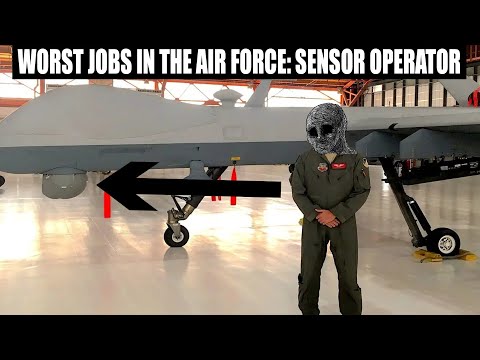
Worst Jobs in the Air Force: Sensor Operator (1U0X1)
Geopolitical Realist · 2/4/2026
1 of 11 videos
Reddit discussions(10)
These do not reflect official U.S. Air Force views and may contain inaccuracies — negative opinions are often overrepresented online.
Official links & resources(2)
Researching other jobs too? Every career field's videos and discussions are collected the same way — browse all AFSCs.
Frequently asked questions
- What ASVAB score do you need for Multi-domain Operations Aviator (1A1X4)?
- You need Electrical 65+ on the ASVAB to qualify for 1A1X4.
- Where can Multi-domain Operations Aviator Airmen get stationed?
- 1A1X4 Airmen serve at 31 bases: 25 stateside and 6 overseas, including Geilenkirchen, Germany, JB Elmendorf-Rich, Alaska, Kadena, Japan.
- Does 1A1X4 require a security clearance?
- Yes — Multi-domain Operations Aviator requires a Top Secret clearance.
Where this data comes from
Most of the data on this page comes from the Air Force Enlisted Classification Directory (AFECD) and recruiter TTMS readouts, which are no longer released publicly. Pulling it together and keeping it accurate takes real time, so I update these pages as often as I can.
Requirements do change between updates. Before you make any decisions, confirm the details with your recruiter. They always have the latest word.