1T0X1 · Operations
Survival, Evasion, Resistance, Escape (SERE) Specialist
Also known as: SERE, Survival, Evasion, Resistance, and Escape
Last updated
At a glance
- ASVAB minimums
- G 55
- Security clearance
- SecretTop Secret for some positions
- Tech school
- Fairchild, Washington · JBSA Lackland, Texas
- Career field size
- 542 Airmen
- Possible bases
- 32 stateside · 14 overseas
- Civilian equivalent pay
- $29k–$116k
- Special warfare / operational
- U.S. citizenship required
Table of ContentsShow
- What does a Survival, Evasion, Resistance, Escape (SERE) Specialist do?
- Duties and responsibilities
- Specialty qualifications
- Civilian career paths
- ASVAB requirements
- Entry requirements
- Where you could be stationed
- Badges & identifiers
- Degrees & training plan
- Videos, Reddit & resources
- Frequently asked questions
What does a Survival, Evasion, Resistance, Escape (SERE) Specialist do?
Experts in Survival, Evasion, Resistance, Escape (SERE) in support of personnel recovery (PR). Survives anywhere in the world and prepares others to do the same. Preserves combat airpower and joint lethality through the continuum of Personnel Recovery, Preparation, Planning, Execution, and Adaptation. Plans, performs, supervises, and leads SERE functions of preparation and execution to allow for mission planning, PR mission execution and application of airpower across the full spectrum of military operations in all geographic and environmental conditions. May be employed alone or as part of an Air Force, joint, interagency or coalition force in support of Combatant Commander’s PR and access objectives. Prepares high risk of isolation personnel for SERE across the full range of military operations. Conducts preparation of the environment activities as part of a supporting or supported force to survey areas for evasion, recovery corridors, contact sites, cache site establishment, areas of interest and physical infrastructure. Provides positive control of recovery/contact sites and caches. Synchronizes joint, interagency, intergovernmental, multinational, and commercial (JIIM-C) efforts for full spectrum PR. Assesses and develops Partner Nation recovery capabilities through foreign internal defense (FID) security force assistance (SFA) and Building Partnership Capacity (BPC). Operates in the eight geographic disciplines of Arctic, Coastal, Desert, Jungle, Mountain, Urban, Water and Captivity, day, or night, to include friendly, denied, hostile, or sensitive areas. Related DoD Occupational Subgroup: 101200.
Duties and responsibilities
- Deploys in support of operational requirements for theater and Joint Force Commanders as in-theater SERE and PR subject matters experts (SME) to support conventional and Nonconventional Assisted Recovery (NAR). Manages development and coordination of SERE and PR operations. Manages SERE programs including isolated personnel reports (ISOPREP), evasion plans of action (EPA), blood chits, evasion charts (EVC), and PR aids. Augments Joint Personnel Recovery Center (JPRC), Unconventional Assisted Recovery Coordination Center (UARCC) and all DoD Components Recovery Coordination Cells (PRCC) as SERE and PR SME.
- Synchronizes JIIM-C efforts for full spectrum personnel recovery. Assesses and develops partner nation PR capabilities.
- Plans, coordinates, and conducts Operational Preparation of the Environment (OPE) activities with operations and intelligence directorates of the DoD, external agencies, NATO, and coalition entities to develop and establish physical infrastructure to support areas for evasion, recovery corridors, contact sites, and potential cache sites.
- Responsible for the verification and transmission of areas for evasion, recovery corridors, contact sites, areas of interest, potential cache sites and infrastructure.
- Deploys into permissive, hostile, denied, or politically and/or diplomatically sensitive environments, and forward operating locations to participate in the full spectrum of military operations to include air expeditionary force, force projection, counterinsurgency (COIN), counter narcotic (CN), counterterrorism (CT), irregular warfare (IW), foreign internal defense (FID), unconventional warfare (UW), security force assistance (SFA), humanitarian assistance, noncombatant evacuation operations (NEO) and OPE as a part of supporting or supported force to enable full spectrum personnel recovery and global access.
- Performs tactical mission planning and preparation. Understand special operations tactics, techniques, and procedures (TTP).
- Plans, organizes, directs, and conducts SERE preparation activities. Designs and develops curriculum, functional structure, and procedures for SERE courses and programs. Determines training schedules according to course control documents, directives, policies, and instructional principles. Conducts classroom, laboratory, and operational training. Uses lecture, demonstration and performance, guided discussion, case study, and time and circumstance instructional methodology. Conducts training under conditions closely approximating actual SERE episodes.
- Develops and implements SERE joint tactics, techniques, and procedures (JTTOP). Assists in developing theater PR infrastructure, CONOPS and recommends changes.
- Instructs and performs static line, military free fall, and emergency parachuting techniques in support of premeditated jump programs, formal jump training, and Formal SERE Training and SERE Mission Preparation (SMP). Performs parachutist duties in support of approved DoD exercises. SERE Specialists are designated the AF subject matter experts for aircrew parachute egress in an operational environment, at home station or deployed.
- Conducts Developmental Testing and Evaluation (D&TE) and Operational Testing and Evaluation (O&TE) on Guardian Angel and SERE/Aircrew equipment.
- Coordinates SERE activities to support PR related exercises. Performs observer and controller duties for high-risk-of-isolation personnel to ensure safety of participants, appropriate learning outcomes, and documents lessons learned.
- Inspects and evaluates SMP and PR operational support programs (PROS). Determines readiness and efficacy of equipment, supplies, and training aids. Ensures standardization and compliance with policies, directives, course control documents, RM procedures, operational guidance, and instructional methodology.
- Performs and supervise self-contained underwater breathing apparatus (SCUBA) and water operations in support of Formal SERE training & SMP.
Specialty qualifications
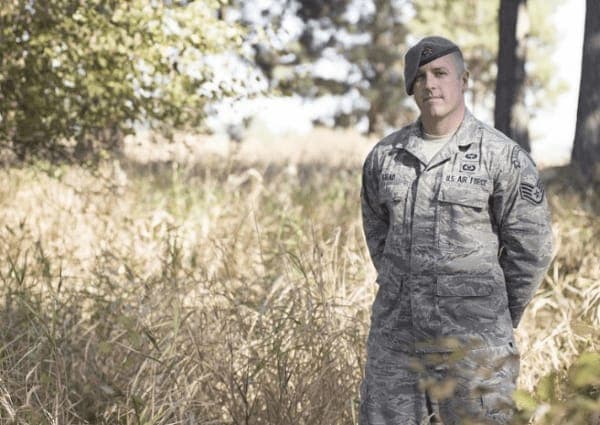
Knowledge. Knowledge is mandatory of: The Code of Conduct; DoDI O-3002.05, and U.S. Government policy for IP; global SERE and PR principles and JTTP; procedures for MAJCOM SERE program requirements; procedures for PR program management; JPRC, UARCC and PRCC roles and missions; cultural and sociopolitical considerations that affect PR; all aspects of premeditated and emergency parachuting procedures; providing for personal protection and sustenance; communication and signaling techniques; methods of vectoring recovery assets; escape and evasion TTP (rural and urban; apprehension avoidance (A2) and escape enhancements (E2); CBRNE (Chemical, Biological, Radiological/Nuclear, Explosive) survival skills; water survival TTP and dive physiology; psychology of survival; avoidance of hazardous terrain, rough land travel and emergency evacuation procedures for injured personnel; survival medicine; Tactical Combat Casualty Care (TCCC); Air Force Combatives Program (AFCP); land and water navigation and travel; special operations recovery teams and Assisted Recovery; caring for and using post-egress, recovery, and aircrew flight equipment; improvising and manufacturing clothing and equipment needed by an isolated person; lecture, demonstration and performance, guided discussion, time and circumstance, and role-play instructional methods and techniques; impact of international law on IP; conduct after capture concepts for war, governmental detention, and hostage environments including, but not limited to, resistance to exploitation, organization and communication, maintenance of psychological and physical health. Awarded the SERE Beret and Arch upon completion of 1T031 training requirement, unless waived.
Training. The following training is mandatory for award of the AFSC indicated:
- 1T031. Completion of the following courses:
- 3-level tasks IAW 1T0X1 CFETP
- SV70A; SERE Specialist Assessment and Selection (SSAS).
- SV89A; SERE Specialist Training Indoctrination Course (SST-IC).
- SV97A; Advanced SERE Training
- SV98A: Long-Term Survival and Evasion Training
- SV85A; Emergency Parachute and Water Survival Training
- SV84A; Underwater Egress.
- SV81A1; SERE Specialist Training Apprentice Course (SST-AC), Team Building/Stress Inoculation
- SV81A2; SERE Specialist Training Apprentice Course (SST-AC), Core Skills
- SV81A3; SERE Specialist Training Apprentice Course (SST-AC), Instructional Techniques Field
- SV81A4; SERE Specialist Training Apprentice Course (SST-AC), Desert
- SV81A5; SERE Specialist Training Apprentice Course (SST-AC), Coastal, Open Ocean
- SV81A7; SERE Specialist Training Apprentice Course (SST-AC), Tropic
- SV81A8; SERE Specialist Training Apprentice Course (SST-AC), Inland Water Survival
- SV81A9; SERE Specialist Training Apprentice Course (SST-AC), Mountain Team Member
- SV81A10; SERE Specialist Training Apprentice Course (SST-AC), Personnel Recovery
- L5ABA1T031 0A7A; US Army Basic Airborne Course.
- Air Force Combatives Program, Basic Instructor.
- SERE 100.2 CBT (or equivalent)
- Tactical Combat Casualty Care (TCCC), Tier 2.
- 1T051. Completion of the following:
- 5-level tasks IAW 1T0X1 CFETP
- SV81C; SERE Specialist Journeyman Arctic Survival Training.
- PR-102; Fundamentals of Personal Recovery (or CFM approved equivalent)
- PR-296/297; Reintegration team Responsibilities/ PR Debriefing (or CFM approved equivalent)
- PR 292, Personnel Recovery Execution (or CFM approved equivalent).
- 1T071. Completion of the following courses:
- SV81F; Survival, Evasion, Resistance, Escape (SERE) Craftsman Course.
- 7-level tasks IAW 1T0X1 CFETP
Experience. The following experience is mandatory for award of the AFSC indicated:
- 1T051. Qualification in and possession of AFSC 1T031. Also, experience applying global SERE principles, procedures, techniques, and equipment; emergency parachuting procedures; survival medicine; rough land travel and evacuation procedures; land and water navigation and travel; use of post-egress survival and aircrew flight equipment; PR JTTP; escape and evasion techniques; combat communication, signaling, and recovery procedures; PR operations; survival in CBRNE contamination conditions; and conduct after capture during wartime, peacetime governmental detention, and hostage detention guidance including survival adaptations, communication, organization, resistance to exploitation, and escape TTPs.
- 1T071. Qualification in and possession of AFSC 1T051. Also, experience in performing or supervising SERE operations and training activities.
- 1T091. Qualification in and possession of AFSC 1T071. Also, experience in managing and directing SERE operations and training programs.
Other. The following are mandatory as indicated:
- For entry into this specialty:
- Completion of high school, or equivalent.
- Must score a 55 or higher on the SERE 2-Factor Selection Model. Must maintain eligibility to deploy and mobilize worldwide.
- Successful passing score of the SERE Initial Fitness Test (IFT) within 60 days of the enter of active duty (EAD) date or retraining class start date for Air Force Specialty Code 1T011.
- Prior to attendance of SSAS (SV70A), applicants must meet medical standards for Special Warfare Airmen as outlined in DAFMAN 48-123, Medical Examinations and Standards, and the accompanying Medical Standards Directory (MSD), Special Warfare Airmen (SWA) column. Applicants must also meet medical standards for entry into required training that is provided by sister service schools (Army Airborne) as applicable for this AFSC.
- Absence of any speech impediment and ability to read aloud and speak English clearly and distinctly.
- Passing SERE color vision requirement, as defined the Air Force Medical Standards Directory; at minimum must identify vivid red and vivid green as projected by the ophthalmological projector or stereoscope vison testing.
- Must complete the Minnesota Multiphasic Personality Inventory (MMPI) assessment.
- Must undergo a standardized entry interview with any credentialed/privileged Mental Health provider.
- For Guard and Reserve Non-Prior Service or Prior-Service Cross-trainees seeking SERE Specialist positions, In-Service Recruiters and impacted unit leadership teams must contact the respective Guard or Reserve SERE Specialist MAJCOM Functional Area Manager/Functional Area Manager (MFM/FAM) prior to candidate selection. This consultation is mandatory for training timelines, skill-level upgrade processes, and ensuring the unit can provide adequate support to the new hire.
- See Attachment 4 for additional entry requirements.
- For retention of AFSC 1T051/71/91:
- Qualification in 5-level/7-Level IAW SERE CFETP.
- Must maintain eligibility to deploy and mobilize worldwide.
- Specialty requires routine access to Tier 3 (T3) information, systems, or similar classified environment. For retention of AFSCs 1T0XX, completion of a current T3, according to DoDM 5200.02, AFMAN 16-1405, Personnel Security Program Management, is mandatory. NOTE: Award of the entry level without a completed T3 is authorized provided an interim Secret security clearance has been granted according to DoDM 5200.02, AFMAN 16-1405.
- SERE Specialists filling positions within staffs, command and control (C2) nodes, and Operational Unit Type Codes (UTC) require routine access to Tier 5 (T5) information systems, or similar classified environment.
- For retention of this AFSC, must maintain local network access IAW AFI 17-130, Cybersecurity Program Management and AFMAN 17-1301, Computer Security.
Civilian career paths
Comparable civilian careers for this field pay roughly $29,460 to $115,640 per year (median salaries; varies by role and location):
- Business Continuity Planner: $77,420
- Captains, Mates, and Pilots of Water Vessels: $77,130
- Career/Technical Education Teachers, Middle School : 62,270
- Career/Technical Education Teachers, Postsecondary: $55,620
- Career/Technical Education Teachers, Secondary School: $62,460
- Couriers and Messengers: $30,980
- Emergency Management Directors: $76,250
- Emergency Medical Technician: $36,650
- Forest and Conservation Technicians: $38,940
- General and Operations Managers: $103,650
- Instructional Coordinators: $66,970
- Motorboat Operators: $55,910
- Paramedics: $36,650
- Riggers: $50,850
- Sailors and Marine Oilers: $44,920
- Surveying and Mapping Technician: $46,200
- Training and Development Managers: $115,640
- Training and Development Specialists: $62,700
- Transportation, Storage, and Distribution Managers: $96,390
- Travel Guides: $29,460
ASVAB requirements
To qualify for 1T0X1, you need:
Enter your scores in the AFSC explorer and this section will check each requirement for you.
Entry requirements
Medical profile (PULHES)ShowHide
PULHES scale: lower numbers mean a stricter medical standard. Tap a letter for what it measures.
Vision requirementsShowHide
Medical disqualifiersShowHide
These screened conditions disqualify a candidate for this AFSC:
Education prerequisitesShowHide
Security & backgroundShowHide
Where you could be stationed
Stateside (32)
- Barksdale, Louisiana
- Beale, California
- Davis-Monthan, Arizona
- Dover, Delaware
- Dyess, Texas
- Eglin, Florida
- Ellsworth, South Dakota
- F E Warren, Wyoming
- Fairchild, Washington
- Hill, Utah
- Hurlburt Field, Florida
- JB Charleston, South Carolina
- JB Langley-Eustis, Virginia
- Joint Base Lewis-McChord, Washington
- Joint Base McGuire-Dix-Lakehurst, New Jersey
- Kirtland, New Mexico
- Little Rock, Arkansas
- MacDill, Florida
- Malmstrom, Montana
- McConnell, Kansas
- Minot, North Dakota
- Moody, Georgia
- Mountain Home, Idaho
- Pope, North Carolina
- Robins, Georgia
- Scott, Illinois
- Seymour Johnson, North Carolina
- Shaw, South Carolina
- Tinker, Oklahoma
- Travis, California
- Tyndall, Florida
- Whiteman, Missouri
Overseas (14)
- Andersen, Guam
- Aviano, Italy
- Eielson, Alaska
- JB Elmendorf-Rich, Alaska
- JB Prl Hbr-Hickam, Hawaii
- Kadena, Japan
- Kunsan, South Korea
- Lakenheath, United Kingdom
- Mildenhall, United Kingdom
- Misawa, Japan
- Osan AB, South Korea
- Ramstein, Germany
- Spangdahlem AB, Germany
- Yokota, Japan
Badges & identifiers
Duty badges
The occupational badges worn by Airmen in this career field.
- AETC Instructor Badge
- Military Freefall Parachute (HALO) Badge
- Operations Support Badge
- Parachutist Badge
- SERE Beret
Degrees & training plan
While serving in 1T0X1 you can earn an associate degree through the Community College of the Air Force:
- Survival Instructor
- Career Field Education & Training Plan (CFETP)View CFETP (PDF, opens in a new tab)
The CFETP is the official Air Force document describing this career field's full training pipeline, from tech school through advanced skill levels.
Videos, Reddit & resources
1T0X1 videos(12)
These do not reflect official U.S. Air Force views and may contain inaccuracies — negative opinions are often overrepresented online.
Worst Jobs in the Air Force: SERE (1T0X1)
Geopolitical Realist · 4/30/2026
1 of 12 videos
Reddit discussions(10)
These do not reflect official U.S. Air Force views and may contain inaccuracies — negative opinions are often overrepresented online.
Official links & resources(6)
Researching other jobs too? Every career field's videos and discussions are collected the same way — browse all AFSCs.
Frequently asked questions
- What ASVAB score do you need for Survival, Evasion, Resistance, Escape (SERE) Specialist (1T0X1)?
- You need General 55+ on the ASVAB to qualify for 1T0X1.
- Where can Survival, Evasion, Resistance, Escape (SERE) Specialist Airmen get stationed?
- 1T0X1 Airmen serve at 46 bases: 32 stateside and 14 overseas, including Andersen, Guam, Aviano, Italy, Eielson, Alaska.
- Does 1T0X1 require a security clearance?
- Yes — Survival, Evasion, Resistance, Escape (SERE) Specialist requires a Secret clearance.
Where this data comes from
Most of the data on this page comes from the Air Force Enlisted Classification Directory (AFECD) and recruiter TTMS readouts, which are no longer released publicly. Pulling it together and keeping it accurate takes real time, so I update these pages as often as I can.
Requirements do change between updates. Before you make any decisions, confirm the details with your recruiter. They always have the latest word.