1D7X3 · Operations
Cable and Antenna
Also known as: Cable Dawgs, 3D1X7, Cable and Antennae Defense Operations
Last updated
At a glance
- ASVAB (any one path)
- M 45
- orE 60
- Security clearance
- Top Secret
- Tech school
- Sheppard, Texas · 80 days
- Civilian equivalent pay
- $104k–$104k
Table of ContentsShow
What does the Cable and Antenna career field do?
Provides command and control (C2) capabilities through installation, maintenance, fault isolation, and reconstitution of fixed cable and wireless distribution systems, local area networks (LAN), and wide area networks (WAN) in support of tactical and strategic operations. Monitors and analyzes performance of underground, buried, and aerial cable and antenna networks. Supports Warfighter Communications and IT and cyber functions (DoDIN operations) in accordance with related DoD Occupational Subgroup: 162100. Surveys, secures, protects, defends, preserves, designs, builds, operates, and extends data, networks, net-centric capabilities, and other designated systems. This Air Force Specialty Code description incorporates the use of DoD Cyber Workforce Framework (DCWF) Codes to tie this specialty description to the framework. DCWF work roles associated with this specialty will be listed in the Career Field Education and Training Plan (CFETP).
Duties and responsibilities
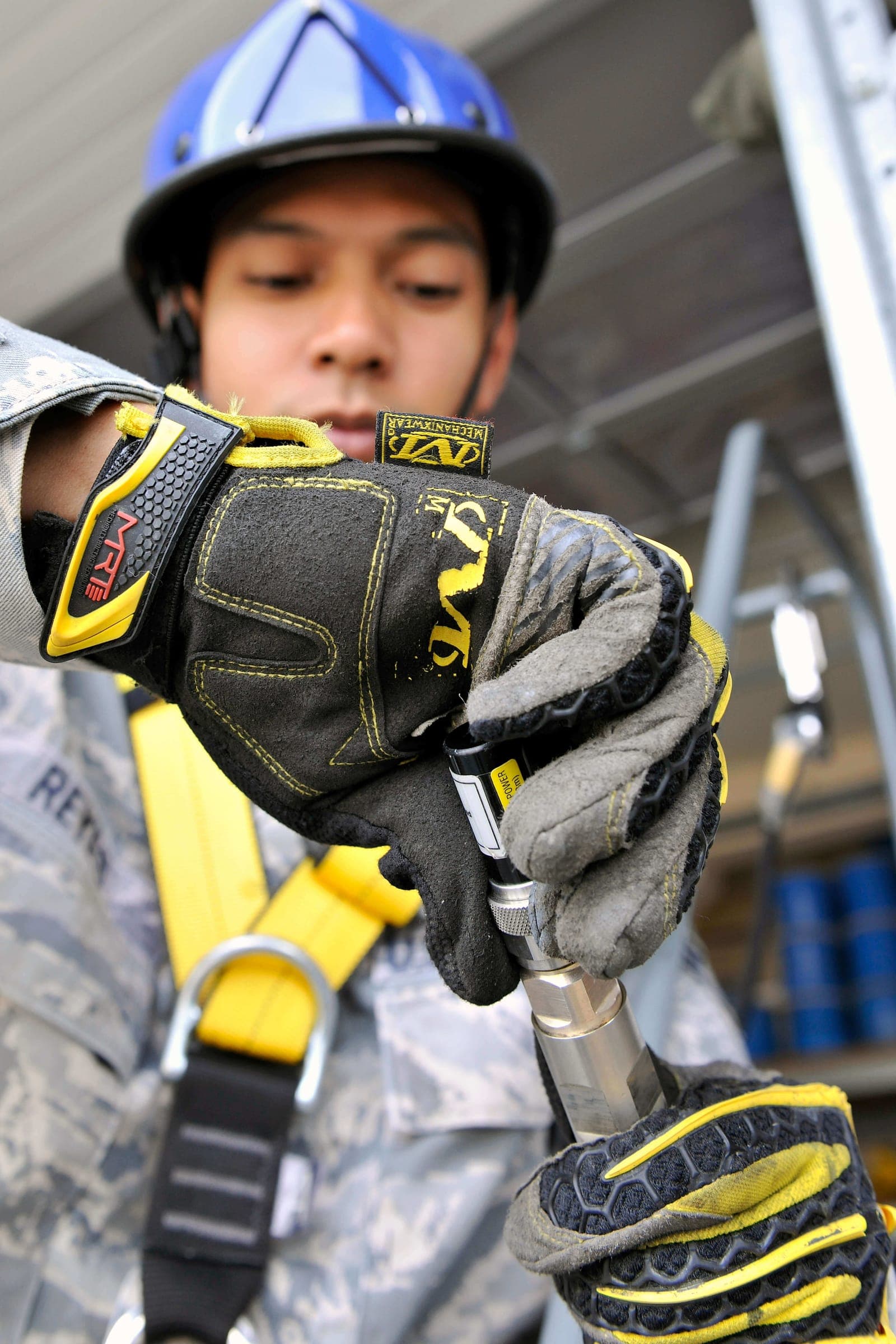
- Installs, maintains, reconstitutes, removes, and modifies copper core, coaxial, waveguide, and fiber optic cable and antenna systems. Climbs antenna support structures and wooden poles to various heights for maintenance and installation actions on cable and antenna systems. Installs and maintains dedicated local area network (LAN) and wide area network (WAN) media distribution systems, including distribution system interior wiring. Installs and removes fire stopping barriers when installing interior cabling. Uses drawings, task lists, instructions, and technical data to work on copper core, coaxial, waveguide, fiber optic cable and antenna systems. Installs distribution equipment. Terminates copper core, coaxial, waveguide, and fiber optic cable on distribution frames and interface equipment. Operates and performs maintenance using tools, test equipment, auxiliary equipment, and vehicles such as backhoes, trenchers, cable trailers, cable reel trucks, and antenna construction vehicles.
- Locates, repairs, and replaces faulty closures in copper core, waveguide, coaxial, and fiber optic cable systems. Performs pneumatic troubleshooting to locate faulty splice closures and seals splice closures. Excavates and backfills splice pits. Installs and maintains aerial cable support structures such as pole line and suspension strands. Installs underground cables, uses duct rods, cleans cable duct systems, prepares pulling apparatus, and pulls in and temporarily bonds cable. Installs, maintains, and marks path of buried cable systems.
- Monitors, analyzes, and troubleshoots copper core, waveguide, coaxial, and fiber optic cable systems. Determines cause of signal deterioration in cable carrying audio, video, digital, and data transmission. Interprets compressor meter readings and adjusts controls. Installs, maintains, and repairs or replaces damaged pneumatic components in cable air dryers. Uses test equipment to identify copper conductors and optic fibers in cables. Locates and traces buried cable. Locates and traces leaks in pressurized cable system. Performs operational checks and preventative maintenance inspections.
- Maintains communications and computer systems installation records, maintenance and inspection cable records, and technical orders.
- Supervises, plans, organizes, and directs cable and antenna installation and maintenance activities. Develops and improves work methods and procedures related to installation and maintenance of all cable and antenna systems.
- Performs IT project management duties to include; managing, supervising, and performing planning and implementation activities. Manages safety programs for equipment operations and maintenance as required (e.g., confined spaces, tower training, etc). Manages implementation and project installation and ensures architecture, configuration, and integration conformity. Develops, plans, and integrates base communications systems. Serves as advisor at meetings for facility design, military construction programs and minor construction planning. Evaluates base comprehensive plan and civil engineering projects. Monitors the status of cyber or communications-related base civil engineer work requests. Performs mission review with customers. Controls, manages, and monitors project milestones and funding from inception to completion. Determines adequacy and correctness of project packages and amendments. Monitors project status and completion actions. Manages and maintains system installation records, files, and indexes. Evaluates contracts, wartime, support, contingency, and exercise plans to determine impact on manpower, equipment, and systems. [DCWF Code-802]
Specialty qualifications
Knowledge. Knowledge of the following is mandatory: installation and maintenance management functions; wire transmission principles; electrical and light wave communications on aerial, buried and underground cable systems; cable pressure and alarm systems; antenna and obstruction systems; antenna fundamentals, including antenna theory and principles of rotators, amplifiers and control cables; antenna installation procedures, including radio frequency cable, waveguide splicing, and repair and maintenance techniques of radomes; operation and theory of cable pressurization, alarm systems, locating cable faults, identifying causes of deterioration in cable systems, cable testing procedures and methods of sealing cables; safety precautions related to oxygen deficiency, aid and cardiopulmonary resuscitation; use and limitations of test set operations; corrosion prevention and control procedures; and capabilities, limitations, operations and functional use of basic cable and antenna systems and associated hardware is mandatory.
Education. For entry into this specialty, completion of high school or general educational development equivalency is mandatory. Additional courses in mathematics, computer science or information technologies are desirable.
Training. For award of the AFSC 1D733, completion of Cable and Antenna initial skills course is mandatory.
Experience. The following experience is mandatory for the award of the AFSC indicated:
- 1D753. Qualification in and possession of AFSC 1D733. Also, experience in functions such as installing, maintaining, and repairing communications cable and antenna systems, including electrical equipment and transmission lines.
- 1D773. Qualification in and possession of AFSC 1D753. Also, experience performing or supervising functions in areas such as project installation and maintenance actions, communications cables, antennas, and related electrical hardware.
Other. The following are mandatory as indicated:
- For entry into this specialty:
- Normal color vision as defined in DAFMAN 48-123, Medical Examinations and Standards.
- See attachment 4 for additional entry requirements.
- For entry, award, and retention of this AFSC:
- Physical ability to perform climbing duties and freedom from fear of heights.
- Completion of a background investigation according to AFMAN 16-1405, Personnel Security Program Management, is mandatory.
- Must maintain & sustain highest security clearance level received up to Top Secret (Tier 5) or based on current position requirements. NOTE: Award of the 3-skill level without a completed investigation is authorized provided interim Tier 3 (Secret) clearance has been granted according to DoDM 5200.01 - AFMAN 16-1405.
Civilian career paths
Comparable civilian careers for this field pay roughly $103,590 per year (median salaries; varies by role and location):
- Information Security Analysts: $103,590
ASVAB requirements
1D7X3 has 2 qualification paths — you only need to meet one:
Enter your scores in the AFSC explorer and this section will check each requirement for you.
Entry requirements
Medical disqualifiersShowHide
These screened conditions disqualify a candidate for this AFSC:
Security & backgroundShowHide
Badges & identifiers
Duty badges
The occupational badge worn by Airmen in this career field.
- Cyberspace Support Badge
Duty identifiers
Special duty patches and identifiers associated with this AFSC.
- CYBER Duty Identifier
- XCOMM Duty Identifier
Degrees & training plan
- Career Field Education & Training Plan (CFETP)View CFETP (PDF, opens in a new tab)
The CFETP is the official Air Force document describing this career field's full training pipeline, from tech school through advanced skill levels.
Videos, Reddit & resources
1D7X3 videos(12)
These do not reflect official U.S. Air Force views and may contain inaccuracies — negative opinions are often overrepresented online.
1D7X3 - Cable and Antenna Operations Specialists
Airman Vision · 5/9/2025
1 of 12 videos
Reddit discussions(1)
These do not reflect official U.S. Air Force views and may contain inaccuracies — negative opinions are often overrepresented online.
Official links & resources(5)
Researching other jobs too? Every career field's videos and discussions are collected the same way — browse all AFSCs.
Frequently asked questions
- What ASVAB score do you need for Cable and Antenna (1D7X3)?
- 1D7X3 has 2 qualification paths — you only need to meet one: Mechanical 45+; or Electrical 60+.
- Does 1D7X3 require a security clearance?
- Yes — Cable and Antenna requires a Top Secret clearance.
- How long is tech school for Cable and Antenna?
- Tech school for 1D7X3 runs about 80 days at Sheppard, Texas.
Where this data comes from
Most of the data on this page comes from the Air Force Enlisted Classification Directory (AFECD) and recruiter TTMS readouts, which are no longer released publicly. Pulling it together and keeping it accurate takes real time, so I update these pages as often as I can.
Requirements do change between updates. Before you make any decisions, confirm the details with your recruiter. They always have the latest word.