1C8X3 · Operations
Radar, Airfield & Weather Systems (RAWS)
Also known as: RAWS
Last updated
At a glance
- ASVAB minimums
- M 50+E 65
- Security clearance
- Secret
- Tech school
- Keesler, Mississippi · 210 days
- Possible bases
- 47 stateside · 25 overseas
- Civilian equivalent pay
- $32k–$107k
- U.S. citizenship required
Table of ContentsShow
- What does the Radar, Airfield & Weather Systems (RAWS) career field do?
- Duties and responsibilities
- Specialty qualifications
- Civilian career paths
- ASVAB requirements
- Entry requirements
- Where you could be stationed
- Badges & identifiers
- Degrees & training plan
- Videos, Reddit & resources
- Frequently asked questions
What does the Radar, Airfield & Weather Systems (RAWS) career field do?
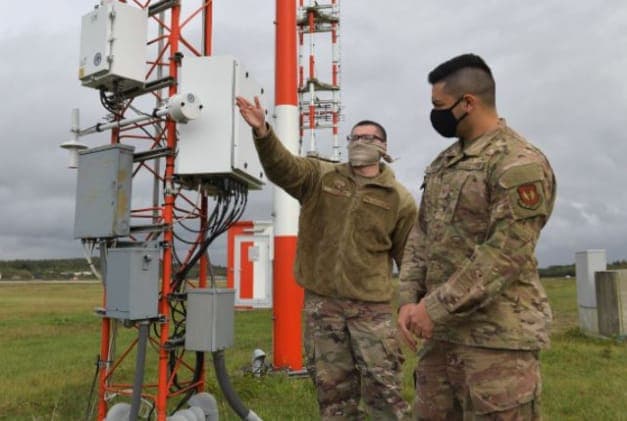
Performs full-spectrum communications-electronics maintenance. Deploys, installs, maintains, and repairs fixed or mobile air traffic control, weather, ground aircraft control and early warning radar systems, related radar operator training devices, aircraft identification equipment, remoting systems, video mappers, computerized processors, meteorological, navigation and air traffic control ground-to-air radio systems. Operates and relocates related support and communications equipment, uses test equipment, analyzes performance trends, performs administrative cybersecurity and elevated-privilege tasks such as software updates, networking, and privilege management, and supervises maintenance activities. RAWS may be required to maintain entire facilities, subsystems, or individual services or equipment that assist in the safe and expedient movement of air traffic throughout the National Airspace System (NAS) as well as providing support to the National Weather Service (NWS) and other outside supported agencies. Related DoD Occupational Subgroups: 110000, 110100, 110200, 110300, and 110400.
Duties and responsibilities
- Performs RAWS functions. Plans, organizes, and schedules maintenance activities for RAWS to include cybersecurity support functions. Oversees contract proposals, implementation, and performance standards. Establishes production controls and standards. Inspects, evaluates, and prepares reports for maintaining, installing, repairing, modifying, removing, and siting all types of RAWS.
- Employs RAWS. Installs/removes and relocates RAWS. Assembles/disassembles, connects, modifies, and adjusts electronic subassemblies and ancillary systems (e.g., antennas, transmitters, receivers, processors, indicator groups, etc.). Assembles/disassembles, loads, transports, unloads, climbs associated support structures, and erects equipment and components. Performs electronic protection functions. Determines equipment position based on plans, diagrams, local terrain, and planned base facilities and requirements. Conducts tests of installed equipment for proper component assembly and compliance with technical orders. Determines equipment position based on plans, diagrams, and specifications. Checks and inventories equipment and project materials for serviceability. Assembles, connects, and wires components, assemblies, and antenna systems. Performs operational tests and adjusts and aligns equipment. Places in operation, calibrates, tunes, and aligns subassemblies according to approved technical data to maximize performance. Commissions equipment and completes flight inspections.
- Oversees work in progress and reviews completed repairs for sound maintenance practices. Establishes requirements for maintenance and support equipment, tools, and spare parts. Manages the requisition and disposition of supplies and material. Diagnoses and recommends equipment repair, replacement, or depot overhaul. Interprets inspection findings and determines adequacy of corrective action. Reviews and ensures compliance with maintenance management publications and procedures. Develops and enforces safety standards. Evaluates and resolves problems encountered during siting, installing, repairing, and overhauling with the use of layout drawings, schematics, and pictorial diagrams. Analyzes operating characteristics of equipment to determine sources of malfunction.
- Directs maintenance activities. Isolates malfunctions using visual inspections, voltage checks, and other tests using electronic test equipment. Repairs RAWS subassemblies, including antennas, transmitters, receivers, operator training devices, radar beacon systems, remoting systems, video mappers, display systems, and associated communications systems and related equipment. Conducts performance tests of repaired subassemblies, using bench mockups and applicable test equipment. Accomplishes organizational and intermediate level equipment modifications according to time compliance technical orders, or field directives. Assembles, installs, and repairs antenna systems, transmission lines, and waveguides. Performs corrosion control.
- Directs activities responsible for system analysis and compliance. Develops methods for improving maintenance effectiveness and efficiency. Performs staff assistance visits to subordinate units. Interprets inspection findings and determines adequacy of corrective actions. Ensures maintenance data collection records are accurately completed and maintained. Recommends changes to improve equipment performance, maintenance practices, or system interoperability. Evaluates justification and practicality of recommended improvements to equipment performance and maintenance procedures. Enforces safety standards and practices for RAWS maintenance activities.
- Directs program duties. Establishes requirements for tools, test/support equipment, personnel, supplies, and technical publications. Develops work standards, methods, and controls for functions such as periodic inspections, operational testing, and equipment repair. Identifies maintenance problem areas and initiates corrective action. Posts entries on maintenance and inspection records. Records and reviews meter readings, test results, and historical data in equipment records. Completes and reviews maintenance data collection and equipment status reporting databases.
- Prepares RAWS equipment for deployment. Deploys, surveys, assembles/disassembles, and activates tactical/mobile RAWS and associated equipment. Completes all required maintenance to sustain system operations according to HHQ requirements. Coordinates with Federal Aviation Administration (FAA) as well as other agencies as needed. Reconstitutes and redeploys systems.
- Performs internal/external agency coordination. Coordinates with various functions such as cyber, spectrum management, civil engineering, and others to fulfill mission requirements. Coordinates with outside agencies such as the FAA and others to ensure compliance with industry standards as applicable.
- Performs automation functions. Oversees, evaluates, and supports the documentation, validation, assessment, and authorization processes necessary to assure that new and existing information technology (IT) systems meet the organization's cybersecurity and risk requirements. Ensures appropriate treatment of risk, compliance, and assurance from internal and external perspectives. Applies computer security policies to safeguard systems and information. Categorizes, isolates, and resolves system problems. Performs fault recovery by validating, isolating, correcting faults, and verifying service restoral with customers. Processes, documents, and coordinates resolution of trouble calls from lower support echelons. Processes scheduled and authorized outages. Submits outage reports in response to unscheduled outages. Operates and maintains data automation equipment. Performs routine cleaning and maintenance of computer software and hardware. Revises data automation needs in accordance with current technology and availability.
Specialty qualifications
Knowledge. Knowledge is mandatory of: electronic principles and digital techniques, including transistors and solid-state component theory that applies to RAWS; maintenance data processing systems; wiring diagrams, circuit diagrams, schematic diagrams and technical orders; maintenance and supply procedures; infrastructure capabilities and limitations; RAWS capabilities and limitations; microprocessors; data processing; mathematics principles required to solve electronic formulas and number systems; analog and digital electronic circuits; advanced troubleshooting techniques; principles of RAWS maintenance; use of technical data and blueprints; system block, data flow, schematic, logic, and interconnecting wiring diagrams; principles and use of test equipment and diagnostic systems; radio frequency principles; advanced soldering techniques; application of data automation; and fixed and mobile command and control system characteristics
Education. For entry into this specialty, completion of high school diploma or equivalent is mandatory. Additional courses in physics and mathematics, basic knowledge of electronic principles; and computers, and networks are desirable.
Training. The following training is mandatory as indicated:
- 1C833. Completion of RAWS Apprentice initial skills training course (E3AQR1C833 00AA and E3ABR1C833 01AA) is mandatory.
- 1C853. Completion of RAWS 5-level Career Development Course and applicable 5-level core tasks.
- 1C873. Completion of RAWS Work Center Manager’s Distance Learning Course (E6ACW1C871 077A) and In-residence Course (E3ACR1C871 07AA).
Experience. The following experience is mandatory for award of the AFSC indicated:
- 1C853. Qualification in and possession of AFSC 1C833. Also, experience is mandatory in functions such as testing, calibrating, cabling, or repairing RAWS, associated communications and identification equipment, operating RAWS. Use of test equipment and interpretation of test results is mandatory.
- 1C873. Qualification in and possession of AFSC 1C853. Also, experience is mandatory in performing or supervising functions such as project management, siting, installing, repairing, deploying, overhauling, modifying, or flight inspecting RAWS, and associated communications and identification equipment.
Other. The following are mandatory as indicated:
- For entry into this specialty:
- Normal color vision as defined in DAFMAN 48-123, Medical Examinations and Standards.
- Must possess a valid state driver’s license to operate government motor vehicles (GMV) in accordance with DAFI 24-301, Ground Transportation.
- Physical ability to perform climbing duties and freedom from fear of heights.
- See attachment 4 for additional entry requirements.
- For award and retention of this AFSC:
- Must maintain local network access IAW DAFI 17-130, Cybersecurity Program Management and DAFMAN 17-1301, Computer Security (COMPUSEC).
- Must attain and maintain Information Assurance Technician Level 2 certification IAW AFMAN 17-1303, Cybersecurity Workforce Improvement Program and DoD 8570.01-M, Information Assurance Workforce Improvement Program, and career field guidance as specified by position number requirements.
- Specialty requires routine access to Tier 3 (T3) information, systems, or similar classified environment.
- Completion of a current T3 Investigation required IAW DoDM 5200.02, DAFMAN 16-1405, Air Force Personnel Security Program, is mandatory. NOTE: Award of the entry level without a completed T3 Investigation is authorized provided an interim Secret security clearance has been granted according to DoDM 5200.02, AFMAN 16-1405.
Civilian career paths
Comparable civilian careers for this field pay roughly $31,760 to $107,210 per year (median salaries; varies by role and location):
- Airfield Operations Specialists: $51,330
- Avionics Technicians: $67,840
- Coin, Vending, and Amusement Machine Servicers and Repairers: $37,580
- Computer, Automated Teller, and Office Machine Repairers: $41,090
- Electrical and Electronic Engineering Technologists and Technicians: $67,550
- Electrical and Electronic Equipment Assemblers: $36,390
- Electrical and Electronics Repairers, Commercial and Industrial Equipment: $62,010
- First-Line Supervisors of Mechanics, Installers, and Repairers: $70,240
- Helpers--Installation, Maintenance, and Repair Workers: $31,760
- Radio, Cellular, and Tower Equipment Installers and Repairers: $57,720
- Remote Sensing Scientists and Technologists: $107,210
- Remote Sensing Technicians: $52,460
- Telecommunications Equipment Installers and Repairers: $61,470
ASVAB requirements
To qualify for 1C8X3, you need:
Enter your scores in the AFSC explorer and this section will check each requirement for you.
Entry requirements
Medical profile (PULHES)ShowHide
PULHES scale: lower numbers mean a stricter medical standard. Tap a letter for what it measures.
Vision requirementsShowHide
Medical disqualifiersShowHide
These screened conditions disqualify a candidate for this AFSC:
Physical requirementsShowHide
Education prerequisitesShowHide
Security & backgroundShowHide
Where you could be stationed
Stateside (47)
- Altus, Oklahoma
- Barksdale, Louisiana
- Beale, California
- Cannon, New Mexico
- Columbus, Mississippi
- Davis-Monthan, Arizona
- Dover, Delaware
- Dyess, Texas
- Ellsworth, South Dakota
- Fairchild, Washington
- Fort Bragg, North Carolina
- Fort Hood, Texas
- Grand Forks, North Dakota
- Hamilton, Massachusetts
- Hill, Utah
- Holloman, New Mexico
- Hurlburt Field, Florida
- JB Andrews, Maryland
- JB Charleston, South Carolina
- JB Langley-Eustis, Virginia
- JBSA Lackland, Texas
- Joint Base Lewis-McChord, Washington
- Joint Base McGuire-Dix-Lakehurst, New Jersey
- Keesler, Mississippi
- Laughlin, Texas
- Little Rock, Arkansas
- Luke, Arizona
- MacDill, Florida
- Maxwell, Alabama
- McConnell, Kansas
- Minot, North Dakota
- Moody, Georgia
- Mountain Home, Idaho
- Nellis, Nevada
- Offutt, Nebraska
- Pope, North Carolina
- Robins, Georgia
- Scott, Illinois
- Seymour Johnson, North Carolina
- Shaw, South Carolina
- Sheppard, Texas
- Tinker, Oklahoma
- Travis, California
- Tyndall, Florida
- Vance, Oklahoma
- White Sand Missle Range, New Mexico
- Whiteman, Missouri
Overseas (25)
- Andersen, Guam
- Aviano, Italy
- Bann Comm Sta 02, Germany
- Chievres, Belgium
- Coronel Enrique S, Honduras
- Eielson, Alaska
- Grafenwohr, Germany
- Incirlik AB, Turkey
- JB Elmendorf-Rich, Alaska
- JB Prl Hbr-Hickam, Hawaii
- Kadena, Japan
- Kaena Point, Hawaii
- Kunsan, South Korea
- Lajes, Portugal
- Lakenheath, United Kingdom
- Learmonth, Australia
- Mildenhall, United Kingdom
- Misawa, Japan
- Moron, Spain
- Osan AB, South Korea
- Poggio Renatico, Italy
- Ramstein, Germany
- Spangdahlem AB, Germany
- Wheeler, Hawaii
- Yokota, Japan
Badges & identifiers
Duty badges
The occupational badge worn by Airmen in this career field.
- Logistic Badge
Duty identifiers
Special duty patches and identifiers associated with this AFSC.
- RAWS Duty Identifier
Degrees & training plan
- Career Field Education & Training Plan (CFETP)View CFETP (PDF, opens in a new tab)
The CFETP is the official Air Force document describing this career field's full training pipeline, from tech school through advanced skill levels.
Videos, Reddit & resources
1C8X3 videos(7)
These do not reflect official U.S. Air Force views and may contain inaccuracies — negative opinions are often overrepresented online.
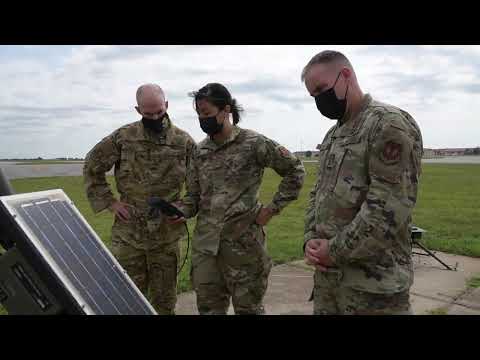
Air Force RAWS - Radar, Airfield & Weather Systems (1C8X3)
Airman Vision · 7/20/2025
1 of 7 videos
Reddit discussions(10)
These do not reflect official U.S. Air Force views and may contain inaccuracies — negative opinions are often overrepresented online.
Official links & resources(1)
Researching other jobs too? Every career field's videos and discussions are collected the same way — browse all AFSCs.
Frequently asked questions
- What ASVAB score do you need for Radar, Airfield & Weather Systems (RAWS) (1C8X3)?
- You need Mechanical 50+ and Electrical 65+ on the ASVAB to qualify for 1C8X3.
- Where can Radar, Airfield & Weather Systems (RAWS) Airmen get stationed?
- 1C8X3 Airmen serve at 72 bases: 47 stateside and 25 overseas, including Andersen, Guam, Aviano, Italy, Bann Comm Sta 02, Germany.
- Does 1C8X3 require a security clearance?
- Yes — Radar, Airfield & Weather Systems (RAWS) requires a Secret clearance.
- How long is tech school for Radar, Airfield & Weather Systems (RAWS)?
- Tech school for 1C8X3 runs about 210 days at Keesler, Mississippi.
Where this data comes from
Most of the data on this page comes from the Air Force Enlisted Classification Directory (AFECD) and recruiter TTMS readouts, which are no longer released publicly. Pulling it together and keeping it accurate takes real time, so I update these pages as often as I can.
Requirements do change between updates. Before you make any decisions, confirm the details with your recruiter. They always have the latest word.