1C7X1 · Operations
Airfield Management
Also known as: AFM, Base Ops, Base Operations, BOPS
Last updated
At a glance
- ASVAB minimums
- G 50
- Security clearance
- Secret
- Tech school
- Keesler, Mississippi · 30 days
- Career field size
- 790 Airmen
- Possible bases
- 42 stateside · 18 overseas
- Civilian equivalent pay
- $51k–$130k
- U.S. citizenship required
Table of ContentsShow
What does the Airfield Management career field do?
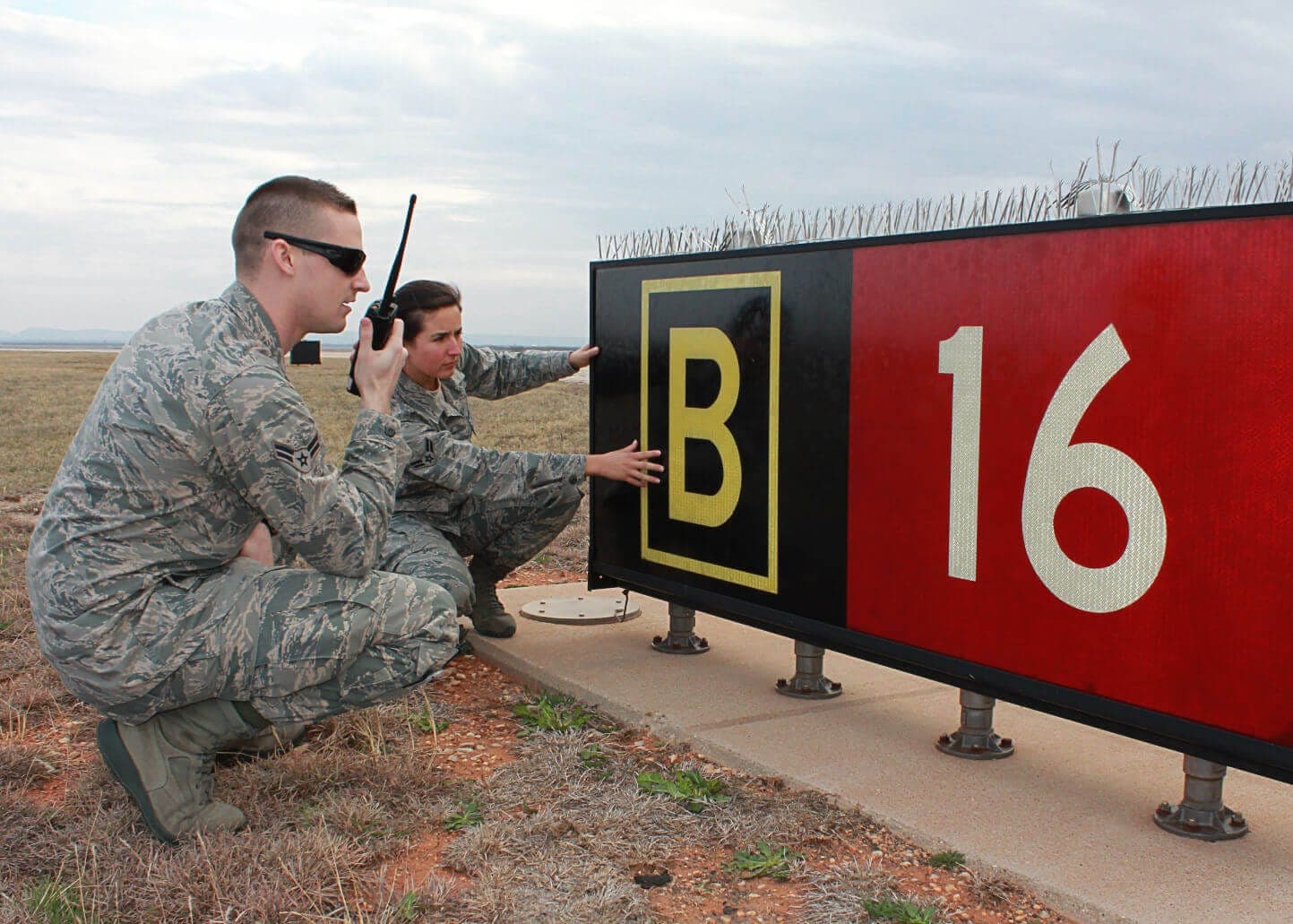
Manages airfield operations, coordinates with civil engineering, safety, air traffic control and various other base agencies to ensure safe aircraft operations within the airfield environment and through the national and international airspace systems. Related DoD Occupational Subgroup: 155600.
Duties and responsibilities
- Monitor and coordinate airfield and aircraft activities. Conduct airfield checks. Processes flight plans and other air traffic related data through the national and international air traffic systems. Provides flight following services and initiates appropriate actions for overdue aircraft. Maintains and processes Notice-to-Airman (NOTAMs). Maintains a record of daily events. Executes Operating Instructions and Quick Reaction Checklists necessary to perform Airfield Management duties and responds to situations requiring immediate action. Provides transient aircrew and aircraft support to include processing Prior Permission Required (PPR) requests; coordinating parking areas; receiving, storing, and issuing classified material; and coordinating aircrew transportation. Provides briefings to base and transient aircrews on relevant airfield operations and restrictions. Maintains the flight planning room equipment, maps, displays and publications.
- Maintains situational awareness of airfield activities and overall responsibility for Airfield Management (AM) section while on duty. Serves as the representative for the Airfield Manager during emergency response situations and during Airfield Manager’s non-duty hours. Assesses airfield operations/situations, determines operational requirements, and imposes airfield restrictions as needed (e.g., closing/suspending operations on aprons, taxiways, and runways). Briefs AM personnel on emergency and operational activities.
- Performs daily airfield inspections to ensure a safe operational environment. Evaluates airfield activities to ensure compliance with established policies and directives. Identifies, reports, corrects, or mitigates inspection discrepancies. Coordinates and supervises airfield construction, repair activities, facilities maintenance, and snow removal operations. Coordinates with appropriate agencies, such as air traffic control, civil engineers, security forces and command post, to ensure airfield activities are supported as appropriate.
- Reviews, interprets, and enforces policies, instructions and directives pertaining to airfield management activities operations. Prepares operating directives and memorandums for airfield management activities. Establishes and manages base airfield driving program to include training, certification, and remedial action. Establishes procedures for controlling privately owned vehicles on the airfield.
- Performs expeditionary airfield management functions in support of USAF worldwide deployment of DoD aircraft.
Specialty qualifications
Knowledge. Knowledge is mandatory of: International Civil Aviation Organization (ICAO); North Atlantic Treaty Organization (NATO); United States federal and military airfield regulations; aeronautical charts, maps, and publications; flight data and NOTAM systems; familiarity of navigational aids; basic aircraft design characteristics; and principles of organization, purpose, operation, and management of airfield operational areas.
Education. For entry into this specialty, completion of high school with a course in speech and basic knowledge of computers is desirable.
Training. The following training is mandatory as indicated:
- 1C731. Completion of the Airfield Management Apprentice course for award of the AFSC indicated.
- 1C751. Completion of training requirements outlined in 1C7X1 Career Field Education and Training Plan (CFETP) and DAFMAN 13-204v2, Airfield Management.
- 1C771. Completion of the Airfield Management Craftsman in-residence course, training requirements outlined in the 1C7X1 CFETP, and additional training requirements outlined in DAFMAN 13-204v2, Airfield Management. For TSgts and above, completion of Airfield Manager position certification requirements and the Advanced Airfield Managers Course are required to obtain the SEI 368.
- 1C791. Completion of Advanced Airfield Manager Course and additional training requirements outlined in AFMAN 13-204v2, Airfield Management.
Experience. The following experience is mandatory for award of the AFSC indicated:
- 1C751. Qualification in and possession of AFSC 1C731. Also, experience in Airfield Management Operations functions such as: airfield checks, NOTAM processing, emergency response actions, and maintaining flight information data and supportive displays.
- 1C771. Qualification in and possession of AFSC 1C751 and SEI 155. Also, experience performing and supervising Airfield Management functions such as; airfield checks and inspections, overseeing airfield construction or repairs, processing airfield waivers, or conducting airfield surveys. NOTE: TSgt or above must obtain Airfield Manager qualifications to gain an SEI 368.
- 1C791. Qualification in and possession of AFSC 1C771 and SEI 368. Also, experience managing functions such as airfield management activities, preparing or reviewing policies and directives for airfield management or ensuring coordination with agencies to improve airfield management functions.
Other. The following items are mandatory as indicated:
- For entry into this specialty:
- Normal color visions as defined in DAFMAN 48-123, Medical Examinations and Standards.
- Ability to speak distinctly in person and over air-to-ground radios.
- See attachment 4 for additional entry requirements.
- For award and retention of these AFSCs:
- Must possess a valid state driver’s license to operate government motor vehicles (GMV) in accordance with AFI 24-301, Ground Transportation.
- Must maintain qualifications according to DAFMAN 13-204v2, Airfield Management.
- Must maintain local network access IAW AFI 17-130, Cybersecurity Program Management and AFMAN 17-1301, Computer Security.
- Specialty routine access to Tier 3 (T3) information, systems, or similar classified environment.
- For award and retention of AFSCs 1C7X1 and 1C700:
- Completion of a current T3 Investigation required IAW DoDM 5200.02, DAFMAN 16-1405, Air Force Personnel Security Program, is mandatory.
- Hearing Conservation certification is mandatory.
- Must be able to handle weapons for BASH response and contingency taskings. NOTE: Award of the entry level without a completed T3 Investigation is authorized provided an interim Secret security clearance has been granted according to DoDM 5200.02, DAFMAN 16-1405 Department of Air Force Personnel Security Program.
Civilian career paths
Comparable civilian careers for this field pay roughly $51,330 to $130,420 per year (median salaries; varies by role and location):
- Air Traffic Controllers: $130,420
- Airfield Operations Specialists: $51,330
- Aviation Inspectors: $78,400
ASVAB requirements
To qualify for 1C7X1, you need:
Enter your scores in the AFSC explorer and this section will check each requirement for you.
Entry requirements
Medical profile (PULHES)ShowHide
PULHES scale: lower numbers mean a stricter medical standard. Tap a letter for what it measures.
Vision requirementsShowHide
Medical disqualifiersShowHide
These screened conditions disqualify a candidate for this AFSC:
Physical requirementsShowHide
Security & backgroundShowHide
Where you could be stationed
Stateside (42)
- Altus, Oklahoma
- Barksdale, Louisiana
- Beale, California
- Birmingham, Alabama
- Cannon, New Mexico
- Creech, Nevada
- Davis-Monthan, Arizona
- Dover, Delaware
- Dyess, Texas
- Edwards, California
- Eglin, Florida
- Ellsworth, South Dakota
- Fairchild, Washington
- Grand Forks, North Dakota
- Hill, Utah
- Holloman, New Mexico
- Hurlburt Field, Florida
- JB Andrews, Maryland
- JB Charleston, South Carolina
- JB Langley-Eustis, Virginia
- JBSA Lackland, Texas
- Joint Base Lewis-McChord, Washington
- Joint Base McGuire-Dix-Lakehurst, New Jersey
- Kirtland, New Mexico
- Little Rock, Arkansas
- Luke, Arizona
- MacDill, Florida
- McConnell, Kansas
- Minot, North Dakota
- Moody, Georgia
- Mountain Home, Idaho
- Nellis, Nevada
- Offutt, Nebraska
- Robins, Georgia
- Scott, Illinois
- Seymour Johnson, North Carolina
- Shaw, South Carolina
- Tinker, Oklahoma
- Travis, California
- Tyndall, Florida
- Whiteman, Missouri
- Wright Patterson, Ohio
Overseas (18)
- Andersen, Guam
- Aviano, Italy
- Chievres, Belgium
- Coronel Enrique S, Honduras
- Eielson, Alaska
- Incirlik AB, Turkey
- JB Elmendorf-Rich, Alaska
- JB Prl Hbr-Hickam, Hawaii
- Kadena, Japan
- Kunsan, South Korea
- Lakenheath, United Kingdom
- Mildenhall, United Kingdom
- Misawa, Japan
- Moron, Spain
- Osan AB, South Korea
- Ramstein, Germany
- Spangdahlem AB, Germany
- Yokota, Japan
Badges & identifiers
Duty badges
The occupational badge worn by Airmen in this career field.
- Command and Control Badge
Duty identifiers
Special duty patches and identifiers associated with this AFSC.
- AFLD Duty Identifier
Degrees & training plan
While serving in 1C7X1 you can earn an associate degree through the Community College of the Air Force:
- Aviation Management
- Career Field Education & Training Plan (CFETP)View CFETP (PDF, opens in a new tab)
The CFETP is the official Air Force document describing this career field's full training pipeline, from tech school through advanced skill levels.
Videos, Reddit & resources
1C7X1 videos(12)
These do not reflect official U.S. Air Force views and may contain inaccuracies — negative opinions are often overrepresented online.
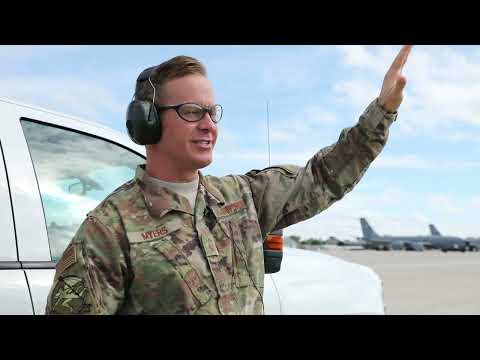
Air Force Airfield Management Career - 1C7X1
Airman Vision · 6/18/2025
1 of 12 videos
Reddit discussions(5)
These do not reflect official U.S. Air Force views and may contain inaccuracies — negative opinions are often overrepresented online.
Official links & resources(2)
Researching other jobs too? Every career field's videos and discussions are collected the same way — browse all AFSCs.
Frequently asked questions
- What ASVAB score do you need for Airfield Management (1C7X1)?
- You need General 50+ on the ASVAB to qualify for 1C7X1.
- Where can Airfield Management Airmen get stationed?
- 1C7X1 Airmen serve at 60 bases: 42 stateside and 18 overseas, including Andersen, Guam, Aviano, Italy, Chievres, Belgium.
- Does 1C7X1 require a security clearance?
- Yes — Airfield Management requires a Secret clearance.
- How long is tech school for Airfield Management?
- Tech school for 1C7X1 runs about 30 days at Keesler, Mississippi.
Where this data comes from
Most of the data on this page comes from the Air Force Enlisted Classification Directory (AFECD) and recruiter TTMS readouts, which are no longer released publicly. Pulling it together and keeping it accurate takes real time, so I update these pages as often as I can.
Requirements do change between updates. Before you make any decisions, confirm the details with your recruiter. They always have the latest word.