AF099 · Lesson 49 of 71
Air Force Organization
Table of ContentsShow
- Overview
- Chain of Command
- Lower Levels of Command
- Flight
- Squadron
- Group
- Wing
- Numbered Air Force (NAF)
- Major Commands
- MAJCOM emblems
- Field Operating Agency (FOA)
- Direct Reporting Unit (DRU)
- Headquarters Air Force
- Military Departments
- Composition
- Functions of military departments
- Total Force Concept
- Total Force Integration (TFI)
- Air Force Mission
- Unified Combatant Commands and Combined Commands
- Unified Combatant Commands
- Combined Commands
- Three Elements of the Command and Control Concept
- Air Force Basic Doctrine
- Overview
- Principles of War
- Unity of Command
- Highest Levels of Command Authority
- Joint Staff
- JCS
- CJCS
- SECDEF
- President or CINC
- Space Force
- Mission
- Office of the Chief of Space Operations
- Space Force Organization
- Space Capabilities
- Summary
In any organization - military or civilian - there's a hierarchy and many sections that support the mission. The military is no different. As an Air Force member, you have a part in the "big picture" that includes the Army, Navy, Air Force, Marine Corps, and Coast Guard. The services depend on each other, so strategic thinking is important for all components to fight as one.
This section covers the Air Force as an organization - from flight to MAJCOM, the military departments, the command and control concept, the highest levels of command, and the Space Force.
Overview
Objective: Identify basic facts and general principles about intermediate Airmanship fundamentals.
Learning Outcomes
- Identify basic facts about the chain of command.
- Recognize the lower levels of command from lowest to highest.
- Recall the nine Major Commands (MAJCOMs) and how they're interrelated and complementary.
- Recognize a Field Operating Agency (FOA) performs beyond scope of a MAJCOM.
- Recognize a Direct Reporting Unit (DRU) is unique from MAJCOM and FOA, and reports to the CSAF.
- Identify the two major entities of Headquarters Air Force.
- Understand what the military departments consist of.
- Identify basic facts about Unified Combatant and Combined Commands.
- Recognize the three elements of the command and control concept.
- Outline Air Force Basic Doctrine.
- Identify the five main levels of command from the Joint Staff to the President.
- Recall basic facts about the Space Force - mission, organization, and capabilities.
Foundational Competencies
- Precision - A concern for order, quality, and accuracy with an underlying drive to reduce uncertainty in the environment.
- Strategic Thinking - The process of considering and organizing activities and resources to achieve a desired goal. The ability to think on a large and small scale, long and short term.
Summary
- Chain of Command
- Lower Levels of Command
- Major Commands
- Field Operating Agency
- Direct Reporting Unit
- Headquarters Air Force
- Military Departments
- Unified Combatant Commands and Combined Commands
- Three Elements of the Command and Control Concept
- Air Force Basic Doctrine
- Highest Levels of Command Authority
- Space Force
Chain of Command
Your chain of command starts with your immediate supervisor. Your supervisor is the first link - they'll resolve the majority of your problems or issues. The next link is the person who supervises your supervisor. The process for identifying the next link: identify the person who is superior in rank and supervises the individual to whom you addressed your concern.
You should provide your chain of command the opportunity to address issues prior to taking them elsewhere. If you recall your memory work, you can quickly identify all members in your chain of command - all the way to the President of the United States (POTUS).
Lower Levels of Command
These commands, from lowest to highest:
- Flight
- Squadron
- Group
- Wing
- Numbered AF (NAF)
The Air Force divides its components into groupings or teams for organization, just as BMT does when performing drill. Pay attention during drill - you can increase your understanding of the flight, squadron, group, and wing concepts. During parade, listen to your MTI's spoken commands like "FLIGHT," "SQUADRON," or "GROUP."
Flight
The first or bottom level of command - falls below a squadron. A flight usually consists of several sections or elements that report to or fall under a squadron. Example: a flight is organized of two to four elements for marching at BMT.
Squadron
The level of command above a flight and below a group. The squadron is the basic unit in the AF organizational structure and consists of several flights. Squadrons must meet a minimum threshold of 35 authorizations / positions / personnel.
The squadrons assigned to BMT: 319 TRS, 320 TRS, 321 TRS, 322 TRS, 323 TRS, 324 TRS, 326 TRS, 331 TRS, and the 737 TRSS.
Group
The level of command above a squadron and below a wing. A group has two or more subordinate squadrons or flights. They must meet a minimum of 400 authorizations / positions / personnel. All BMT squadrons belong to the 737th Training Group. Another group at JBSA-Lackland is the 37th Training Group, which provides Technical Training to students through the many squadrons under it.

Wing
The level of command above a group and below a Numbered Air Force (NAF). A wing has a distinct mission with a significant scope. It usually consists of several groups with no fewer than 1,000 personnel assigned. Every member of BMT belongs to the 37th Training Wing - the largest training wing in the Air Force.

Numbered Air Force (NAF)
A level of command directly above a wing and under a Major Command (MAJCOM). NAFs provide an intermediate level of operational leadership and supervision.
What NAF do you belong to? BMT falls under the MAJCOM of Air Education and Training Command (AETC). Since all AETC units are part of the Second Air Force (2 AF), your NAF is the 2 AF. The 2 AF is responsible for conducting basic military and Technical Training for AF non-flying enlisted members and support officers.
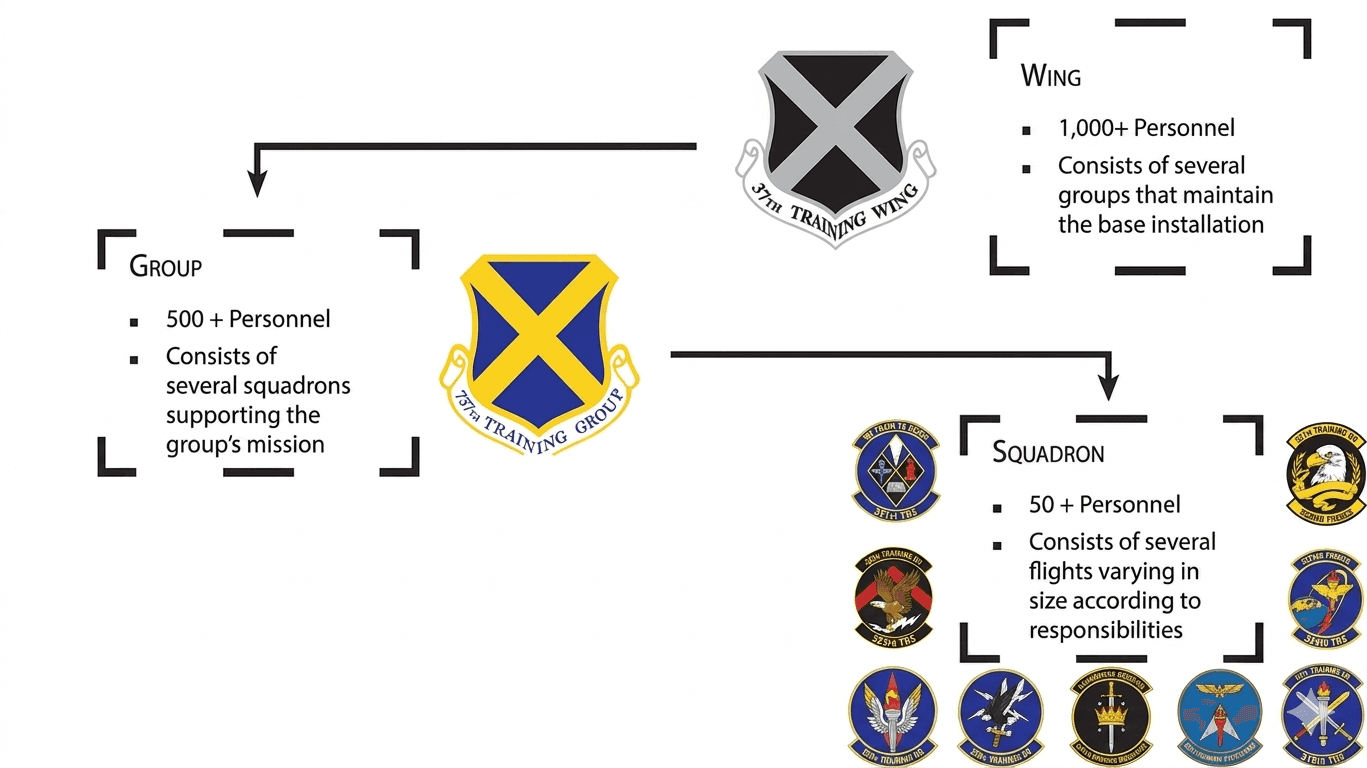
Fig 34-1: How it breaks down for BMT at JBSA-Lackland.
Major Commands
Major Commands (MAJCOMs) are major subdivisions of the Air Force, each assigned a major part of the AF mission. All 9 MAJCOMs are interrelated and complementary, and they report to Headquarters (HQ) USAF.
| MAJCOM | Headquarters | Primary mission |
|---|---|---|
| Air Combat Command (ACC) | Joint Base Langley-Eustis, VA | Primary force provider of combat airpower to America's warfighting commands and cybersecurity. |
| Air Mobility Command (AMC) | Scott AFB, IL | Provides rapid, global mobility - right effects, right place, right time. |
| Pacific Air Forces (PACAF) | JB Pearl Harbor-Hickam, HI | Provides U.S. Pacific Command integrated expeditionary AF capabilities to defend the homeland, promote stability, dissuade/deter aggression, and swiftly defeat enemies. |
| U.S. Air Forces in Europe (USAFE) | Ramstein AB, Germany | Directs air operations in a theater spanning three continents, covering 8M+ square miles, 51 independent states, and 1/8 of the world's population (and 1/4 of world's GDP). |
| Air Education and Training Command (AETC) | JBSA-Randolph, TX | Develops America's Airmen today … for tomorrow. Includes AF Recruiting Services, two NAFs, and Air University. The 2 AF conducts BMT and non-flying Technical Training; 19 AF conducts flying training. Air University handles PME, graduate, and continuing education. |
| Air Force Materiel Command (AFMC) | Wright-Patterson AFB, OH | Delivers war-winning technology, acquisition, test, sustainment, and expeditionary capabilities to the warfighter. |
| Air Force Special Operations Command (AFSOC) | Hurlburt Field, FL | Delivers special operations power anytime, anywhere. |
| Air Force Reserve Command (AFRC) | Robins AFB, GA | Provide Combat-Ready Forces to Fly, Fight, and Win. |
| Air National Guard (ANG) | Pentagon, Arlington County, VA | Provides mission-ready Airmen to safeguard the homeland, serve communities, and execute global operations. |
| Air Force Global Strike Command (AFGSC) | Barksdale AFB, LA | Develops and provides combat-ready forces for nuclear deterrence and global strike operations - safe, secure, and effective - to support POTUS and Combatant Commanders. |
MAJCOM emblems
The 8 MAJCOM emblems below (ACC and AMC are listed in the table above but not depicted here):
Field Operating Agency (FOA)
A Field Operating Agency (FOA) is a subdivision of the AF that performs activities beyond the scope of a MAJCOM. The mission they perform is specialized or associated with an AF wide mission. A FOA usually has the word "agency" in its designator.
It provides special activities outside the scope of a MAJCOM and deals with an Air Force-wide mission. Examples: Air Force Weather Agency and Air Force Services Agency.
Direct Reporting Unit (DRU)
A Direct Reporting Unit (DRU) is a subdivision of the AF that reports directly to the CSAF. DRUs are separate from any MAJCOM or FOA due to unique missions, legal requirements, or other factors. DRUs perform missions that don't fit into any of the MAJCOMs.
Examples: the USAF Academy and the Air Force District of Washington.
Headquarters Air Force
The senior headquarters of the Air Force consists of two major entities:
- Secretary of the Air Force (SECAF) - head of the Department of the Air Force. A civilian appointed by the President with advice and consent of the Senate.
- Chief of Staff of the Air Force (CSAF) - the highest- ranking officer in the Air Force. The CSAF presides over the Air Staff.
Military Departments
Composition
The military departments consist of:
- Air Force
- Army
- Space Force
- Navy (includes the Marine Corps, and in wartime, the Coast Guard)
The military departments and the Service Secretaries are responsible for providing efficiently organized, trained, and equipped forces to Combatant Commanders. Each service develops and trains its forces to perform functions that support the efforts of other services and accomplish overall military objectives.
Functions of military departments
Functions are the traditional roles and mission of each branch of service as established by the Key West Agreement of 1948 (revised 1953 and 1958). The general functions of the armed forces are to:
- Support and defend the U.S. Constitution against all enemies, foreign and domestic.
- Ensure the security of the U.S., its possessions, and areas vital to its interests.
- Uphold and advance the national policies and interests of the U.S.
To maximize warfighting capability, the U.S. capitalizes on the strengths of each service:
- Air Force - delivers sovereign options for the defense of the U.S. and global interests; fly, fight, and win in air, space, and cyberspace.
- Army - conducts prompt, sustained combat and stability operations on land; provides logistics and support to enable other services to accomplish their missions.
- Navy - maintains, trains, and equips combat-ready naval forces capable of winning wars, deterring aggression, and maintaining freedom of the seas.
- Marine Corps - conducts prompt and sustained amphibious landings and ground operations. Specializes in the ability to gain access to denied areas, often from great distances.
- Coast Guard - protects the public, environment, and U.S. economic securities and interests in any maritime region where these may be at risk - international waters, U.S. coastline, ports, and inland waterways. Some Coast Guard functions fall under Title 14 USC - Department of State, others under Title 10 USC - DoD.
Total Force Concept
The Air Force uses the Total Force concept to meet its mission. Total Force consists of all components - organizations, units, and individuals - that comprise the Air Force's resources: Regular, Guard, Reserve, civilian, and auxiliary members from the Civil Air Patrol.
The Total Force vision is the dynamic and effective integration of all AF components to provide unparalleled air, space, and cyberspace power for the joint warfighter.
Total Force Integration (TFI)
A combination of Active Duty, Air Force Reserve Command, Air National Guard, retired military, federal civilian, contractor, and allied support personnel structured to protect the nation's interests. USAF TFI is made up of three components:
- Regular Air Force (RegAF)
- Air National Guard (ANG)
- Air Force Reserve Command (AFRC)
TFI provides strategic oversight and direction to leverage combined resources and capabilities. Transforms organizational constructs to enhance combat capability to deter, defend, and defeat every adversary that threatens the American way of life.
Air Force Mission
The mission of the USAF is to fly, fight and win … airpower, anytime, anywhere.
To achieve this mission, the Air Force has six distinctive capabilities:
- Air and Space Superiority - control what moves through air and space. Success in air, land, and sea operations depends on air and space superiority. Example: Operation DESERT STORM - coordinated and integrated air campaign achieved air/space superiority through helicopters, F-117s, decoys, drones, electronic-jamming aircraft, cruise missiles, and personnel.
- Information Superiority - control and exploit information to our nation's advantage. Example: Operation DELIBERATE FORCE (1995, NATO bombing of Bosnia/Herzegovina) - E-8 J-STARS, U-2 aircraft, UAVs, and reconnaissance satellites monitored ground-to-ground operations to protect UN forces and civilians.
- Global Attack - engage adversary targets anywhere, anytime. The AF can attack rapidly and persistently with munitions anywhere on the globe - space forces, ICBMs, bombers - and provide humanitarian aid.
- Precision Engagement - deliver desired effects with minimal risk and collateral damage. Example: Vietnam War took 11 years to destroy 5 bridges; DESERT STORM destroyed 72 bridges in 6 weeks.
- Rapid Global Mobility - rapidly position forces anywhere in the world. Example: Operation ENDURING FREEDOM - airlift assets provided all logistical support in early phases.
- Agile Combat Support - sustain flexible and efficient combat operations. Includes ordering supplies and tracking delivery. Goes beyond traditional logistics by ensuring items can be maintained and supported as weapon systems are designed.
Unified Combatant Commands and Combined Commands
Unified Combatant Commands
Composed of forces from two or more military departments, with a broad, continuing mission. There are nine unified combatant commands.
Combined Commands
Consist of forces from more than one allied nation that usually operate under a treaty, alliance, or bilateral agreement. Two examples:
- North American Aerospace Defense Command (NORAD)
- Allied Command Europe
Three Elements of the Command and Control Concept
The three elements of Command and Control (C2) command authority are:
- Operational Control (OPCON) - performs functions of command over subordinate forces. Accomplished by commanders at any level at or below the combatant command. Involves organizing and employing commands and forces, assigning tasks, designating objectives, and giving authoritative direction.
- Tactical Control (TACON) - provides detailed direction and control of movements or maneuvers within an operational area to accomplish the mission or task. Accomplished on any level at or below the combatant command. Involves controlling and directing the application of force or tactical use of combat support assets within the assigned mission.
- Administrative Control (ADCON) - exercises authority for administration and support. Involves organizing service forces; controlling resources, equipment, and unit logistics; personnel management; individual unit training; and readiness, mobilization, demobilization, and discipline.
Air Force Basic Doctrine
Overview
Air Force Doctrine Document (AFDD) 1 presents the guiding principles of the Air Force and its view of opportunities for the future. Lessons of air and space power history survive today and are reflected in the principles of war, tenets of air and space power, and core competencies - together they describe air and space power as a force distinct from other Services.
Principles of War
Throughout the history of conflict, military leaders have noted certain principles that tend to produce military victory. The principles of war are:
- Unity of Command
- Objective
- Offensive
- Mass
- Maneuver
- Economy of Force
- Security
- Surprise
- Simplicity
Each principle is a generally accepted "truth." All Airmen must use sound and professional judgment when applying these principles. No one principle should be considered without looking at the others - the principles are not all-inclusive.
Unity of Command
Ensures concentration of effort for every objective under one responsible commander. Coordination is best achieved by vesting a single commander with the authority to direct all forces in pursuit of a common objective.
Unity of command is vital in employing air and space forces. Air and space power is the product of multiple capabilities, and centralized C2 is essential to fuse these capabilities. Airmen best understand the entire range of air and space power. Unity of command is essential at all levels in the chain of command.
Highest Levels of Command Authority
Five main levels of command extend from the Joint Staff (lowest) to the President (highest):
- Joint Staff
- Joint Chiefs of Staff (JCS)
- Chairman, JCS (CJCS)
- Secretary of Defense (SECDEF)
- President or Commander in Chief (CINC)
Joint Staff
Consists of 1,500 military and civilian personnel who assist members of the JCS in carrying out their duties.
JCS
Serves as advisors to the President, SECDEF, and the National Security Council. The JCS provides strategic direction of the armed forces.
CJCS
The principal military advisor to the President, National Security Council, and SECDEF. The CJCS outranks all other officers in the armed forces.
SECDEF
The civilian head of the DoD - reports directly to the President. Serves as the principal defense policy advisor.
President or CINC
The U.S. Constitution establishes the basic principle of civilian control of the Armed Forces and assigns the POTUS as Commander in Chief (CINC). The President is the head of the Executive Branch and is subject to "checks and balances" by the Legislative and Judicial branches. Civilian leadership is the key concept in the military organization.
Space Force
The U.S. Space Force (USSF) is a new branch of the Armed Forces. Established December 20, 2019, with enactment of the Fiscal Year 2020 National Defense Authorization Act.
The USSF was established within the Department of the Air Force - meaning the SECAF has overall responsibility for the USSF, under the guidance and direction of the SECDEF. Additionally, a four-star general known as the Chief of Space Operations (CSO) serves as the senior military member of the USSF. The CSO is a full member of the Joint Chiefs of Staff.
Mission
The USSF is a military service that organizes, trains, and equips space forces to protect U.S. and allied interests in space and to provide space capabilities to the joint force. USSF responsibilities include:
- Developing military space professionals.
- Acquiring military space systems.
- Maturing the military doctrine for space power.
- Organizing space forces to present to Combatant Commands.
Office of the Chief of Space Operations
The CSO serves as the principal uniformed adviser to the SECAF on Space Force activities. The CSO presides over the Office of the Chief of Space Operations, transmits plans and recommendations to the SECAF, and acts as the Secretary's agent in carrying them out.
Space Force Organization
USSF Headquarters and Office of the CSO are located in the Pentagon, just like the Army, Navy, Marine Corps, and Air Force.
As a new military service, the USSF will leverage the DAF for more than 75 percent of its enabling functions to significantly reduce cost and avoid duplication. The DAF provides support functions including logistics, base operating support, civilian personnel management, business systems, IT support, audit agencies, etc.
Space Capabilities
The new, independent USSF maintains and enhances the competitive edge of the DoD in space while adapting to new strategic challenges:
- Ground-based and space-based systems monitor ballistic missile launches around the world to guard against a surprise missile attack on North America.
- A global network of space surveillance sensors provides vital information on the location of satellites and space debris.
- Maintaining space superiority is an emerging capability required to protect U.S. space assets from hostile attacks.
Summary
This section provided a brief overview of the Air Force and its components - from the flight level to the President. You should now have a basic understanding of the AF organization and how each component has a purpose within the Air Force. Regardless of what organization and mission you're assigned, all are important in achieving the Air Force mission.