The Air Force Fitness Test in 2026: The New PFRA, Explained
Table of ContentsShow
Go figure…the military puts an emphasis on physical fitness. Who would have thought?? Seriously though, if there is one thing that causes some major stress it's the Air Force Fitness Test. I have a theory though; the reason why so many people stress about the test is because they aren't prepared for it. Don't let that happen to you. Keep reading!
And if you read an older version of this post, or you're getting advice from someone who tested a few years ago - stop and pay attention, because the Air Force just gave the PT test its biggest overhaul in a generation. The new test is called the Physical Fitness Readiness Assessment (PFRA). Regular testing paused January 1, 2026, a diagnostic period ran through the spring (you tested against the new standards, but scores didn't count for record), and official scored testing began July 1, 2026. That date moved, by the way: the original plan said September, but a January 2026 update compressed the timeline by two months. If this is how you're finding out, you're not alone. The 1.5-mile run you've heard about your whole life? Retired for the operational force. The waist measurement everyone celebrated getting rid of back in 2020? It's back, baby.
TL;DR - the 2026 PFRA:
- Four components: cardio (50 pts), body composition (20 pts), strength (15 pts), core (15 pts)
- Cardio is now a 2-mile run (or the 20-meter HAMR shuttle run)
- Body composition = waist-to-height ratio - your waist in inches divided by your height in inches
- You need a composite score of 75+ and the minimum in every component to pass
- You'll test every six months; scores have counted for record since July 1, 2026
- BMT is different - trainees still test on push-ups, sit-ups, and the 1.5-mile run (more below)
The goal of this post is to shine light on the PT test after basic training and tech school. When you arrive at your first duty station (base), the responsibility falls on you to develop a good training program. You will not be required to attend PT sessions, except on rare occasions; that is unless you are in special tactics or some other operational AFSC. So, when you are worn out from working a long day, have night shift brain, or just plain don't feel like it, you still have to have the discipline to hit the gym or go run. These standards also apply to the AF Guard and Reserve components. Sounds like fun, right?
What's on the new Air Force PT test?
The PFRA measures four things, and - this is new - you get choices within most of them:
- Body composition - your waist-to-height ratio (WHtR). Measured up to five duty days before the rest of your test.
- Strength - your choice: push-ups (1 minute) or hand-release push-ups (2 minutes)
- Core endurance - your choice: sit-ups (1 minute), cross-leg reverse crunches (2 minutes), or a timed forearm plank
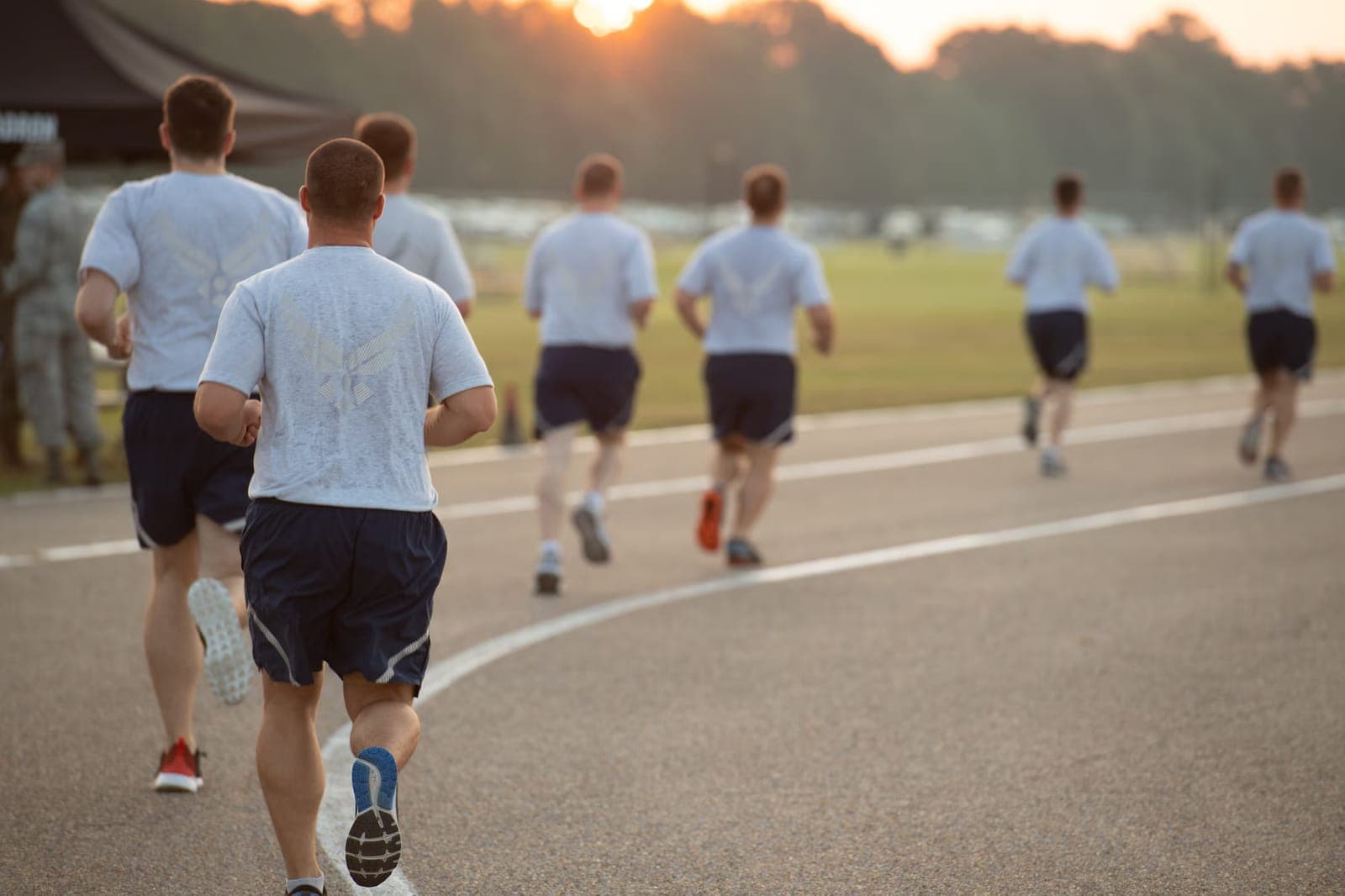
- Cardio - your choice: the 2-mile run or the 20-meter HAMR (that's the High Aerobic Multi-Shuttle Run - the beep test)
You test every six months under the new system. And here's a rule change most articles missed: the original plan required the 2-mile run for at least one of your two annual tests, but a January 2026 revision made the 2-mile optional. You can take the HAMR for both assessments if the beep test is your thing. What you can't do is run the old 1.5-mile: it's fully retired from the operational test.
A 2-kilometer walk still exists as an alternative for Airmen who aren't medically cleared to run - that one is a pass/fail against a maximum time for your age group, not a point score.
Never seen the HAMR? It's a 20-meter shuttle run to a beep that keeps getting faster. Here's what it looks like in practice:
How is the PFRA scored?
The Air Force uses a composite score out of 100 possible points:
| Component | Max Points |
|---|---|
| Cardio (2-mile run or HAMR) | 50 |
| Body composition (WHtR) | 20 |
| Strength (push-ups) | 15 |
| Core (sit-ups/crunch/plank) | 15 |
| Total | 100 |
To pass, you need two things:
- A composite score of 75 or better
- The minimum score in every single component
That second rule catches people. You can post a passing composite and still fail the whole test because you tanked one component. The minimums are printed right on the charts (the cardio component alone has a 35-point floor - the Air Force is not going to let you walk the run and make it up with push-ups). The charts are age- and sex-specific, same as always, and there's a separate, tougher, single standard for Special Warfare and EOD career fields.
Score categories still work the way you remember: 90 or better is Excellent, 75 to 89.99 is Satisfactory, and below 75 (or any missed minimum) is Unsatisfactory. You'll look at these charts a thousand times in your career - get familiar with your age bracket now.
Want the changes explained out loud? This breakdown covers the new test and how it fits into the bigger BMT overhaul:
The waist measurement is back (sort of)
Before you panic: this is not the old tape-test-your-waist-and-pray abdominal circumference measurement. The new body composition component is your waist-to-height ratio - waist in inches divided by height in inches. That's it. A 34-inch waist on a 5'10" (70-inch) frame is 34 ÷ 70 = 0.49, which scores the full 20 points.
The scoring bands map to health risk: 0.49 and below is low risk and full points, the high-risk zone starts around 0.55, and at 0.60 or above you score zero for the component. The nice part about a ratio: you know exactly where you stand before test day. No surprises, no "the tape guy measured me weird." Grab a tape measure at home and do the math.
Now the bad news…failing PT tests
Serious time. There are major consequences to failing PT tests.
An unsatisfactory score opens the door for your commander to take administrative action, and the actions escalate the more you fail:
- Verbal counseling
- Letter of Counseling
- Letter of Admonition
- Deferred promotion
- Up to and including administrative separation
And it's not just failing the test itself - commanders also document unexcused failures to participate: skipping a scheduled assessment, blowing off a fitness appointment, or not completing mandatory intervention programs after a failure. All of it counts against you.
You do not want to be in these positions. The Air Force WILL NOT hesitate to act because you can't pass the PT test - fitness is treated as a readiness issue, not a suggestion.
How do I prepare for the new test?
The playbook didn't change just because the test did: consistency beats cramming, every time. The whole point of the redesign - straight from Air Force leadership - is to push Airmen toward year-round fitness habits instead of the panic-train-two-weeks-out routine we've all witnessed (or, ahem, done).
Two practical adjustments for the new format:
- Train the 2-mile. It's not just "the 1.5 but longer" - pacing a 2-mile run is a different animal, and it's now the centerpiece of your score at 50 points.
- Pick your components early and train those. Choices are a gift. If your sit-ups are ugly but you can hold a plank all day, train the plank and take the plank. Know which options score best for your body before test day, not during it.
Does the new test apply at BMT?
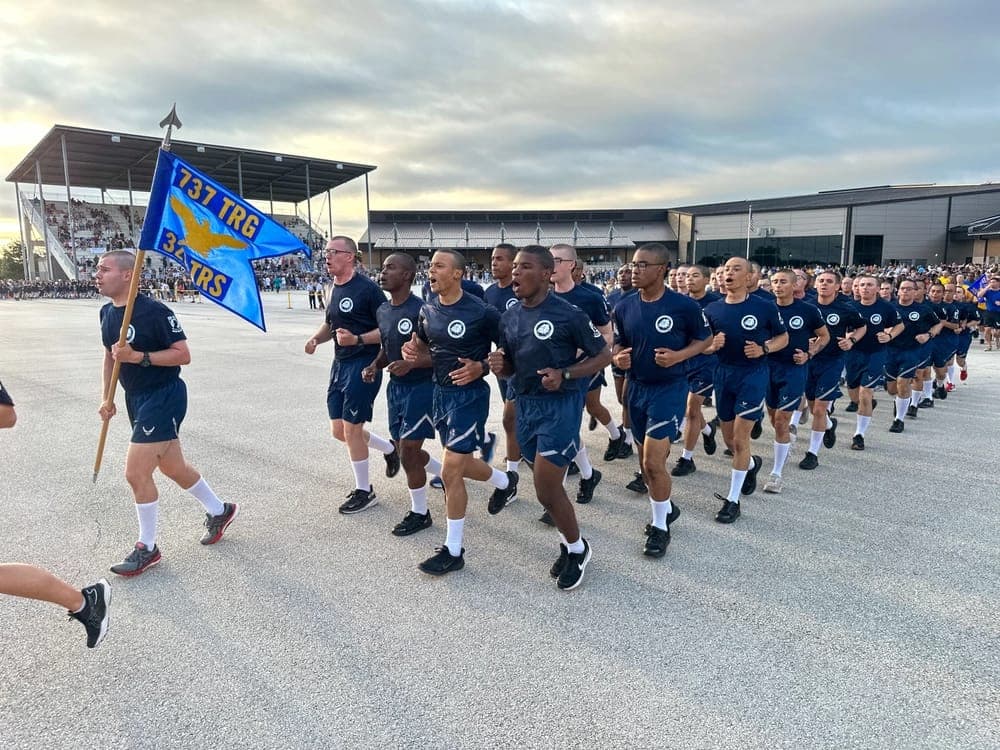
No - and this surprises people. Basic Military Training runs its own PT program, and trainees still test on the classics: push-ups, sit-ups, and the 1.5-mile run, assessed at least three times during training (weeks one, three, and five), with a composite score of 75 to graduate.
In fact, BMT moved in the opposite direction of the operational force: in April 2025 the Air Force eliminated the alternate components at BMT - no hand-release push-ups, no crunch or HAMR substitutions for trainees. Fail a component and you retake the whole test, original components only. The stated reason: keeping one consistent standard across the training pipeline. Second Air Force (which owns BMT and tech training) maintains its own fitness program guidance, separate from the PFRA.
So if you're pre-BMT, here's the honest answer on what to train: the 1.5-mile, push-ups, and sit-ups get you through basic - then the 2-mile is waiting for you at your first duty station. Train both distances and you'll never be surprised. The full BMT PT program - run ability groups, the actual workouts they use at Lackland, what happens if you fail an assessment there - is covered in Air Force BMT PT Test: the Exact Standards to Graduate.
Here comes the motivational speech
Listen, I am a FIRM believer that just about anyone can pass this test with honest preparation. The Air Force will train you and instill the confidence you need to be a successful Airman - including not just passing the PT test but excelling at it. Knowledge is power, and by reading this, you've just been empowered. Now, go for a run and do some push-ups!! I believe in you.
And if you want the complete picture of Air Force fitness - the BMT PT program, the run ability groups, the workouts they actually use at Lackland, and everything else about your first year - it's all in the free AF099 Basic Training course right here on the site.
Want more?
- Air Force updates scoring charts for new fitness test (Air & Space Forces Magazine)
- Twice-a-year PT tests and 2-mile runs coming in 2026 (Air & Space Forces Magazine)
- Air Force cuts alternate PT drills at BMT (Air & Space Forces Magazine)
- Air Force modernizes physical fitness program (official release)
- Official PFRA scoring charts, effective 1 March 2026 (PDF)
- The governing fitness manual is DAFMAN 36-2905 - an updated edition covering PFRA specifics was pending publication as of this writing; check e-publishing.af.mil for the current version.
Keep Reading
Air Force BMT PT Test: The Exact Standards to Graduate (2026)
What it takes to pass the BMT fitness test: the 75-point composite, run/push-up/sit-up scoring, week-5 final eval, run groups, and what happens if you fail.

The BMT End of Course (EOC) Test: What's on It and How to Pass
Yes, there's a final exam at Air Force basic training. The BMT EOC test explained: 100 questions, the 22 subjects covered, passing scores, and how to study.
Thinking of Enlisting in the Air Force?
A starting guide for anyone thinking of enlisting in the Air Force: questions to ask, mistakes to avoid, recruiting, job selection, pay, and benefits.

How to Write to Your Trainee at Air Force BMT (Exact Mailing Address Format)
The exact BMT mailing address format at JBSA-Lackland, how to get your trainee's specific address, when mail arrives, and who to call in an emergency.