Thinking of Enlisting in the Air Force?

Table of ContentsShow
- 10 Questions to ask before you decide to enlist
- 5 mistakes to avoid
- Air Force Recruitment Process
- Prescreening and Eligibility
- Air Force medical standards worth knowing
- Air Force Recruiters
- Air Force Job Selection Process (DEP)
- How job assignments work at BMT
- Obtaining additional rank for qualifying events
- Basic Training
- Air Force Pay and Retirement
- Education Benefits
- Assignment process overview
- There is a LOT more to learn!
- Next Steps...
Choosing to enlist in the Air Force is a big deal, and it's not something you should rush into.
My own story of enlisting isn't exactly the most uplifting. I just about failed high school and thought I was too dumb for college. How I got past that limiting belief is a story for another time.
But here's the thing…I ended up in the Air Force kind of by accident. It was the first recruiter's office I walked into in Amarillo, TX. I could have just as easily joined the Marine Corps or Army. I didn't know much about what I was getting into, and didn't even know the difference between enlisted and officer.
I want to make sure you don't find yourself in that situation, and I know that you won't because you are here doing your research.
This guide is just a starting point to get you thinking more about what enlisting in the Air Force means. I'm just touching on the basics here, but hopefully, it gets you asking the right questions and gives you a bit of insight into what to expect.
Let's kick things off with some thinking about what this all means for you.
10 Questions to ask before you decide to enlist
These questions are a product of my opinion! They are questions that I would ask you if you came to me with the questions about what branch to join. Weigh them just like you would any other opinion!
1. What are your career/life goals?
Understanding your long-term career and life aspirations helps ensure that your choice to enlist aligns with your personal and professional development goals. Clarifying these goals can guide you towards specific roles within the Air Force that complement your future plans.
2. Why do you want to join the military?
Reflect on your motivations for joining. Are they rooted in a desire for personal growth, a sense of duty, or external influences? Are your parents, spouse, grandparents, friends pressuring you? If the decision isn't yours alone then run the other way.
3. What can you qualify for and how fast do you want to leave?
Your qualifications, such as ASVAB scores, impact the roles available to you. Understanding this can help set realistic expectations about your career path in the Air Force and how quickly you can begin. The more flexible you are, then faster you can ship.
4. How much of the rough and tough military environment do you want?
Consider how immersive of a military experience you're seeking. If you want the full experience, then you might consider the Army, Navy, or Marine Corps. The Air Force is still a military branch, but it is a little more relaxed than our sister services (I'm painting with a broad brush on this one...AFSCs have their own cultures).
5. Do you want something more combat focused?
While the Air Force is less associated with direct combat roles, they do exist. Your interest in these positions should reflect your comfort with the responsibilities and risks involved.
6. Is quality of life important to you?
The Air Force is known for high quality of life, including housing, on-base facilities, and community. Weighing this factor can influence your decision to choose the Air Force over other military branches.
7. How bad do you want to be by the water?
If you want the water, then you better go to the Navy or Coast Guard! Though the Air Force does have water locations, there aren't many.
8. What is your take on traveling/living overseas?
The Air Force has more bases overseas than all of the other services. Depending on your job (AFSC), you could very well be stationed overseas. If you want to stay near a certain location, then you might consider the Air Force Reserve, or the Air National Guard.
9. Do you want to eventually get your commission?
If you aspire to transition from enlisted to officer, consider how the Air Force supports this goal through programs like ROTC or OTS. These commissioning programs are very competitive. But also know that the Navy has more commissioning programs than the Air Force.
10. Do you want to deploy?
Consider your willingness to deploy, which is a significant aspect of military service. Deployment is not only about willingness but also about being prepared for the physical and emotional challenges it entails.
Finally, think about these things, but don't fall victim to "analysis paralysis." Your desires, goals and priorities change as you grow older.
5 mistakes to avoid
Over the years, I've seen some common mistakes being made by those thinking of enlisting. I've even seen them while wearing the uniform. Here are a few of them for you to consider while making your decision.
1. You think you're someone special.
I don't intend this to come off as negative, but there isn't an easy way to say it. No one is going to take an interest in your career more than you will. Don't expect the Air Force, leadership, supervisors, or your friends to bend over backwards for you because you desire to do something. Take your career/life into your own hands.
2. You are only joining because of the education
While the Air Force offers great educational benefits, enlisting requires a commitment to service and mission beyond personal gain. There is a reason why they call it "serving our nation."
3. You have no respect for authority
A respect for the chain of command is fundamental in the military. Disregarding this will be at your own risk. You'll learn military bearing before and during BMT, but don't lose it when you get to your duty station.
4. You are not teachable
This is something that will serve you well in the Air Force and in life. If you are not teachable, then you have a closed mindset and it hinders personal growth. This will ultimately lead to mission failure.
5. You think you'll never go to war
No one thought 9-11 was going to happen. Every generation has their 9-11. Yours may just happen while you are serving. Will you be ready when that happens?
Air Force Recruitment Process
Enlisting in the Air Force can be a daunting journey. There are a lot of actions and milestones you're going to have to accomplish. Below is an interview I did with JodywithaWhy. Jody is a YouTuber who was also a Recruiter Instructor at the time. What that means is that he teaches Recruiters how to do what they do and he's very knowledgeable.
Be sure to check out his channel because it has a wealth of great information.
Prescreening and Eligibility
Enlisting in the Air Force can be a daunting journey. There are a lot of actions and milestones you're going to have to accomplish. But first, check out what can disqualify you from enlisting in the Air Force to determine if you are even eligible to enlist.
Disclaimer!! Only Air Force Recruiters can conduct initial interviews for enlistment, as per AFMAN 36-2032, section 3.6, to assess if an applicant might qualify. However, even if someone meets all requirements, they can still be denied entry into the Air Force if the recruiter, with agreement from the Recruiting Flight Chief or ANG Recruiting and Retention Manager, believes it's not in the Air Force's best interest.
Air Force medical standards worth knowing
ADHD: Individuals who have taken ADHD medication more than once daily or for over 24 months after turning 14 can still apply for a waiver. They must have shown stable academic or work performance without medication for 15 months before joining the Air Force, and they must meet other specified requirements.
Asthma: To objectively assess candidates with a questionable history of asthma, the Air Force employs the Methacholine Challenge Test. Those who pass this test may be eligible for a waiver.
Pre-enlistment marijuana use: The Air Force has updated its policy to eliminate specific limits on past marijuana use for enlistment eligibility. However, any diagnosis of substance abuse or addiction is disqualifying. Legal issues related to marijuana use before joining will be evaluated on a case-by-case basis and could affect eligibility. The Air Force enforces a strict policy against drug use post-application; any use after the initial interview will lead to disqualification.
Source: AF evolves policies to access more talent, maintain high standards
Medical standards evolve, and waivers are evaluated case by case. Your recruiter will have the current answer for your specific situation, so don't rule yourself out before asking.
Air Force Recruiters
Navigating the Air Force recruitment process can sometimes feel overwhelming, and finding the right recruiter might pose its own set of challenges. Here's a more user-friendly take on understanding the recruitment process and what to do if you're facing issues.
Recruiters play a pivotal role in shaping the future Air Force, but they're incredibly busy. If you're looking to get in touch with one, there are multiple ways to do it: through clicking links provided by the Air Force, sending an email, making a phone call, or even visiting their office in person. Keep in mind, they might ask you to schedule another time if you drop by unannounced, but it's worth the effort.
For those already in the loop with a recruiter but finding communication has gone quiet, consider a few reasons why. Your recruiter might be on their annual leave, as everyone in the service gets 30 days off. They could also be on TDY (temporary duty) for work-related training or attending an event, which means they're temporarily out of reach.
Remember, recruiters juggle multiple candidates and responsibilities, so patience is key. There's also a chance they've moved to a different role or location. Ideally, they would have transitioned you to another recruiter smoothly, but sometimes things slip through the cracks. You're going to have to get used to this if you decide to enlist.
If you're struggling to reach your recruiter by phone, try texting, emailing, or visiting the office again. Your information is kept in a central database, making it tricky to switch recruiters without a heads-up.
And if you're thinking of leaving the Delayed Enlistment Program (DEP), it's crucial to communicate this directly. Ghosting your DEP meetings isn't just inconvenient; it disrupts the planning and effort invested by your recruiter and the Air Force team.
Air Force Job Selection Process (DEP)
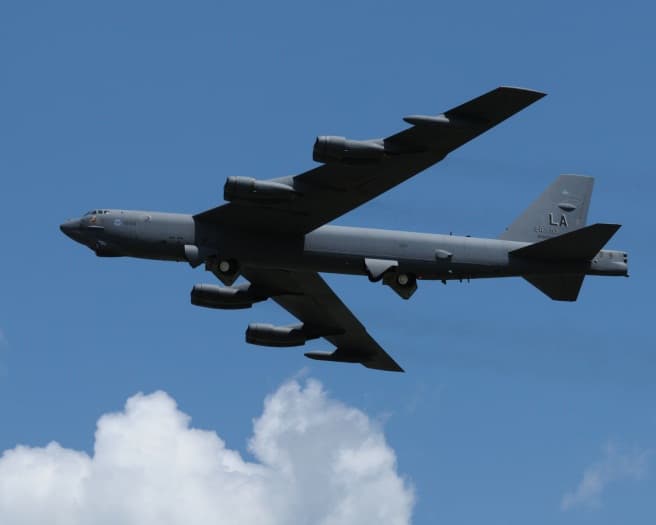
In today's Air Force recruiting world, flexibility is key, especially when it comes to the job you might end up doing. Despite the varied job possibilities hinted at in advertisements, the Air Force's main goal is straightforward: to prepare for and engage in combat to protect our nation.
This mission revolves around three core areas: Air Superiority, Global Strike, and Rapid Global Mobility, supported by a fleet of roughly 5,500 aircraft. Keeping these aircraft flying involves a huge team effort, particularly in aircraft maintenance, which represents a large portion of all enlisted personnel. These AFSCs are currently under significant pressure due to staffing needs, meaning a lot of new recruits find themselves working in the 2A (aircraft maintenance) field.
Another critical area is the 3P0X1 - Security Forces AFSC, responsible for defending Air Force bases. This role, being the largest single Air Force Specialty Code (AFSC), is also in high demand for new recruits.
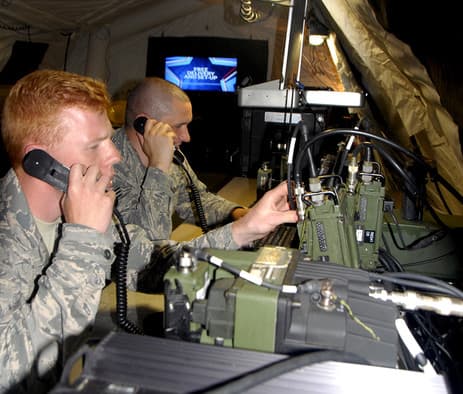
While many people dream of joining the Air Force to work in communications, intelligence, medical, or as aircrew, these roles make up a smaller portion of the force and are not as urgently in need of additional personnel.
When you go through the Military Entrance Processing Station (MEPS), you'll pick a list of preferred jobs along with an open category based on your aptitudes: mechanical, administrative, general, or electronic.
You're guaranteed to get a job from your list or within your selected open category. However, availability can vary widely from month to month, and while some recruiters may let you wait for your top job choice in the Delayed Enlistment Program (DEP), most will offer you positions as they become available.
The selection process each month can feel quite random, with job slots fluctuating and assignments to specific roles being made without direct recruiter input. This process underscores the unpredictable nature of Air Force recruitment and the importance of being open to various roles.
In essence, while you might have your heart set on a specific job, the reality of current staffing needs (Needs of the Air Force...you'll hear that a lot), especially in critical fields like aircraft maintenance and security, may require a different path. So, keep an open mind and be flexible.
How job assignments work at BMT
When you head off to Basic Military Training (BMT), your job assignment begins right from the start. Initially, at the Military Entrance Processing Station (MEPS), you sign a contract that aligns you with one of the major aptitude areas (Mechanical, Administrative, General, and Electrical), without guaranteeing a specific job.
In the second week of BMT, the exploration phase kicks in. You'll dive into the available job options within your aptitude area. This involves reviewing detailed descriptions for each Air Force Specialty Code (AFSC) on your aptitude area job sheet and prioritizing the roles you're most interested in.
By the third week, it's time to refine your list. You'll sit down with a job interviewer to ensure you qualify for the jobs you've selected. The qualified AFSCs are then officially loaded into the job assignment system on your behalf.
The big moment comes in the fifth week of BMT, when the system assigns you to an AFSC within your aptitude area. You still won't know what your AFSC is at this point.
Finally, in the seventh week of BMT, you'll receive your tech school orders, which include the job you've been assigned.
For those with an open category, the assignment process is a bit more complex. It factors in your job preference list, desirable traits (like relevant high school classes, job experience, or certifications as defined by the AFSC's functional manager), ASVAB scores, and how you rank against other trainees. If your top job choice isn't available, the system will systematically work through your list to match you with the best available option.
This information was posted on the r/AirForce wiki, but it's unknown how dated it is. But, it should give you an idea of what the objective data says, even in today's recruiting environment.
Current match percentages:
- 80% are getting one of their top 5 choices
- 87% are getting a job choice on their list
Aptitude Area Info:
- Roughly 65% of recruits will have a guaranteed job when they leave for BMT, 35% will have an open category or Aptitude Area.
- 100% of Security Forces jobs are guaranteed jobs and filled before coming to BMT. The AFSC is listed on the General AA job sheet for back fill reasons only.
- 60% of medical career fields are filled at BMT with the General aptitude area.
- Trainees with AAs will be able to see the different shred outs for each AFSC. Those with guaranteed jobs will have shred outs chosen for them.
One thing to keep in mind is that available jobs are first given to those in Basic Training, then they are given to recruiting stations to assign to those in DEP. So, a lot of the good jobs may have been given first to them. This should be a factor to weigh in your job selection choices. In a sense, if you are interested in a smaller manned AFSC, then the openings may only be at Basic Training.
Obtaining additional rank for qualifying events
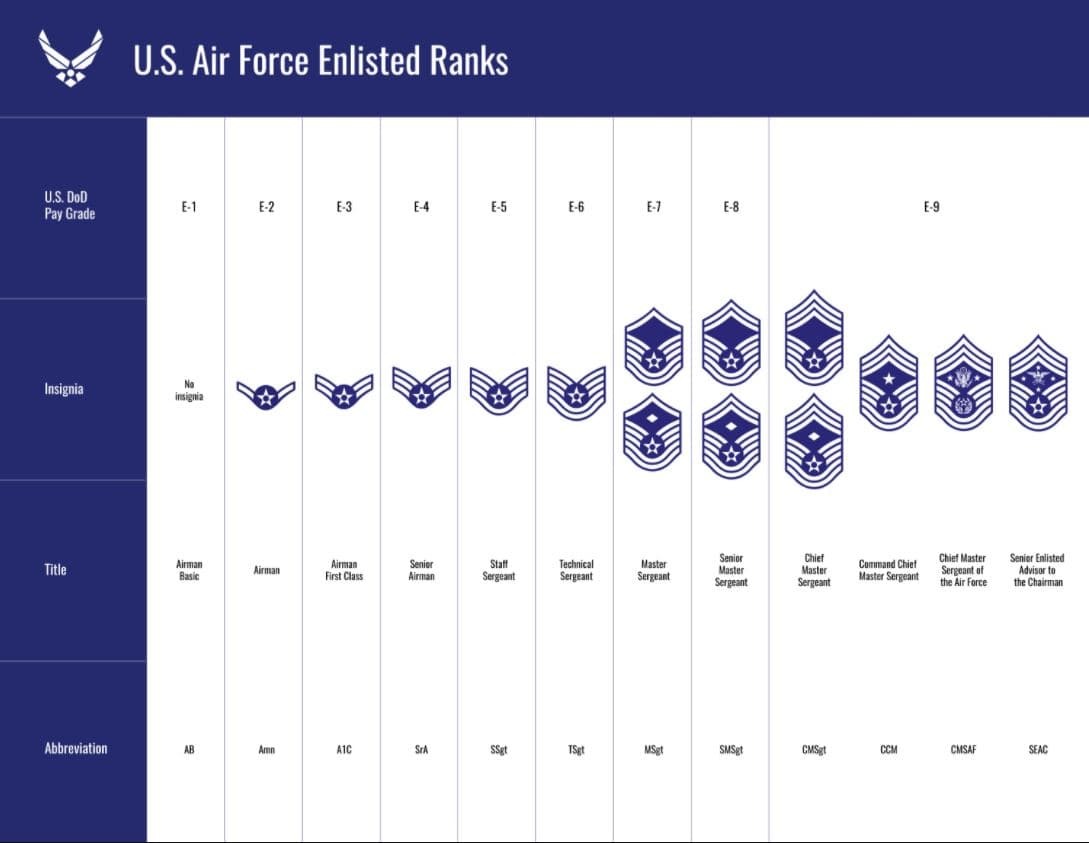
Airman First Class (A1C) / E-3
- If you are a Civil Air Patrol (CAP) cadet who earned the General Billy Mitchell, Amelia Earhart, Ira C. Eaker, or General Carl Spaatz Award, or the Headquarters (HQ) CAP submits a letter certifying successful completion of the award. (Notes 1 and 2)
- You have satisfactorily completed the entire three (3)-year high school Junior Reserve Officers' Training Corps (JROTC) program, you are a high school graduate, and present an official certificate of completion from the service component or the school conducting the program. (Notes 1 and 2)
- You are a former service academy student who has completed at least one year at the academy. (Note 1)
- You are non-prior service and enlist under the Critical Skills Promotion program as part of the fiscal year recruiting and retention initiatives for the fiscal year in which the applicant enlists. (Notes 1 and 2)
- You have at least 45 semester hours or at least 67 quarter hours of accredited junior college/college credits. (Notes 1 and 4)
Airman (Amn) / E-2
- You have completed two years of a high school JROTC program and are a high school graduate. Present written evidence of program participation from the service component or the school conducting the program. (Notes 1 and 2)
- You are a former service academy student who has completed at least 90 days but less than one year at the academy. (Notes 1 and 3)
- You have at least 20 but less than 45 semester hours or, at least 30 but less than 67 quarter hours of accredited junior college/college credits. (Notes 1 and 4)
- You have received the Boy Scout Eagle Award or Girl Scout Gold Palm. (Notes 1 and 2)
Notes
- Every effort is made to ensure the applicant is enlisted into the appropriate grade at the time of the enlistment process.
- RegAF Airmen have up to one year after arrival at their first permanent duty station to apply for a grade correction if an error exists. Send requests through the military personnel flight to AFPC Officer Accession Branch (AFPC/DP2LT) for consideration.
- AFR and ANG Airmen requests may be completed up until BMT graduation date.
- An individual enlisted in their senior year of high school is enlisted in the grade of airman basic, but an exception to policy may be authorized. Upon graduation from high school and receipt of the diploma or transcripts, the individual may be promoted to the grade reflected in Column B, with an effective date of graduation. For RegAF these actions are completed prior to entering BMT. For AFR and ANG, these actions may be completed up until BMT graduation date.
- Unless separated for cause or highest grade held was airman basic.
- Certification of completed college semester hours is necessary. Examples are a certified college transcript or a validated letter from the college.
Basic Training
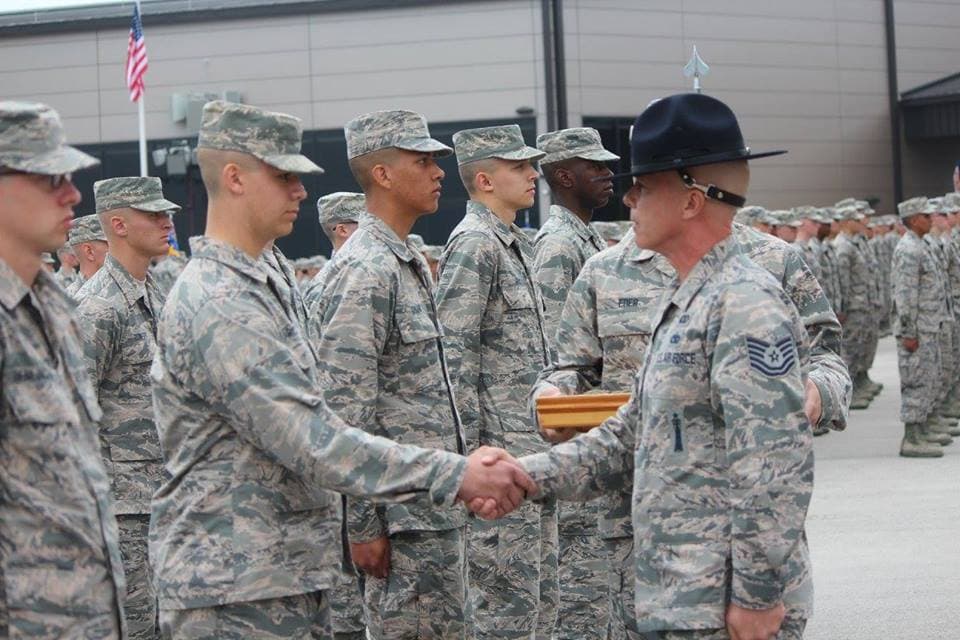
I'm not going to go into this too much for 2 main reasons. There is a ton of information out there and the second, Basic Training tends to get too much attention for what it is. 7.5 weeks of training (call it 8.5 door to door with Zero Week) out of the 208 to 312 weeks you'll be enlisting for. If you want to see how those weeks actually break down, I wrote up how long Air Force Basic Training really is.
There's no doubt that your basic training experience will be with you for the rest of your life, but it's a very small snapshot in your Air Force time.
Here's some great resources to get your research going:
- Air Force Recruiting BMT Overview: https://www.airforce.com/training/military-training/bmt/overview
- Official AFBMT website: https://www.basictraining.af.mil/
- The free BMT lessons right here on Forever Wingman
Air Force Pay and Retirement
Pay
There is a lot to learn about pay and retirement, but to get you started, I wrote a blog article on enlisted pay. You'll want to read that in detail. The short of it is that you are not going to be rich, but you are going to be very comfortable. If you learn how to manage your finances, and live below your means, then you can easily serve 20 years and come out very comfortable.
Retirement (Blended Retirement System)
The Blended Retirement System (BRS) combines a pension with the Thrift Savings Plan (TSP), a retirement savings plan.
- Pension: After 20 years of service, you get a monthly pension calculated as 2% of your average highest 36 months of basic pay times years of service. You can opt for a lump sum payment at retirement in exchange for reduced monthly payments until Full Retirement Age.
- Thrift Savings Plan: The DoD contributes 1% of your basic pay to your TSP starting 60 days after you begin service, and matches up to 4% more after two years of service, making a total contribution of up to 5% if you also contribute 5%. You're fully vested after two years.
- Continuation Pay: A one-time bonus is available between your 8th and 12th years of service for committing to four more years. The amount is variable.
Please keep in mind that these are examples only and calculations are simplified. Time in service, rank, and other factors will all differ from person to person.
Pension Calculation Example: Let's say you retire after 20 years of service. If your average highest 36 months of basic pay is $4,000:
- Pension Formula: 20 years of service × 2% × $4,000
- Monthly Pension: 20 × 0.02 × $4,000 = $1,600 per month before any deductions or considerations for taking a lump sum option.
Thrift Savings Plan (TSP) Contribution Example:
- Service Member's Basic Pay: $3,000 per month
- DoD Automatic 1% Contribution: 1% of $3,000 = $30 per month
- Service Member's Contribution: Decides to contribute 5% of their basic pay = $150 per month
- DoD Matching: Matches up to an additional 4% of the service member's contribution (since the member is contributing 5%, they get the full match) = $120 per month
- Total Monthly Contribution to TSP: Service member's contribution ($150) + DoD automatic contribution ($30) + DoD matching ($120) = $300 per month
Continuation Pay Example: For a mid-career bonus, let's say an Airman receives continuation pay at their 12th year of service. If their monthly basic pay is $4,000:
- Continuation Pay: Assuming the rate is 2.5 times the monthly basic pay = 2.5 × $4,000 = $10,000 as a one-time bonus for committing to an additional four years of service.
You can read more on the BRS at the Air Force Benefits site. There are also Guard/Reserve articles on this topic as well.
Education Benefits
The Post-9/11 GI Bill offers a significant benefit for eligible, active duty Airmen, providing up to 36 months of support for various educational and training endeavors outside the Air Force.
This can include pursuing undergraduate and graduate degrees, vocational and technical training, as well as assistance for tutorials, books, supplies, and a monthly housing allowance.
And thanks to the Forever GI Bill, anyone who separates on or after January 1, 2013 (which will be you) has no expiration date on these benefits. The old 15-year use-it-or-lose-it limit no longer applies. They can also be transferred to spouses or dependent children, offering a flexible and valuable resource for furthering education.
For more reading on the Post-9/11, check out the VA site: https://www.va.gov/education/
In addition to the GI Bill, the Air Force Tuition Assistance (TA) program supports active duty personnel in seeking voluntary, off-duty educational opportunities. The TA program covers 100 percent of tuition costs up to $250 per semester hour, with an annual cap of $4,500.
This can be applied towards courses and degree programs of an academic or technical nature, available through two- or four-year institutions, whether on base, off base, or via correspondence.
This initiative underscores the Air Force's commitment to fostering continuous learning and professional growth among its ranks.
For more reading on the Air Force TA program, check out this site: https://www.myairforcebenefits.us.af.mil/Benefit-Library/Federal-Benefits/Military-Tuition-Assistance-(MilTA)
Assignment process overview
While the needs of the Air Force come first, Airmen have the opportunity to list their assignment preferences. This includes preferred locations and roles. While not guaranteed, the Air Force Personnel Center (AFPC) does consider these preferences when making assignment decisions.
This is primarily the reason your assignment preference sheet has the nickname "dream sheet."
For instance, if you are a 2A3X3 - Tactical Aircraft Maintenance, you would only go to bases where there are F-15's and F-16's. Similarly, the Air Force won't station you at a base where there are no vacancies in your AFSC. Ultimately, the Air Force's needs prevail.
If there's a tie in necessity between two bases, and you've shown a preference for one, you might just end up there. Otherwise, it's wise to stay flexible and try not to have your expectations set too high.
As for if a base is good or bad…that varies widely among individuals. What one person finds appealing about a base might be exactly what another dislikes. Everyone has unique tastes, family circumstances, hobbies, and objectives.
So, rather than approaching a new assignment with preconceived notions based on others' opinions, it's beneficial to keep an open mind. Embracing your new environment with positivity is key to making the most of your assignment.
There is a LOT more to learn!
As you can see, there is a lot to learn about when it comes to your future career in the Air Force. There isn't anything stopping you from starting to dig in a little deeper.
Take a look at all of the links and source documents. When in doubt just google something that doesn't make sense.
If you need some assistance in researching Air Force careers and life in the Air Force, take a look at the free AF101 Air Force Knowledge course and the AFSC explorer. They're the best resources I could make to help those who are on the path to enlistment.
Next Steps...
Forever Wingman has a lot of great information on the many Air Force jobs, but I'm not the only place you should be looking. Below are a bunch of websites that will help you in your research.
- Air Force Recruitment: https://www.airforce.com/
- Official Air Force website: https://www.af.mil/
- Air Force Basic Training website: https://www.basictraining.af.mil/
- Air Force Personnel Center: https://www.afpc.af.mil/
- Air Force Publications Library: https://www.e-publishing.af.mil/
- Air Force Benefits: https://www.myairforcebenefits.us.af.mil/
- Veterans Affairs (you'll be a vet one day): https://www.va.gov/
Keep Reading
The $1,200 GI Bill Decision You Make During BMT (Days 180-270)
Six months into the Air Force, you must choose: stay in the Montgomery GI Bill or opt out forever. What the DD Form 2366 decision means and how to choose.
Signs that the Air Force is NOT for you
Signs that the Air Force is NOT for you

GI Bill and Tuition Assistance
GI Bill and Tuition Assistance
Air Force BMT PT Test: The Exact Standards to Graduate (2026)
What it takes to pass the BMT fitness test: the 75-point composite, run/push-up/sit-up scoring, week-5 final eval, run groups, and what happens if you fail.