4T0X1 · Medical
Medical Laboratory
Also known as: Lab
Last updated
At a glance
- ASVAB minimums
- G 62
- Tech school
- Fort Sam Houston, Texas · 268 days
- Career field size
- 932 Airmen
- Possible bases
- 52 stateside · 18 overseas
- Civilian equivalent pay
- $36k–$92k
Table of ContentsShow
What does the Medical Laboratory career field do?
Tests and analyzes specimens of human origin and other substances by established scientific laboratory techniques to aid in diagnosing, treating, and preventing diseases or to support medical research; and supervises medical laboratory activities. Related DoD Occupational Subgroup: 131100.
Duties and responsibilities
- Performs hematological tests and urinalyses. Accomplishes standardized quantitative and qualitative evaluation of erythrocytes, leukocytes, and thrombocytes. Examines stained blood smears microscopically and refers any abnormal cells to superiors. Performs coagulation studies on human blood and plasma. Performs chemical, macroscopic, and microscopic urine specimen examinations.
- Performs chemical analysis. Analyses human material or other products submitted to the laboratory, using photometric, calorimetric, titrimetric, radioisotope, or any other chemical or physical procedures applicable to clinical chemistry. Calibrates and maintains all instruments. Makes necessary calculations and reports data to superiors. Reviews all chemistry procedures to ensure current procedures are used.
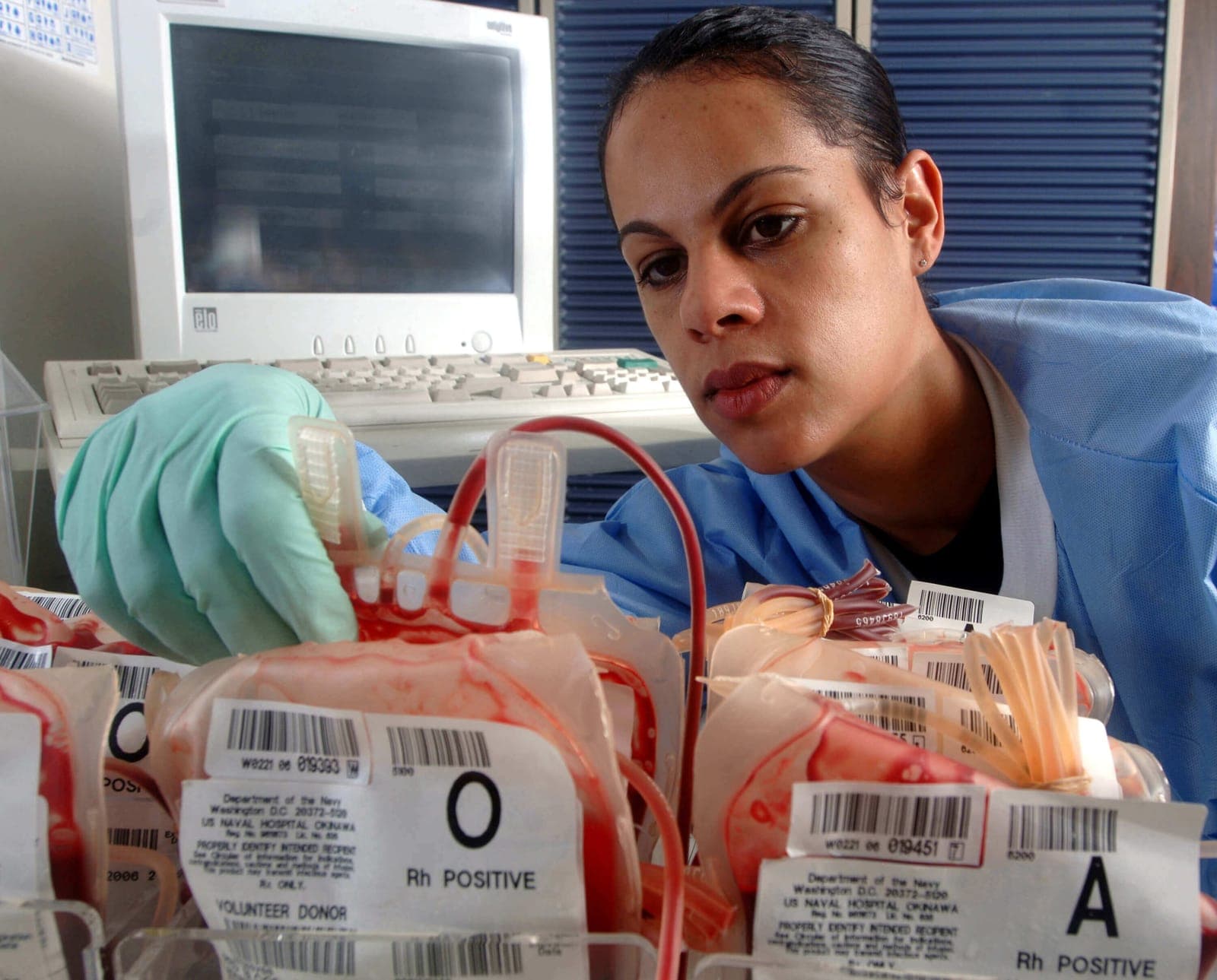
- Performs blood bank duties. Draws and processes blood aseptically by standardized techniques. Completely types donors' and recipients' blood; assists in cross matching blood to establish donor-recipient compatibility, reporting any abnormal reactions to immediate supervisor. Prepares blood derivatives. Accomplishes all techniques required for blood transfusion service.
- Performs microbiological and serological tests. Conducts procedures to isolate and identify bacteria by gross and microscopic examination, staining, biochemical and immunological procedures, or any other determination of growth characteristics. Performs sensitivity test on pathogenic bacteria. Assists in identifying viruses and fungi. Applies parasitological techniques to recover and identify parasites. Applies standard serological tests for identifying antibodies specific to diseases.
- Accomplishes general medical laboratory duties. Conducts bacteriological and chemical examination of food products, water, dairy products, and sewage incidental to preventive and veterinary medicine programs. Takes all necessary precautions to maintain safe conditions in laboratory for both laboratory and hospital personnel. Performs preventative maintenance procedures on laboratory equipment. Performs and evaluates laboratory quality control procedures. Prepares reagents for use in test performance.
- Plans, organizes, directs, coordinates, and evaluates medical laboratory activity. Composes local medical laboratory regulations. Applies continuous effective internal quality control of all medical laboratory departments. Advises superiors regarding status and adequacy of equipment, supplies, personnel training, and operating efficiency. Coordinates with other activities, agencies, and organizations. Resolves problems about operating medical laboratory activities. Inspects medical laboratory activities. Furnishes deficiency reports and outstanding accomplishments to superiors. Interprets inspection findings and recommends corrective actions.
- Performs medical laboratory functions. Assists medical officers and allied scientist in research assignments in broad pathology field. Prepares tissue for electron microscopy. Directs toxicology procedures performance incident to aerospace pathology and forensic medicine programs. Assists in epidemiological investigations. Assists biological warfare officer in developing procedures for detecting bacteriological agents incident to biological warfare.
Specialty qualifications
Knowledge. Knowledge is mandatory of hematology, urinalyses, clinical chemistry, microbiology, blood banking, immunology, medical terminology, medical ethics applicable to performing medical laboratory procedures, medical laboratory management and medical administrative principles, pathology and histopathology fundamentals, and routine equipment maintenance.
Education. For entry into this specialty, completion of high school or college courses in algebra, chemistry and biological sciences (e.g. anatomy and physiology, botany, general biology, microbiology, zoology, etc.) is mandatory.
Training. For award of AFSC 4T031, completion of the basic medical laboratory course is mandatory.
Experience. The following experience is mandatory for award of the AFSC indicated:
- 4T051. Qualification in and possession of AFSC 4T031. Also, experience in performing functions in urinalyses, hematology, bacteriology, serology, and chemistry.
- 4T071. Qualification in and possession of AFSC 4T051. Also, experience performing or supervising functions such as work normally performed in a routine clinical laboratory (class A dispensary or hospital); specialty performance of tests or technical supervisory experience in clinical chemistry, bacteriology, toxicology, or virology at class A, class B, or analogous laboratory; or combination of foregoing types of experience.
Other. The following are mandatory as indicated:
- For entry into this specialty:
- Normal color vision as defined in AFI 48-123, Medical Examinations and Standards.
- See attachment 4 for additional entry requirements.
- For award and retention of these AFSCs, must maintain local network access IAW AFI 17-130, Cybersecurity Program Management and AFMAN 17-1301, Computer Security.
Civilian career paths
Comparable civilian careers for this field pay roughly $36,320 to $91,510 per year (median salaries; varies by role and location):
- Biological Technicians: $46,340
- Cytotechnologists: $54,180
- Histology Technician: $54,180
- Histotechnologists: $54,180
- Medical and Clinical Laboratory Technicians: $54,180
- Medical and Clinical Laboratory Technologists: $54,180
- Medical Scientists: $91,510
- Microbiologists: $84,400
- Phlebotomists: $36,320
ASVAB requirements
To qualify for 4T0X1, you need:
Enter your scores in the AFSC explorer and this section will check each requirement for you.
Entry requirements
Medical profile (PULHES)ShowHide
PULHES scale: lower numbers mean a stricter medical standard. Tap a letter for what it measures.
Vision requirementsShowHide
Medical disqualifiersShowHide
These screened conditions disqualify a candidate for this AFSC:
Education prerequisitesShowHide
High school courses required:
Security & backgroundShowHide
Where you could be stationed
Stateside (52)
- Altus, Oklahoma
- Barksdale, Louisiana
- Beale, California
- Bolling, District Of Columbia
- Cannon, New Mexico
- Columbus, Mississippi
- Davis-Monthan, Arizona
- Dover, Delaware
- Dyess, Texas
- Edwards, California
- Eglin, Florida
- Ellsworth, South Dakota
- F E Warren, Wyoming
- Fairchild, Washington
- Goodfellow AFB, Texas
- Grand Forks, North Dakota
- Hanscom, Massachusetts
- Hill, Utah
- Holloman, New Mexico
- Hurlburt Field, Florida
- JB Andrews, Maryland
- JB Charleston, South Carolina
- JB Langley-Eustis, Virginia
- JBSA Lackland, Texas
- JBSA Randolph, Texas
- Joint Base McGuire-Dix-Lakehurst, New Jersey
- Keesler, Mississippi
- Kirtland, New Mexico
- Laughlin, Texas
- Little Rock, Arkansas
- Luke, Arizona
- MacDill, Florida
- Malmstrom, Montana
- Maxwell, Alabama
- McConnell, Kansas
- Minot, North Dakota
- Moody, Georgia
- Mountain Home, Idaho
- Nellis, Nevada
- Offutt, Nebraska
- Robins, Georgia
- Scott, Illinois
- Seymour Johnson, North Carolina
- Shaw, South Carolina
- Sheppard, Texas
- Tinker, Oklahoma
- Travis, California
- Tyndall, Florida
- USAF Academy, Colorado
- Vance, Oklahoma
- Whiteman, Missouri
- Wright Patterson, Ohio
Overseas (18)
- Alconbury, United Kingdom
- Andersen, Guam
- Aviano, Italy
- Croughton, United Kingdom
- Eielson, Alaska
- Geilenkirchen, Germany
- Incirlik AB, Turkey
- JB Elmendorf-Rich, Alaska
- JB Prl Hbr-Hickam, Hawaii
- Kadena, Japan
- Kunsan, South Korea
- Lakenheath, United Kingdom
- Landstuhl, Germany
- Misawa, Japan
- Osan AB, South Korea
- Ramstein, Germany
- Spangdahlem AB, Germany
- Yokota, Japan
Badges & identifiers
Duty badges
The occupational badge worn by Airmen in this career field.
- Enlisted Medical Badge
Degrees & training plan
While serving in 4T0X1 you can earn an associate degree through the Community College of the Air Force:
- Medical Laboratory Technology
- Career Field Education & Training Plan (CFETP)View CFETP (PDF, opens in a new tab)
The CFETP is the official Air Force document describing this career field's full training pipeline, from tech school through advanced skill levels.
Videos, Reddit & resources
4T0X1 videos(7)
These do not reflect official U.S. Air Force views and may contain inaccuracies — negative opinions are often overrepresented online.
Medical Laboratory (4T0X1) - Air Force Careers
Airman Vision · 6/4/2025
1 of 7 videos
Reddit discussions(10)
These do not reflect official U.S. Air Force views and may contain inaccuracies — negative opinions are often overrepresented online.
Official links & resources(3)
Researching other jobs too? Every career field's videos and discussions are collected the same way — browse all AFSCs.
Frequently asked questions
- What ASVAB score do you need for Medical Laboratory (4T0X1)?
- You need General 62+ on the ASVAB to qualify for 4T0X1.
- Where can Medical Laboratory Airmen get stationed?
- 4T0X1 Airmen serve at 70 bases: 52 stateside and 18 overseas, including Alconbury, United Kingdom, Andersen, Guam, Aviano, Italy.
- How long is tech school for Medical Laboratory?
- Tech school for 4T0X1 runs about 268 days at Fort Sam Houston, Texas.
Where this data comes from
Most of the data on this page comes from the Air Force Enlisted Classification Directory (AFECD) and recruiter TTMS readouts, which are no longer released publicly. Pulling it together and keeping it accurate takes real time, so I update these pages as often as I can.
Requirements do change between updates. Before you make any decisions, confirm the details with your recruiter. They always have the latest word.