4B0X1 · Medical
Bioenvironmental Engineering
Last updated
At a glance
- ASVAB minimums
- G 51
- Tech school
- Wright Patterson, Ohio · 68 days
- Career field size
- 893 Airmen
- Possible bases
- 53 stateside · 17 overseas
- Civilian equivalent pay
- $44k–$94k
Table of ContentsShow
What does the Bioenvironmental Engineering career field do?
Applies engineering and scientific principles in anticipating, recognizing, and evaluating occupational and environmental health (OEH) hazards, also called OEH threats, in both garrison and deployed settings/environments. Helps design and recommend risk control measures and other courses of action that enable risk management decisions, and in some cases patient care strategies, to ensure force health protection. Related DoD Occupational Subgroup: 132200.
Duties and responsibilities
- Conducts preventative medicine studies and provides appropriate recommendations to reduce health risk(s) to installation personnel. Advises commanders at levels on the impact of unacceptable risk(s) to mission and provides viable courses of action to reduce and eliminate health risk.
- Enables data-driven decision making to ensure accurate OEH exposure documentation to support the occupational medicine enterprise.
- Identifies and approves potable and non-potable water sources. Analyzes local surface and ground water sources to determine the potability for both drinking and recreational purposes.
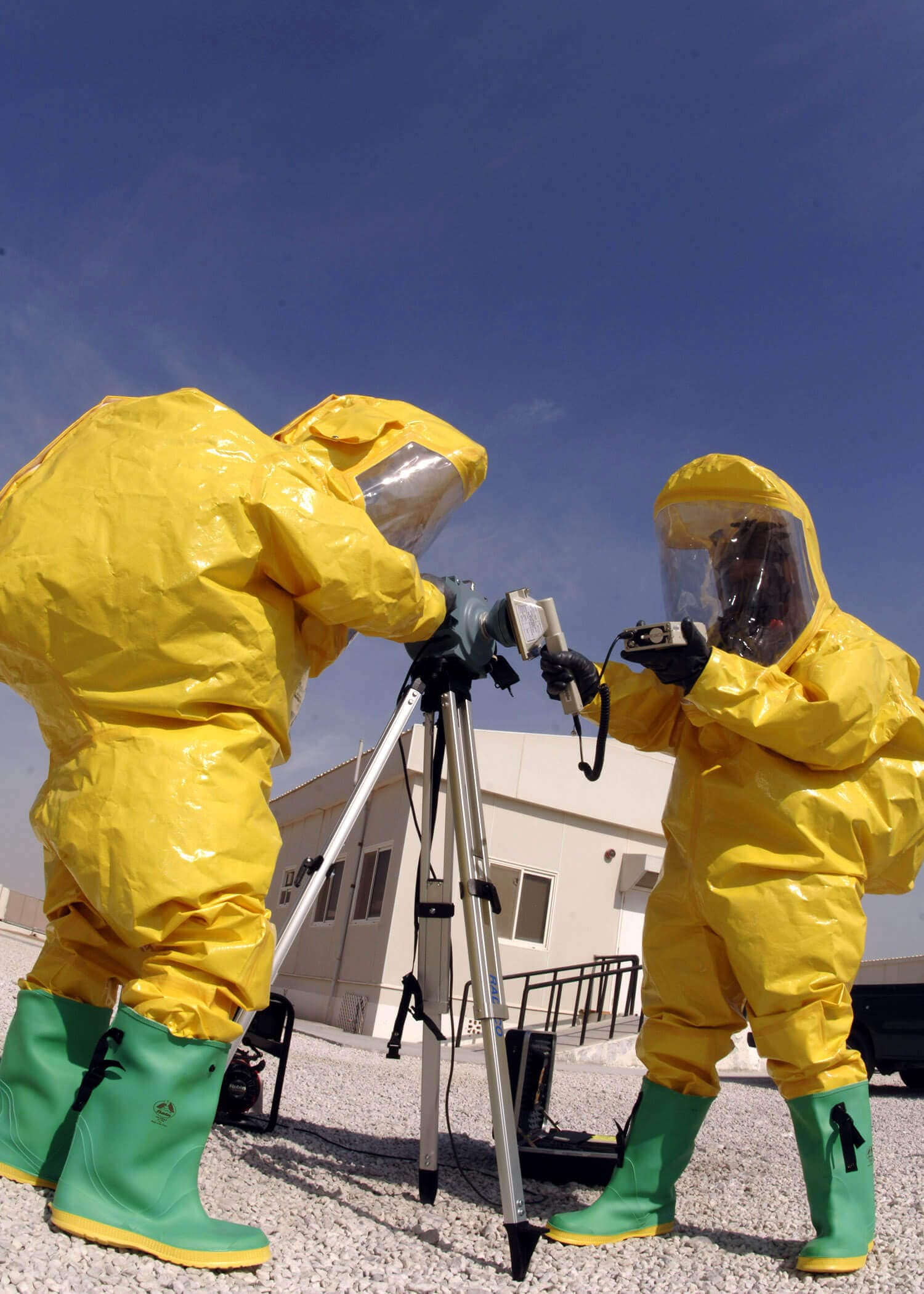
- Responds to accidents, natural disasters, and attacks by hostile forces. Performs and documents health risk assessments for chemical, biological, radiological, nuclear (CBRN), and physical hazards. Participates in installation contingency response activities/exercises.
- Guides the health risk assessment of exposure to ionizing and non-ionizing radiation; and ensures adherence to prescribed safety standards by evaluating activities involving the possession, handling, transportation, storage, use, and disposition of radioactive materials, as well as activities involving use of lasers and other non-ionizing radiation sources. Enables enhanced CBRN response capability for nuclear and radiological incidents.
- Employs professional knowledge to protect personnel and the environment from radiation hazards. Develop measures to control radiological hazards, including those encountered in unrestricted areas to ensure permissible limits of radiation exposure are not exceeded. Enables radiological monitoring, measurement, and control for the Nuclear Enterprise.
- Associate exposure(s) encountered in all settings (e.g. peacetime and wartime activities) with affected personnel. Document exposures of affected individual’s and at-risk populations using the approved OEH management information system to establish an individual longitudinal exposure record.
Specialty qualifications
Knowledge. Mandatory knowledge of basic, applied and advanced mathematics, basic chemistry, basic biology, physics. Knowledge is mandatory of basic, applied, and advanced mathematics, basic chemistry, basic biology, physics. Knowledge of all bioenvironmental engineering principles for force health protection spanning all operational environments.
Education. For entry into this specialty, completion of high school or general education development equivalency with successful completion of courses in Algebra I, Chemistry, Biology, and English composition courses are mandatory. Completion of high school courses in Algebra II and physics are desirable. Computer knowledge in the areas of data/file management, spreadsheet/presentation software (i.e. Excel and PowerPoint) usage, and communication via collaboration/workstream (i.e. TEAMS) platforms are also desirable.
Training. The following are mandatory for award of the AFSCs indicated:
- For award of AFSC 4B031, completion of the basic bioenvironmental engineering apprentice course is mandatory.
- For award of AFSC 4B071, attend and successfully complete the Occupational Health Measurements (OHM) course.
Experience. The following experience is mandatory for award of the AFSC indicated:
- AFSC 4B051. Qualification in and possession of AFSC 4B031. Also, experience conducting bioenvironmental engineering evaluations and surveys.
- AFSC 4B071. Qualification in and possession of AFSC 4B051. Also, perform and supervise health risk and vulnerability assessments, occupational & environmental health site assessments, and medical readiness requirements to include the preparation of all related correspondence, reports, and charts.
- AFSC 4B091. Qualification in and possession of AFSC 4B071. Experience managing occupational & environmental health risk assessments, surveillance, and medical readiness programs. Experience managing the overall administrative operations of the bioenvironmental engineering flight to include manpower and planning, programming, budgeting, and execution requirements.
Other. The following are mandatory as indicated:
- For entry, award, and retention of this specialty:
- No record of acrophobia or claustrophobia.
- Ability to speak English clearly and directly without speech impediment.
- Normal color vision and depth perception as defined in DAFMAN 48-123, Medical Examinations and Standards.
- Must maintain local network access IAW AFI 17-130, Cybersecurity Program Management and DAFMAN 17-1301, Computer Security.
- Medically qualified in accordance with Air Force Instruction 48-137, Respiratory Protection Program.
- For AFRC, only RegAF transfers with minimum entry AFSC of 4B051 are permitted.
- See attachment 4 of the DAFECD, Mandatory AFSC Entry Requirements, for additional entry requirements.
Civilian career paths
Comparable civilian careers for this field pay roughly $43,570 to $94,240 per year (median salaries; varies by role and location):
- Broadcast Technicians: $43,570
- Business Continuity Planners: $77,420
- Climate Change Policy Analysts: $73,230
- Emergency Management Directors: $76,250
- Environmental Compliance Inspectors: $71,100
- Environmental Engineering Technologists and Technicians: $51,630
- Environmental Engineers: $92,120
- Environmental Restoration Planners: $73,230
- Environmental Science and Protection Technicians, Including Health: $46,850
- Environmental Scientists and Specialists, Including Health: $73,230
- Financial Risk Specialists: $83,660
- Hazardous Materials Removal Workers: $45,270
- Health and Safety Engineers: $94,240
- Hydrologist: $84,040
- Industrial Ecologists: $73,230
- Occupational Health and Safety Specialists: $76,340
- Occupational Health and Safety Technicians: $53,340
ASVAB requirements
To qualify for 4B0X1, you need:
Enter your scores in the AFSC explorer and this section will check each requirement for you.
Entry requirements
Medical profile (PULHES)ShowHide
PULHES scale: lower numbers mean a stricter medical standard. Tap a letter for what it measures.
Vision requirementsShowHide
Medical disqualifiersShowHide
These screened conditions disqualify a candidate for this AFSC:
Physical requirementsShowHide
Education prerequisitesShowHide
High school courses required:
Security & backgroundShowHide
Where you could be stationed
Stateside (53)
- Altus, Oklahoma
- Barksdale, Louisiana
- Beale, California
- Cannon, New Mexico
- Columbus, Mississippi
- Davis-Monthan, Arizona
- Dover, Delaware
- Dyess, Texas
- Edwards, California
- Eglin, Florida
- Ellsworth, South Dakota
- F E Warren, Wyoming
- Fairchild, Washington
- Falls Church, Virginia
- Goodfellow AFB, Texas
- Grand Forks, North Dakota
- Hanscom, Massachusetts
- Hill, Utah
- Holloman, New Mexico
- Hurlburt Field, Florida
- JB Andrews, Maryland
- JB Charleston, South Carolina
- JB Langley-Eustis, Virginia
- JBSA Lackland, Texas
- JBSA Randolph, Texas
- Joint Base Lewis-McChord, Washington
- Joint Base McGuire-Dix-Lakehurst, New Jersey
- Keesler, Mississippi
- Kirtland, New Mexico
- Laughlin, Texas
- Little Rock, Arkansas
- Luke, Arizona
- MacDill, Florida
- Malmstrom, Montana
- Maxwell, Alabama
- McConnell, Kansas
- Minot, North Dakota
- Moody, Georgia
- Mountain Home, Idaho
- Nellis, Nevada
- Offutt, Nebraska
- Pope, North Carolina
- Robins, Georgia
- Scott, Illinois
- Seymour Johnson, North Carolina
- Shaw, South Carolina
- Sheppard, Texas
- Tinker, Oklahoma
- Travis, California
- Tyndall, Florida
- Vance, Oklahoma
- Whiteman, Missouri
- Wright Patterson, Ohio
Overseas (17)
- Alconbury, United Kingdom
- Andersen, Guam
- Aviano, Italy
- Croughton, United Kingdom
- Eielson, Alaska
- Incirlik AB, Turkey
- JB Elmendorf-Rich, Alaska
- JB Prl Hbr-Hickam, Hawaii
- Kadena, Japan
- Kunsan, South Korea
- Lakenheath, United Kingdom
- Mildenhall, United Kingdom
- Misawa, Japan
- Osan AB, South Korea
- Ramstein, Germany
- Spangdahlem AB, Germany
- Yokota, Japan
Badges & identifiers
Duty badges
The occupational badge worn by Airmen in this career field.
- Enlisted Medical Badge
Degrees & training plan
While serving in 4B0X1 you can earn an associate degree through the Community College of the Air Force:
- Bioenvironmental Engineering Technology
- Career Field Education & Training Plan (CFETP)View CFETP (PDF, opens in a new tab)
The CFETP is the official Air Force document describing this career field's full training pipeline, from tech school through advanced skill levels.
Videos, Reddit & resources
4B0X1 videos(12)
These do not reflect official U.S. Air Force views and may contain inaccuracies — negative opinions are often overrepresented online.

Air Force Bioenvironmental Engineering (4B0X1)
Airman Vision · 5/27/2025
1 of 12 videos
Reddit discussions(10)
These do not reflect official U.S. Air Force views and may contain inaccuracies — negative opinions are often overrepresented online.
Official links & resources(2)
Researching other jobs too? Every career field's videos and discussions are collected the same way — browse all AFSCs.
Frequently asked questions
- What ASVAB score do you need for Bioenvironmental Engineering (4B0X1)?
- You need General 51+ on the ASVAB to qualify for 4B0X1.
- Where can Bioenvironmental Engineering Airmen get stationed?
- 4B0X1 Airmen serve at 70 bases: 53 stateside and 17 overseas, including Alconbury, United Kingdom, Andersen, Guam, Aviano, Italy.
- How long is tech school for Bioenvironmental Engineering?
- Tech school for 4B0X1 runs about 68 days at Wright Patterson, Ohio.
Where this data comes from
Most of the data on this page comes from the Air Force Enlisted Classification Directory (AFECD) and recruiter TTMS readouts, which are no longer released publicly. Pulling it together and keeping it accurate takes real time, so I update these pages as often as I can.
Requirements do change between updates. Before you make any decisions, confirm the details with your recruiter. They always have the latest word.