4R0X1 · Medical
Diagnostic Imaging
Also known as: Rad Tech, X-Ray Tech, Radiology
Last updated
At a glance
- ASVAB minimums
- G 50
- Tech school
- Fort Sam Houston, Texas · 340 days
- Career field size
- 874 Airmen
- Possible bases
- 53 stateside · 16 overseas
- Civilian equivalent pay
- $36k–$208k
Table of ContentsShow
- What does the Diagnostic Imaging career field do?
- Duties and responsibilities
- Specialty qualifications
- Civilian career paths
- ASVAB requirements
- Entry requirements
- Where you could be stationed
- Badges & identifiers
- Degrees & training plan
- Specialties (shred-outs)
- Videos, Reddit & resources
- Frequently asked questions
What does the Diagnostic Imaging career field do?
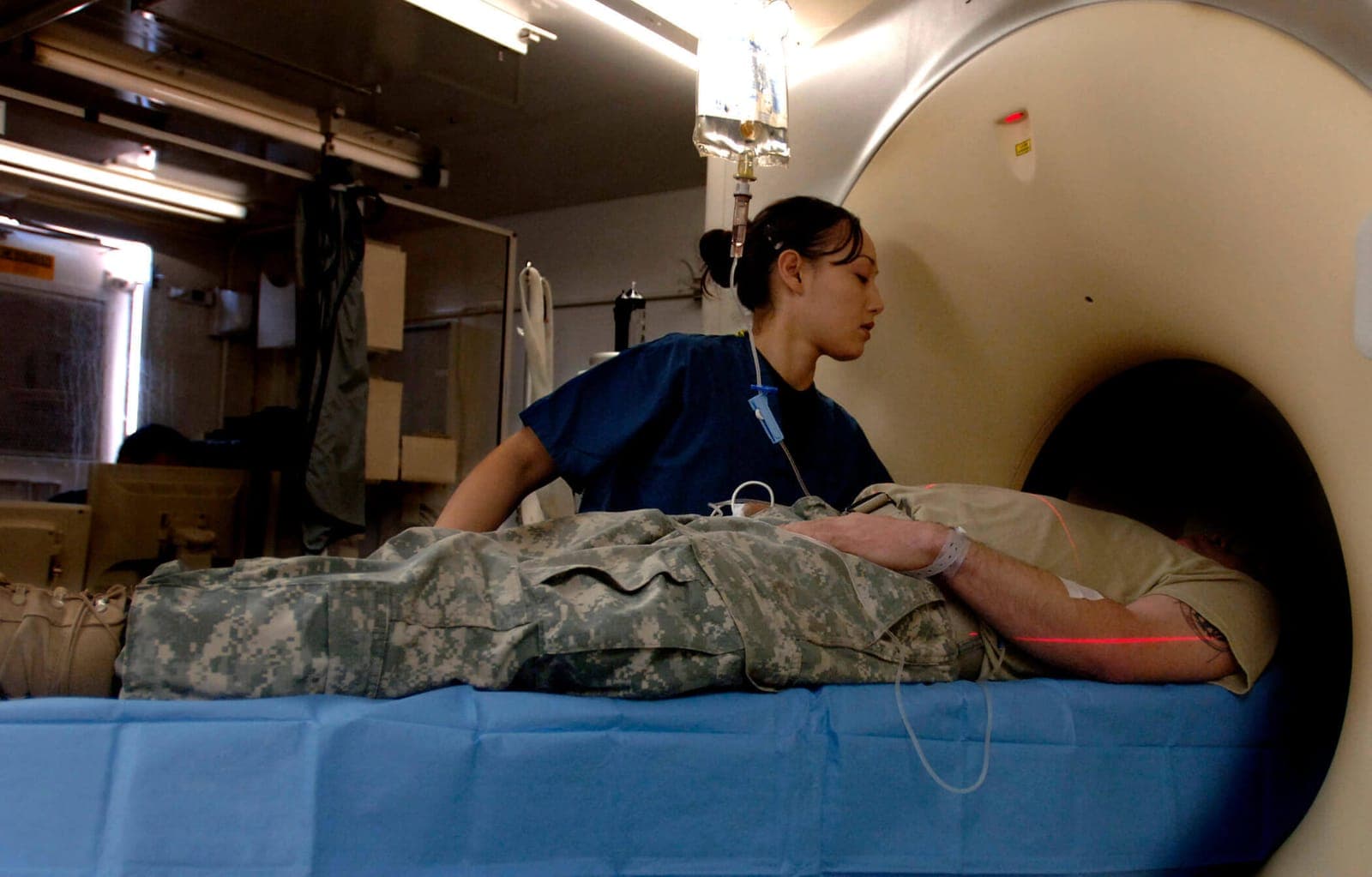
Operates equipment to produce diagnostic images and assists radiologist or physician with special procedures. Prepares equipment and patients for diagnostic studies and therapeutic procedures. Performs technical and administrative imaging activities. Ensures health protective measures such as standard and transmission-based precautions and radiation protection are established and employed. Assists the radiation oncologist. Manages diagnostic imaging functions and activities. Related DOD Occupational Subgroup: 131300.
Duties and responsibilities
- Operates fixed and portable radiographic equipment to produce routine diagnostic medical images. Computes techniques and adjusts control panel settings such as kilovoltage, milliamperage, exposure time, and focal spot size. Positions patient to image desired anatomic structures. Selects image recording media, adjusts table or image receptor (cassette holder), aligns x-ray tube for correct distance and angle, and restricts radiation beam for maximum patient protection. Exposes and processes images.
- Uses specialized equipment to perform nuclear medicine, mammography, diagnostic medical sonography, computed tomography (CT), magnetic resonance imaging (MRI), picture archive and communications system (PACS) and interventional radiology (IR). Selects imaging protocols and required accessories and makes adjustments based on the specific examination requirements. Records and processes the image. Manipulates the recorded image using computer applications.
- Assists physicians with fluoroscopic, interventional, and special examinations. Instructs patients preparing for procedures. Prepares and assists with contrast media administration. Maintains emergency response cart. Assists physician in treating reactions to contrast material. Prepares sterile supplies and equipment. Operates accessory equipment such as automatic pressure injectors, and digital imagers, stereotactic biopsy devices, and vital signs monitoring equipment. Performs image subtraction and manipulation techniques.
- Performs and supervises general diagnostic imaging activities. Cleans and inspects equipment and performs preventive maintenance. Receives patients, schedules appointments, prepares and processes examination requests and related records, and processes images and reports. Enters and maintains data in picture archiving and communication system (PACS), Radiology Information Systems (RIS) and Hospital Information System (HIS). Assists with Phase II didactic and performance training, evaluation and counseling of students, and maintenance of student academic records. Participates in formal research projects.
- Establishes and maintains standards, guidelines, and practices. Composes protocols. Prepares routine positioning guides and technique charts. Reviews images to ensure quality standards are met. Performs equipment quality control checks. Monitors personnel to ensure protective procedures such as those in the As Low As Reasonably Achievable (ALARA) radiation safety, hazardous material communications, and Air Force occupational safety and health programs are followed. Performs tests on radiation protection equipment. Assesses staff competence, and monitors appropriateness of care and completeness of examination requests.
- Plans, organizes, and supervises diagnostic imaging activities. Analyzes workload and establishes production controls and performance standards for administrative and technical activities. Coordinates on interdepartmental issues that interface with diagnostic imaging. Prepares and implements financial plan, and monitors and analyzes annual expenditures. Prepares equipment purchase requests and justifications. Monitors equipment performance and preventive maintenance activities. Recommends new equipment procurement. Performs as the diagnostic imaging facility manager.
Specialty qualifications
Knowledge. The following knowledge is mandatory for award of the AFSC indicated:
- 4R0X1/X1X. Human anatomy and physiology; medical terminology and ethics; legal aspects of medicine; healthcare accreditation standards; radiation physics, biology, and protection; basic electronics theory; techniques of operating x-ray and specialized diagnostic imaging equipment; radiographic positioning; patient care and monitoring techniques; image recording media and processing techniques; quality control procedures; aseptic and sterile techniques; reactions to contrast media; cardiopulmonary resuscitation; methods of recording the fluoroscopic image; patient and equipment safety budget preparation and execution; and medical records administration.
- 4R0X1A. Algebra, nuclear physics, clinical chemistry, nuclear pharmacology, and Nuclear Regulatory Commission regulations concerning use of radionuclides.
- 4R0X1B. Ultrasound physics; techniques of operating specialized ultrasound components and equipment; basic knowledge of vascular and abdominal anatomy (topical and cross-sectional), including normal variant anatomy, abnormal anatomy, and obstetric anatomy; and abnormal anatomy transducer characteristics, differences, and use.
- 4R0X1C. Magnetic physics, magnetism, magnetic safety, radio frequency, and magnetic physics; techniques of operating MRI equipment; and advanced knowledge of cross-sectional anatomy applicable to MRI.
- 4R0X1D. Mammography physics, Breast Anatomy, Physiology, & Pathology, QA/QC, breast implants, positioning and compression including 8 hours of Digital Mammography training, 8 hours of Digital Breast Tomosynthesis training, tracking mammography patient outcomes using the MHSG and Medical Reporting System, techniques of operating a mammography unit and specialized biopsy equipment to produce quality images of the breasts for diagnostic purposes under direction of a physician and to comply with Food and Drug Administration, American College of Radiology, and all other accrediting body regulations.
- 4R0X1E. Undergo advanced specialty training. Assists physicians with special/minimally invasive, image guided vascular radiology procedures for patients, ensuring compliance with all radiation safety procedures.
- 4R0X1F. Possesses comprehensive knowledge of computed tomography principles, techniques, and safety protocols, demonstrating expertise in image acquisition, reconstruction, and interpretation.
- N4R0X1. Manages Picture Archiving and Communication System servers to include all associated ancillary servers connected. Troubleshoots network/application issues within the imaging management servers. Manages the data integrity for the transfer, interpretation and storage or imaging studies. Maintains support for data in the PACS, RIS and HIS networks. (possibly add. see “N” prefix page for pre-requisites for this prefix)
Education. For entry into this specialty, completion of high school or general education development equivalency with successful completion of courses in algebra, and biology or general science are highly desired. If the individual does not already have an awarded college degree, then the following college course are required: English Composition I (3 credits) and Speech (3 credits). AP exam English Composition (minimum score of 3) is accepted in place of English Composition I. Individuals with a international college degree or credits in English Composition I and Speech must have a report of evaluation conducted to ensure the courses and number of credits meet the requirements. Successful completion of high school or collegiate courses in chemistry and physics is desirable.
Training. The following training is mandatory for award of the AFSC indicated:
- 4R031. Completion of Diagnostic Imaging Phase I and Phase II courses.
- 4R031A. Completion of Nuclear Medicine Phase I and Phase II courses.
- 4R031B. Completion of Diagnostic Medical Sonography Phase I and Phase II Courses.
- 4R031C. Completion of Magnetic Resonance Imaging Course.
- 4R031D. Completion of the Mammography Course.
- 4R031E. Completion of the ASRT’s Vascular Interventional Essentials course.
- 4R031F. Completion of the Computed Tomography Course and CT Basics 2.0 or be nationally registered within this modality.
Experience. The following experience is mandatory for award of the AFSC indicated:
- 4R051. Qualification in and possession of AFSC 4R031. Also, experience operating x-ray equipment, and producing and processing radiographs.
- 4R051A/B/C/D/E/F. Prior qualification in and possession of AFSC 4R031A/B/C/D/E/F. respectively. Also, experience performing applicable shred (nuclear medicine, diagnostic medical sonography, MRI, Mammography, Interventional Radiography, or Computed Tomography) functions and activities.
- 4R071. Prior qualification in and possession of AFSC 4R051. Also, experience performing or supervising functions such as producing radiographs, assisting with fluoroscopy and special radiographic procedures.
- 4R071A/B/C/D/E/F Prior qualification in and possession of AFSC 4R051A/B/C/D/E/F respectively. Also, experience performing or supervising nuclear medicine, diagnostic medical sonography, MRI, Computed Tomography, Mammography or Interventional Radiography functions and Picture Archiving and Communications System activities.
- 4R090. Prior qualification in and possession of AFSC N4R071, 4R071, 4R071A, 4R071B, 4R071C, 4R071D,4R071E or 4R071F. Also, experience managing Radiologic, Nuclear Medicine, Ultrasound, MRI, Mammography, Interventional Radiography or Computed Tomography functions and activities; mandatory experience of medical service organization and function, medical administrative procedures, medical supply procedures, medical equipment management procedures, personnel management and administration. Adherence to Nuclear Regulatory Commission regulations governing medical use of radioisotopes, applicable environmental protection standards, preparation for execution of budgets, management of non-military personnel, and applicable accreditation standards and inspection procedures.
Other. The following are mandatory as indicated:
- For entry into this specialty:
- A minimum age of 18 years prior to entry into technical training.
- See attachment 4 for additional entry requirements.
- For entry into 4R0X1A/B/C/D/E/F, prior qualification in and possession of AFSC 4R051/71. To meet FDA and ACR mandates, a radiologic national certification is mandatory prior to entry into the 4R0X1D shred.
- For award and retention of these AFSCs, must maintain local network access IAWAFI 17-130, Cybersecurity Program Management and AFMAN 17-1301, Computer Security.
- Members serving within the Mammography specialty and assigned to a 4R0X1D billet must maintain their radiologic national certifications, the 200 biannual examinations and the 15 mammographic specific continuing education units that are required every 36 months. Members who continuously maintain their credentials and proficiency can have the 4R0X1D shred as a secondary AFSC. Individuals who do not maintain both their credentials/proficiency will be awarded the 460 SEI only.
- Reassigning back to slick 4R0X1 AFSC, current manning levels will be considered prior to approval.
- Members assigned to the 4R0X1A/B/C/D/E/F modalities are eligible to pursue transitioning back to the slick 4R0X1 AFSC following five years of service in their selected modality.
- Members may start this process at the 54-month mark by discussing their intentions with their respective Associate Career Field Manager (ACFM) and their MAJCOM Functional Manager (MFM).
- Each request will be addressed on a case-by-case basis as there are several factors that will be considered prior to members being reassigned back to the slick 4R0X1 AFSC.
- Members serving in overseas locations will be required to work with their respective ACFM and MFMs at least two assignment cycles prior to their DEROS to ensure they are not given an assignment based off shred.
- If member elects to extend their DEROS or has an approved IPCOT (In Place Consecutive Overseas Tour), they must fulfill their current shred in that overseas location.
- Members serving within the 4R0X1D/E/F shreds may apply to retrain into all other shreds after serving two years within that modality. Additionally, individuals who are serving within the 4R0X1C shred may apply to retrain within all other shreds after serving a time of three years within that specialty.
- Each request will be addressed on a case-by-case basis and will be worked through each ACFM, the respected MFM and the CFM.
- All appeals for member’s desiring to be reassigned back to the slick 4R0X1 AFSC will be made with the advisement and consent of the Career Field Manager.
Civilian career paths
Comparable civilian careers for this field pay roughly $35,850 to $208,000 per year (median salaries; varies by role and location):
- Cardiovascular Technologists and Technicians: $59,100
- Diagnostic Medical Sonographers: $75,920
- Endoscopy Technicians: $39,530
- Magnetic Resonance Imaging Technologists: $74,690
- Medical Assistants: $35,850
- Medical Dosimetrists: $44,090
- Nuclear Medicine Technologists: $79,590
- Radiation Therapists: $86,850
- Radiologic Technologists and Technicians: $61,900
- Radiologists: $208,000
ASVAB requirements
To qualify for 4R0X1, you need:
Enter your scores in the AFSC explorer and this section will check each requirement for you.
Entry requirements
Medical profile (PULHES)ShowHide
PULHES scale: lower numbers mean a stricter medical standard. Tap a letter for what it measures.
Medical disqualifiersShowHide
These screened conditions disqualify a candidate for this AFSC:
Education prerequisitesShowHide
High school courses required:
Security & backgroundShowHide
Where you could be stationed
Stateside (53)
- Altus, Oklahoma
- Barksdale, Louisiana
- Beale, California
- Bolling, District Of Columbia
- Cannon, New Mexico
- Columbus, Mississippi
- Davis-Monthan, Arizona
- Dover, Delaware
- Dyess, Texas
- Edwards, California
- Eglin, Florida
- Ellsworth, South Dakota
- F E Warren, Wyoming
- Fairchild, Washington
- Fort Sam Houston, Texas
- Goodfellow AFB, Texas
- Grand Forks, North Dakota
- Hanscom, Massachusetts
- Hill, Utah
- Holloman, New Mexico
- Hurlburt Field, Florida
- JB Andrews, Maryland
- JB Charleston, South Carolina
- JB Langley-Eustis, Virginia
- JBSA Lackland, Texas
- JBSA Randolph, Texas
- Joint Base McGuire-Dix-Lakehurst, New Jersey
- Keesler, Mississippi
- Kirtland, New Mexico
- Laughlin, Texas
- Little Rock, Arkansas
- Luke, Arizona
- MacDill, Florida
- Malmstrom, Montana
- Maxwell, Alabama
- McConnell, Kansas
- Minot, North Dakota
- Moody, Georgia
- Mountain Home, Idaho
- Nellis, Nevada
- Offutt, Nebraska
- Robins, Georgia
- Scott, Illinois
- Seymour Johnson, North Carolina
- Shaw, South Carolina
- Sheppard, Texas
- Tinker, Oklahoma
- Travis, California
- Tyndall, Florida
- USAF Academy, Colorado
- Vance, Oklahoma
- Whiteman, Missouri
- Wright Patterson, Ohio
Overseas (16)
- Andersen, Guam
- Aviano, Italy
- Eielson, Alaska
- Geilenkirchen, Germany
- Incirlik AB, Turkey
- JB Elmendorf-Rich, Alaska
- JB Prl Hbr-Hickam, Hawaii
- Kadena, Japan
- Kunsan, South Korea
- Lakenheath, United Kingdom
- Landstuhl, Germany
- Misawa, Japan
- Osan AB, South Korea
- Ramstein, Germany
- Spangdahlem AB, Germany
- Yokota, Japan
Badges & identifiers
Duty badges
The occupational badge worn by Airmen in this career field.
- Enlisted Medical Badge
Degrees & training plan
While serving in 4R0X1 you can earn an associate degree through the Community College of the Air Force:
- Diagnostic Imaging Technology
- Career Field Education & Training Plan (CFETP)View CFETP (PDF, opens in a new tab)
The CFETP is the official Air Force document describing this career field's full training pipeline, from tech school through advanced skill levels.
4R0X1 specialties (shred-outs)
This career field splits into 6 specialties — you may be assigned to one of these:
- 4R0X1ANuclear Medicine
- 4R0X1BDiagnostic Medical Sonography
- 4R0X1CMagnetic Resonance Imaging
- 4R0X1DMammography
- 4R0X1EInterventional Radiography
- 4R0X1FComputed Tomography
Shred-outs share the 4R0X1 career path; where a specialty sets its own minimums or screens, they're noted above.
Videos, Reddit & resources
4R0X1 videos(9)
These do not reflect official U.S. Air Force views and may contain inaccuracies — negative opinions are often overrepresented online.
Air Force Careers - Radiology Technician (4R0X1)
Airman Vision · 6/2/2025
1 of 9 videos
Reddit discussions(10)
These do not reflect official U.S. Air Force views and may contain inaccuracies — negative opinions are often overrepresented online.
Official links & resources(4)
Researching other jobs too? Every career field's videos and discussions are collected the same way — browse all AFSCs.
Frequently asked questions
- What ASVAB score do you need for Diagnostic Imaging (4R0X1)?
- You need General 50+ on the ASVAB to qualify for 4R0X1.
- Where can Diagnostic Imaging Airmen get stationed?
- 4R0X1 Airmen serve at 69 bases: 53 stateside and 16 overseas, including Andersen, Guam, Aviano, Italy, Eielson, Alaska.
- How long is tech school for Diagnostic Imaging?
- Tech school for 4R0X1 runs about 340 days at Fort Sam Houston, Texas.
Where this data comes from
Most of the data on this page comes from the Air Force Enlisted Classification Directory (AFECD) and recruiter TTMS readouts, which are no longer released publicly. Pulling it together and keeping it accurate takes real time, so I update these pages as often as I can.
Requirements do change between updates. Before you make any decisions, confirm the details with your recruiter. They always have the latest word.