4H0X1 · Medical
Respiratory Care Practitioner
Also known as: Cardiovascular, Respiratory Care
Last updated
At a glance
- ASVAB minimums
- G 50
- Tech school
- Fort Sam Houston, Texas · 233 days
- Career field size
- 355 Airmen
- Possible bases
- 11 stateside · 4 overseas
- Civilian equivalent pay
- $44k–$76k
Table of ContentsShow
What does a Respiratory Care Practitioner do?
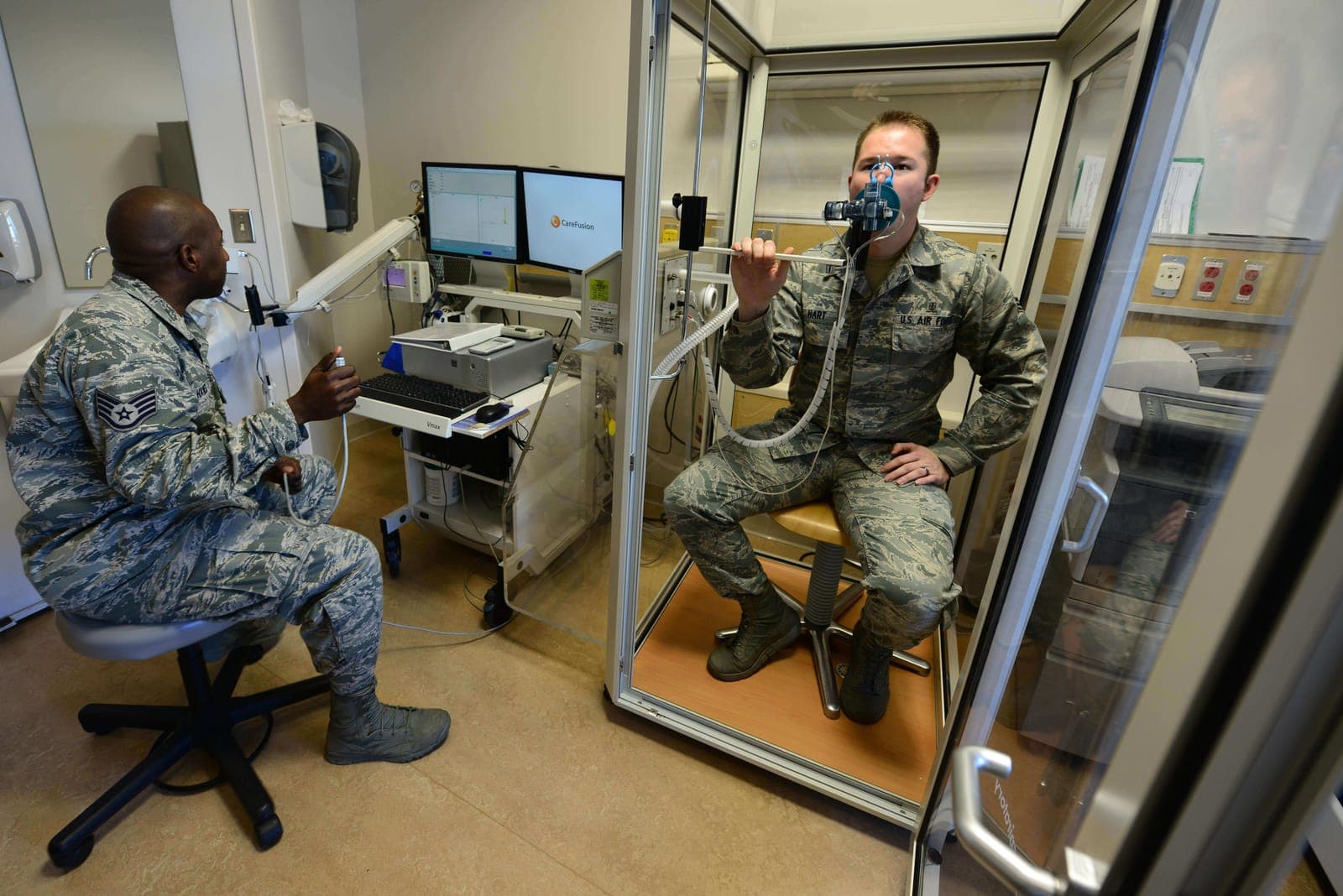
Performs and manages and evaluates patient care and treatment of beneficiaries to include flying and special operational duty personnel in cardiopulmonary laboratory functions and activities as Registered Respiratory Therapist (RRT). Performs and directs support activities for patient care environments, including contingency operations and disasters. Related DoD Occupational Subgroup: 130000.
Duties and responsibilities
- Respiratory Care Services: Supports life by management of invasive/non-invasive mechanical ventilation of neonates, pediatrics and/or adults. Performs comprehensive assessment of patient’s cardiopulmonary status. Assists physicians to establish and maintain artificial airways. Administers aerosol therapies (bland, medicated, and metered dose). Performs airway clearance techniques, such as oral, nasal, and tracheal suctioning; coughing; deep breathing instruction; exercises and chest physical therapy. Performs lung expansion techniques. Monitors physiological responses to therapies to include vital signs, arterial blood gases, and blood chemistry changes. Determines needs related to the frequency and duration of the treatment regime ordered by the physician. Interprets clinical data and recommends additional procedures and/or pharmacologic interventions to physicians. Assists physicians with the performance of procedures, such as intubation/extubation, chest tube/arterial line insertions, weaning from patients from ventilators, etc. Communicates with multidisciplinary care team about discrepancies and concerns. Evaluates effects of respiratory therapy treatment plan by observing, noting, and evaluating patient's progress. Immediately reports adverse reactions following established mechanisms. Responds to emergent situations in the hospital and assists with providing cardiopulmonary resuscitation and advanced cardiovascular life support. Provides education and instruction to patients, family, staff, and students about theory, therapy and equipment used in Respiratory Therapy procedures and techniques, and documents as required. Documents patient care services by charting in patient and department records. Ensures operation of equipment by completing preventive maintenance requirements; follows manufacturer's instructions; troubleshoots malfunctions; turns in equipment for repairs. Maintains safe and clean working environment by complying with procedures, rules, and regulations. Protects patients and employees by adhering to infection-control policies and protocols. Maintains professional and technical knowledge by attending educational workshops, reviewing professional publications, establishing personal networks, and participating in professional societies. Practices safety and security measures.
- Pulmonary Laboratory Clinical Services: Pulmonary laboratory technicians assist physicians through a variety of non-invasive and invasive procedures to diagnose and treat pulmonary disorders.
- Pulmonary Functions technician: Conducts pulmonary function testing to include but not limited to: spirometry, flow volume loops with and without bronchodilator, Broncho provocation, exercise testing, lung capacity and diffusion capacity to gather data for use by physician. Performs arterial blood gas puncture and analyses, six-minute walk tests, pulse oximetry studies, oxygen therapy, and nebulizer treatments. Maintains quality control of arterial blood gas machines and CO-oximeters, including proficiency testing. Performs asthma evaluations. Assists physicians in special procedures such as therapeutic/diagnostic bronchoscopies and thoracotomies. Maintains pulmonary function equipment and associated supplies. Observes and records readings and conveys findings of tests and analyses to physician for interpretation.
- Polysomnography: Provides evaluation and treatment of sleep disorders including in-center testing, diagnostic and therapeutic interventions, comprehensive patient care and direct patient education. Performs, analyzes, and reports a wide range of sleep lab studies.
- Cardiology Laboratory Clinical Services: Cardiovascular technicians assist physicians using a variety of non-invasive and invasive procedures to diagnose and treat heart disease and vascular problems.
- Non-invasive Cardiology technician: Performs, analyzes, and reports a variety of tests to include electrocardiograms (ECGs) and ambulatory monitoring to assist physicians with diagnosing heart problems. Administers stress tests to check heart functioning during exercise or with a pharmacological agent.
- Echocardiograph technician: Prepares patients and diagnostic equipment for ultrasound imaging procedures and explains procedures to patients. Assists physician with trans-esophageal and stress echocardiography and helps interpret data. Assesses heart structures and blood flow via 2-D, m-mode, Doppler, and contrast color modalities. Ensures records are properly recorded.
- Cardiac Catheterization Laboratory technician: Prepares Cardiac Catheterization Lab and assists physician during procedures. Operates X-ray and physiological monitoring equipment. Ensures equipment is in working order and ready for use. Assists in placing specialized equipment and instruments into cardiovascular system for diagnosis and therapy, including cardiac pacemakers and intraaortic balloon pumps. Uses imaging equipment to help the physician detect and treat heart and blood vessel issues within the patient.
- Performs respiratory care practitioner, cardiology, and pulmonary administrative, maintenance, and support functions. Inspects and ensures equipment is calibrated to manufacturer's specifications. Cleans, disinfects, and sterilizes (or prepares for sterilization) cardiopulmonary equipment. Adheres to infection control policies. Operationally checks and inspects equipment. Determines inventory level of disposable supplies, stocks accordingly, and returns excess stock. Prepares equipment requisitions. Maintains CPR cart. Ensures emergency equipment is available and functional. Schedules patients for evaluations, procedures, and treatments. Obtains medical records. Greets patients and answers telephone. Practices patient and coworker sensitivity. Assists with transportation of patients to and from hospitals, and those in air evacuation system requiring mechanical ventilation. Maintains general correspondence, files, records, and reports. Provides biometric data.
- Manages respiratory care practitioner, cardiology, and pulmonary functions and activities. Develops staffing requirements. Determines work priorities, methods, and procedures. Monitors effectiveness of staff training programs. Develops operating instructions and determines policies. Prepares budget requirements. Evaluates, budgets, and justifies new equipment purchases. Establishes and maintains publications library. Ensures compliance with credentialing agency standards. Participates in and manages quality assurance and improvement (QA&I) efforts. Directs on-going continuing education and in-services, developed in part from QA&I findings. Ensures implementation of disaster and emergency plans, as well as safety and security. Collects, analyzes, and reports biometric data. Processes collected data for physician interpretation.
Specialty qualifications
Knowledge. Knowledge is mandatory of general anatomy and physiology; cardiopulmonary system structures and functions; basic cardiopulmonary pharmacology; patient care theory, procedures, and techniques; medical terminology; aseptic techniques; medical ethics; resuscitation techniques; maintaining and operating cardiopulmonary diagnostic and therapeutic equipment; medical computer systems; readiness; and resource management.
Education. entry into this specialty, the following college courses are required:
- (3 credits) English Composition I (3 credits) Humanities, (3 credits) Social Sciences, (3 credits) Speech - “CAHS does not accept Intro to Speech or Interpersonal Communications. Course description must contain verbiage such as creating & delivering speeches or presentations to groups/audiences”, (3 credits) College Algebra - College Geometry, Statistics, or higher-level Mathematics, such as Precalculus, etc.
- See USU/CAHS Pre-Admissions: https://reg.usuhs.edu/transfer-credit#Pre-Admissions for more information/requirements. Students may NOT proceed without transcripts approval from USU/CAHS.
Training. Completion of the following training is mandatory for award of the AFSC indicated:
- For award of the 4H031 AFSC, completion of the Respiratory Care Practitioner (Cardiopulmonary Lab) Apprentice Course Phases I, II and obtain Certified Respiratory Therapist (CRT) credential from National Board of Respiratory Care (NBRC).
- For award of the 4H051 AFSC, completion of all STS core/duty position tasks and obtain Registered Respiratory Therapist (RRT) credential from National Board of Respiratory Care.
Experience. The following experience is mandatory for award of the AFSC indicated:
- 4H051. Qualification in and possession of AFSC 4H031. A minimum of 6 months experience (6 months’ for retrainees). Experience performing diagnostic and therapeutic procedures/tasks to care for and treat a broad spectrum of respiratory care patients.
- 4H071. Qualification in and possession of AFSC 4H051. A minimum of 6 months experience. Experience in performing and supervising diagnostic and therapeutic procedures/tasks to care for and treat a broad spectrum of cardiopulmonary patients.
- 4H091. Qualification in and possession of AFSC 4H071. Advanced experience in supervision and oversight of performance of diagnostic and therapeutic procedures/tasks to care for and treat a broad spectrum of cardiopulmonary patients. Includes operational experience on a wide array of cardiopulmonary and respiratory therapy equipment.
Other. The following are mandatory as indicated:
- For entry into AFSCs 4H0X1 specialty:
- No Unsolved mental health problems (Including, but not limited to failure to engage in help-seeking behaviors, chronic mental health disorders, a pattern of relapse in symptoms/illness, unwillingness or inability to overcome mental health disorder, or prolonged absence from one’s mental health duties to risk associated to patients, self, or staff).
- For course entry guidance, students may NOT proceed without transcript approval. See USU/CAHS Pre-Admissions: https://reg.usuhs.edu/transfer-credit#Pre-Admissions for more information
- See attachment 4 for mandatory entry requirements.
- For award and retention of AFSC’s 4H051/4H071/4H091:
- Must obtain, possess, and maintain a current RRT (Registered Respiratory Therapist) credential from NBRC.
- No unresolved mental health problems (Including, but not limited to: failure to engage in help-seeking behaviors, chronic mental health disorders, a pattern of relapse in systems/illness, unwillingness, or inability to overcome mental health disorder, or prolonged absence from one’s mental health duties due to risk associated to patients, self, or staff.
- Must remain proficient and current in Respiratory Therapy IAW AFI 41-106, Medical Readiness Program Management.
- Must maintain local network access IAW AFI 17-130, Cybersecurity Program Management and AFMAN 17-1301, Computer Security.
- AFRC/ANG requirements for retention in AFSCs 4H051/4H071/4H091:
- AFRC/ANG Respiratory Care Practitioners. Member (4H0X1) assigned to a medical UTCs will maintain a RRT and hold a Respiratory Therapy job that constitutes Full Time (FT) or Part Time (PT) employment at a Level I or II medical center with access to a critical care environment with ventilator management to meet requirements of AFTTP 3-42351, CCATT, and maintain required proficiencies. Other job locations will need to be approved by the 4H0X1 Career Field Manager, routed through AFRC/ANG Functional Managers. NOTE: For the 4H0X1 AFSC, the minimum credential is the Registered Respiratory Therapist Certification in Respiratory Care. However, various states or healthcare systems may require additional certifications in Respiratory Care. The ARC member must be aware of and achieve these requirements based on their individual situations.
Civilian career paths
Comparable civilian careers for this field pay roughly $44,090 to $75,920 per year (median salaries; varies by role and location):
- Cardiovascular Technologists and Technicians: $59,100
- Diagnostic Medical Sonographers: $75,920
- Medical and Clinical Laboratory Technicians: $54,180
- Medical and Clinical Laboratory Technologists: $54,180
- Neurodiagnostic Technologists: $44,090
- Ophthalmic Medical Technologists: $44,090
- Patient Representatives: $44,090
- Radiologic Technologists and Technicians: $61,900
- Respiratory Therapists: $62,810
- Surgical Technologists: $49,710
ASVAB requirements
To qualify for 4H0X1, you need:
Enter your scores in the AFSC explorer and this section will check each requirement for you.
Entry requirements
Medical profile (PULHES)ShowHide
PULHES scale: lower numbers mean a stricter medical standard. Tap a letter for what it measures.
Medical disqualifiersShowHide
These screened conditions disqualify a candidate for this AFSC:
Security & backgroundShowHide
Where you could be stationed
Stateside (11)
- Eglin, Florida
- Fort Sam Houston, Texas
- JB Andrews, Maryland
- JB Langley-Eustis, Virginia
- JBSA Lackland, Texas
- Keesler, Mississippi
- MacDill, Florida
- Miami, Florida
- Nellis, Nevada
- Travis, California
- Wright Patterson, Ohio
Overseas (4)
- JB Elmendorf-Rich, Alaska
- Kadena, Japan
- Lakenheath, United Kingdom
- Landstuhl, Germany
Badges & identifiers
Duty badges
The occupational badge worn by Airmen in this career field.
- Enlisted Medical Badge
Degrees & training plan
While serving in 4H0X1 you can earn an associate degree through the Community College of the Air Force:
- Cardiopulmonary Laboratory Technology
- Career Field Education & Training Plan (CFETP)View CFETP (PDF, opens in a new tab)
The CFETP is the official Air Force document describing this career field's full training pipeline, from tech school through advanced skill levels.
Videos, Reddit & resources
4H0X1 videos(12)
These do not reflect official U.S. Air Force views and may contain inaccuracies — negative opinions are often overrepresented online.
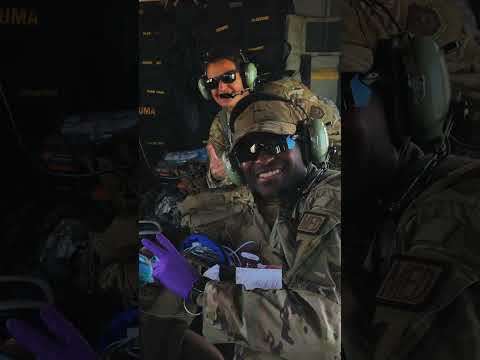
Air Force RT CCATT Training!
Lorenzo Hines · 1/26/2025
1 of 12 videos
Reddit discussions(10)
These do not reflect official U.S. Air Force views and may contain inaccuracies — negative opinions are often overrepresented online.
Official links & resources(3)
Researching other jobs too? Every career field's videos and discussions are collected the same way — browse all AFSCs.
Frequently asked questions
- What ASVAB score do you need for Respiratory Care Practitioner (4H0X1)?
- You need General 50+ on the ASVAB to qualify for 4H0X1.
- Where can Respiratory Care Practitioner Airmen get stationed?
- 4H0X1 Airmen serve at 15 bases: 11 stateside and 4 overseas, including JB Elmendorf-Rich, Alaska, Kadena, Japan, Lakenheath, United Kingdom.
- How long is tech school for Respiratory Care Practitioner?
- Tech school for 4H0X1 runs about 233 days at Fort Sam Houston, Texas.
Where this data comes from
Most of the data on this page comes from the Air Force Enlisted Classification Directory (AFECD) and recruiter TTMS readouts, which are no longer released publicly. Pulling it together and keeping it accurate takes real time, so I update these pages as often as I can.
Requirements do change between updates. Before you make any decisions, confirm the details with your recruiter. They always have the latest word.