4E0X1 · Medical
Public Health
Last updated
At a glance
- ASVAB minimums
- A 48
- Tech school
- Wright Patterson, Ohio · 47 days
- Career field size
- 1,158 Airmen
- Possible bases
- 57 stateside · 17 overseas
- Civilian equivalent pay
- $42k–$208k
Table of ContentsShow
What does the Public Health career field do?
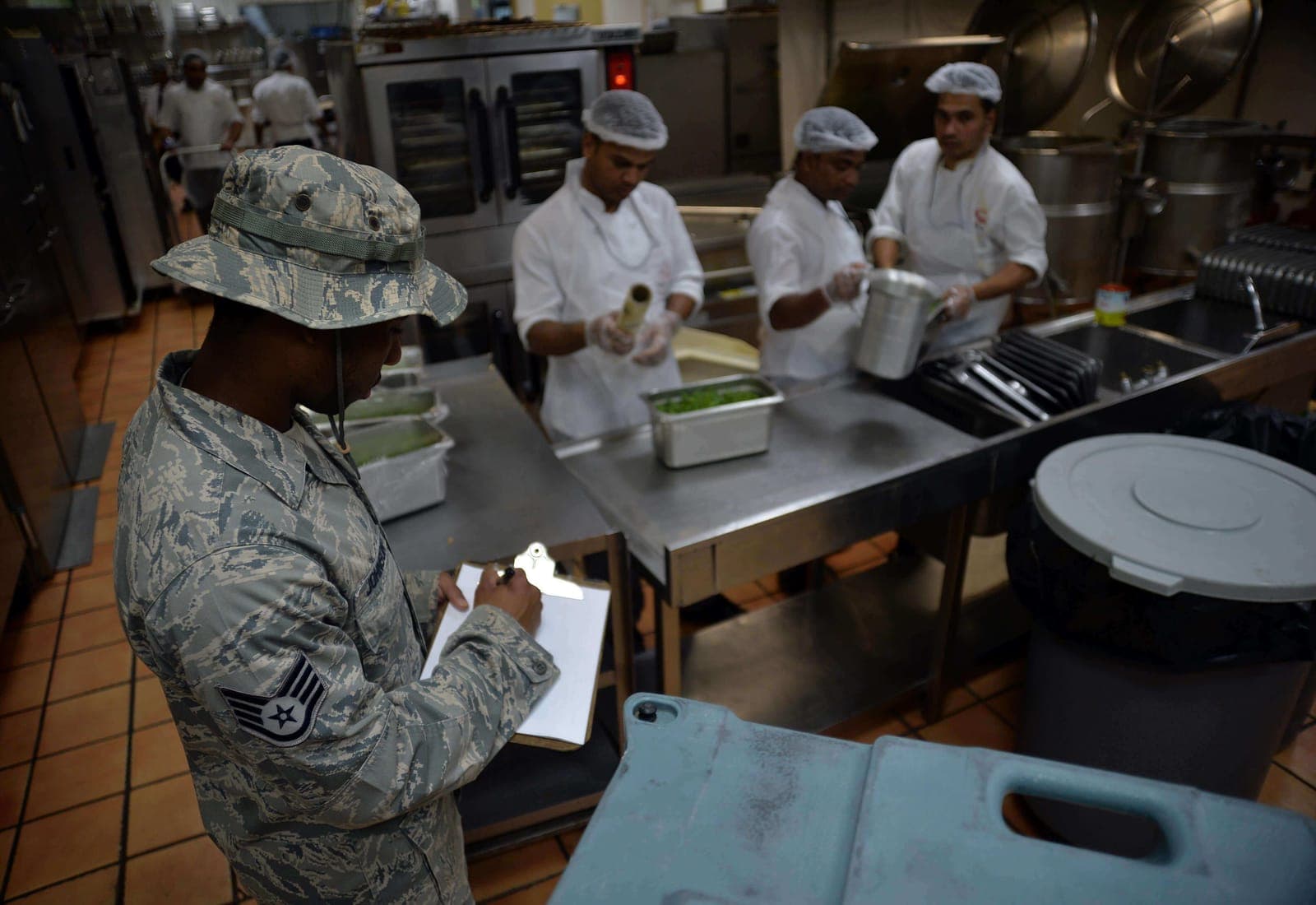
Manages and performs public health activities and programs in support of Air Force Operational Medicine Programs. There are two major divisions within Public Health: Community Health Management and Force Health Management. Community Health Management encompasses communicable disease control and prevention, food safety and defense, medical entomology, facility sanitation, and public health contingency response. Force Health Management encompasses medical deployment clearance processing, and administrative oversight of occupational health examinations (including performing audiograms). Related DoD Occupational Subgroup: 132200.
Duties and responsibilities
Community Health Management
- Organizes and assists in communicable disease prevention and control programs. Controls disease transmission through patient interviews, epidemiological investigations, patient education and community outreach programs. Advises professionals on control measures. Updates and completes associated records and forms. Investigates disease outbreaks. Collects and compiles epidemiological data. Identifies, evaluates, and reports trends.
- Conducts food safety and defense programs. Inspects sanitary condition of containers and vehicles. Ensures food origin and distribution are from approved sources. Inspects foods for wholesomeness and contract compliance. Makes recommendations for disposition of deteriorated or distressed foods. Assesses risks associated with production, transportation, storage, preparation and serving of food. Recommends measures to prevent contamination (unintentional as well as intentional), deterioration and completes Food Vulnerability Assessments. Inspects operational rations. Collects and ships food for laboratory analysis. Investigates customer complaints and food recalls. Evaluates and completes inspection records.
- Plans and conducts medical entomology program. Evaluates vector-borne disease risk. Conducts disease and pest/vector surveillance. Monitors compliance and effectiveness of vector and pest management control measures. Recommends prevention and control measures. Provides education and training on prevention and control of vector-borne diseases.
- Plans and conducts sanitation programs. Conducts sanitary evaluations of food, public facilities, and military and civilian contract aircraft. Determines compliance with sanitary standards and reports discrepancies. Provides food handler, disease outbreak, and community health education and training.
- Plans, organizes, and conducts public health contingency response programs.
Force Health Management
- Assists in Occupational Health Programs. Ensures personnel receive appropriate pre-employment, periodic and termination occupational examinations. Conducts occupational audiometric evaluations. Provides consultation to supervisors and workers in personal hygiene, occupational hazards, hazard communications and personal protective equipment. Performs occupational epidemiology and monitors results of occupational health examinations to detect adverse trends. Investigates occupational illnesses and assists with completion of fitness and risk evaluations. Advises healthcare providers on workplace hazards. Manages and provides quality control of occupational health examinations. Conducts shop visits at the discretion of the Occupational & Environmental Health Working Group.
- Plans and conducts deployment health programs. Initiates pre-and-post-deployment medical clearance process to communicate deployment medical requirements. Provides deploying personnel with medical intelligence briefs to include the threat of vector borne disease and prevention, and use of personal protective equipment. Also oversees medical reintegration by ensuring all re-deployers complete required post-deployment medical requirements.
Specialty qualifications
Knowledge. Knowledge is mandatory of: basic biological and physical sciences; preventive medicine; fundamentals of microbiology, chemistry, anatomy, physiology, and pathology of the human body; medical terminology, medical entomology programs; food science and technology; food handler training; food and water safety and defense principles; food inspection; laboratory procedures; sanitary evaluations; public facility sanitation; prevention and control of food borne, water-borne, and vector-borne diseases; communicable disease prevention and control; epidemiology; occupational health (including hearing conservation); medical readiness (including medical intelligence, deployment processing, and deployment surveillance); personnel management and administration; medical service organization and function; basic medical information management (including database management) and written and oral communication.
Education. For entry into this specialty, completion of high school courses in biology, chemistry, and general science is desirable.
Training. The following training is mandatory as indicated:
- For award of AFSC 4E031, completion of Public Health Apprentice Course is mandatory.
- For award of AFSC 4E071, completion of the Operational Entomology in-residence course and the USAFSAM Epidemiology Distance Learning course are mandatory. Current Hearing Conservation Certification.
Experience. The following experience is mandatory for award of the AFSC indicated:
- 4E051. Qualification in and possession of AFSC 4E031. Also, experience in functions such as routine food safety and defense inspection; sanitary evaluations; communicable disease control and disease intervention; occupational health; force health management activities, medical entomology programs and deployment health programs. Current Hearing Conservation Certification
- 4E071. Qualification in and possession of AFSC 4E051. Also, experience performing public health programs. Current Hearing Conservation Certification.
- 4E091. Qualification in and possession of AFSC 4E071. Also, experience managing public health activities.
Other. The following are mandatory as indicated:
- For entry into this specialty:
- Passing color vision, as defined by getting a 55 or better on the Cone Contrast Test (CCT), or, correctly identifying at least 10 of 14 Ishihara Plates (PIP). CCT should be primary testing choice, but PIP is acceptable if CCT is not available at testing site. Normal color vision as defined in DAFMAN 48-123, Medical Examinations and Standards and Medical Standards Directory.
- For award and retention of AFSCs 4E031/4E051/4E071, current Hearing Conservation certification is mandatory.
- Must pass Read Aloud Test, as defined in current version of Medical Standards Directory (MSD).
- Valid state driver’s license and qualification to operate government motor vehicles according to AFI 24-301, Ground Transportation.
- See attachment 4 for additional entry requirements.
- For award and retention of these AFSCs, must maintain local network access IAW AFI 17-130, Cybersecurity Program Management and DAFMAN 17-1301, Computer Security.
Civilian career paths
Comparable civilian careers for this field pay roughly $42,000 to $208,000 per year (median salaries; varies by role and location):
- Community Health Workers: $42,000
- Environmental Science and Protection Technicians, Including Health: $46,850
- Environmental Scientists and Specialists, Including Health: $73,230
- Epidemiologists: $74,560
- Health and Safety Engineers: $94,240
- Health Education Specialists: $56,500
- Occupational Health and Safety Specialists: $76,340
- Occupational Health and Safety Technicians: $53,340
- Preventive Medicine Physicians: $208,000
ASVAB requirements
To qualify for 4E0X1, you need:
Enter your scores in the AFSC explorer and this section will check each requirement for you.
Entry requirements
Medical profile (PULHES)ShowHide
PULHES scale: lower numbers mean a stricter medical standard. Tap a letter for what it measures.
Vision requirementsShowHide
Medical disqualifiersShowHide
These screened conditions disqualify a candidate for this AFSC:
Physical requirementsShowHide
Security & backgroundShowHide
Where you could be stationed
Stateside (57)
- Altus, Oklahoma
- Barksdale, Louisiana
- Beale, California
- Bolling, District Of Columbia
- Cannon, New Mexico
- Columbus, Mississippi
- Creech, Nevada
- Davis-Monthan, Arizona
- Dover, Delaware
- Dyess, Texas
- Edwards, California
- Eglin, Florida
- Ellsworth, South Dakota
- F E Warren, Wyoming
- Fairchild, Washington
- Goodfellow AFB, Texas
- Grand Forks, North Dakota
- Hanscom, Massachusetts
- Hill, Utah
- Holloman, New Mexico
- Hurlburt Field, Florida
- JB Andrews, Maryland
- JB Charleston, South Carolina
- JB Langley-Eustis, Virginia
- JBSA Lackland, Texas
- JBSA Randolph, Texas
- Joint Base Lewis-McChord, Washington
- Joint Base McGuire-Dix-Lakehurst, New Jersey
- Keesler, Mississippi
- Kirtland, New Mexico
- Laughlin, Texas
- Little Rock, Arkansas
- Luke, Arizona
- MacDill, Florida
- Malmstrom, Montana
- Maxwell, Alabama
- McConnell, Kansas
- Minot, North Dakota
- Moody, Georgia
- Mountain Home, Idaho
- Nellis, Nevada
- Offutt, Nebraska
- Omaha, Nebraska
- Pentagon, Virginia
- Pope, North Carolina
- Robins, Georgia
- Scott, Illinois
- Seymour Johnson, North Carolina
- Shaw, South Carolina
- Sheppard, Texas
- Tinker, Oklahoma
- Travis, California
- Tyndall, Florida
- USAF Academy, Colorado
- Vance, Oklahoma
- Whiteman, Missouri
- Wright Patterson, Ohio
Overseas (17)
- Alconbury, United Kingdom
- Andersen, Guam
- Aviano, Italy
- Croughton, United Kingdom
- Eielson, Alaska
- Geilenkirchen, Germany
- Incirlik AB, Turkey
- JB Elmendorf-Rich, Alaska
- JB Prl Hbr-Hickam, Hawaii
- Kadena, Japan
- Kunsan, South Korea
- Lakenheath, United Kingdom
- Misawa, Japan
- Osan AB, South Korea
- Ramstein, Germany
- Spangdahlem AB, Germany
- Yokota, Japan
Badges & identifiers
Duty badges
The occupational badge worn by Airmen in this career field.
- Enlisted Medical Badge
Degrees & training plan
While serving in 4E0X1 you can earn an associate degree through the Community College of the Air Force:
- Public Health Technology
- Career Field Education & Training Plan (CFETP)View CFETP (PDF, opens in a new tab)
The CFETP is the official Air Force document describing this career field's full training pipeline, from tech school through advanced skill levels.
Videos, Reddit & resources
4E0X1 videos(9)
These do not reflect official U.S. Air Force views and may contain inaccuracies — negative opinions are often overrepresented online.
Public Health Career Field in the Air Force (4E0X1)
Airman Vision · 5/29/2025
1 of 9 videos
Reddit discussions(10)
These do not reflect official U.S. Air Force views and may contain inaccuracies — negative opinions are often overrepresented online.
Official links & resources(4)
Researching other jobs too? Every career field's videos and discussions are collected the same way — browse all AFSCs.
Frequently asked questions
- What ASVAB score do you need for Public Health (4E0X1)?
- You need Administrative 48+ on the ASVAB to qualify for 4E0X1.
- Where can Public Health Airmen get stationed?
- 4E0X1 Airmen serve at 74 bases: 57 stateside and 17 overseas, including Alconbury, United Kingdom, Andersen, Guam, Aviano, Italy.
- How long is tech school for Public Health?
- Tech school for 4E0X1 runs about 47 days at Wright Patterson, Ohio.
Where this data comes from
Most of the data on this page comes from the Air Force Enlisted Classification Directory (AFECD) and recruiter TTMS readouts, which are no longer released publicly. Pulling it together and keeping it accurate takes real time, so I update these pages as often as I can.
Requirements do change between updates. Before you make any decisions, confirm the details with your recruiter. They always have the latest word.