When Do You Get Your Phone at Air Force BMT? (Phone Policy, Explained)
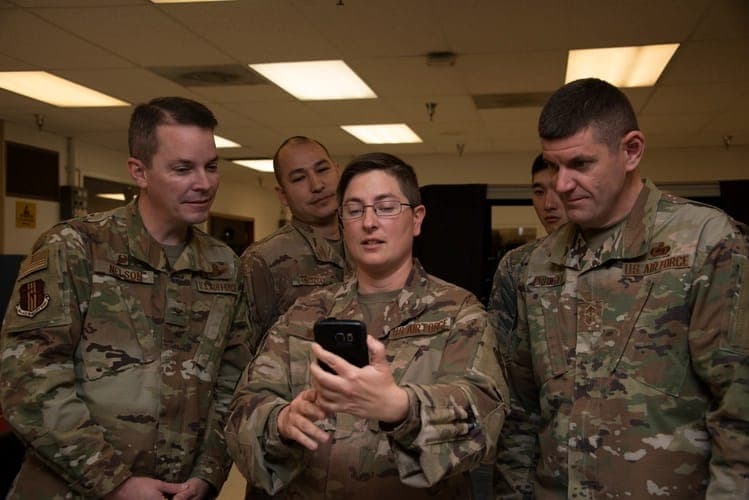
Table of ContentsShow
Here's the moment nobody's ready for: within hours of arriving at Lackland, your phone goes into a locker, and the next time you scroll anything, you'll be nearly done with basic training. For trainees, that's an adjustment. For the families back home staring at a silent phone, it can feel like an emergency. It isn't. There's a system, it's predictable, and once you know it, the silence stops being scary.
TL;DR - the BMT phone policy:
- Your phone is confiscated on arrival and stored until you leave for tech school
- You get a minimum of four phone opportunities across the 7.5 weeks
- The first call (within about 72 hours) exists only to deliver your mailing address
- The first real conversation comes around Week 4 (15 to 20 minutes); a logistics call comes in Week 7
- Voice only. No FaceTime, no video, no texting (one exception below)
- Extra calls are earned by performance; the four-call minimum can't be taken away
- Mail is the real communication channel, and it legally cannot be withheld
What happens to your phone on Day 1
During in-processing, your cell phone is collected and stored under MTI supervision. You'll sit through a Cell Phone Policy Briefing and sign an acknowledgment that you understand the rules and consequences. From that point, general phone use is prohibited until the coin ceremony at the end of training. The phone comes back for good when you head to tech school.
Two practical tips before you ship. First, at the San Antonio airport you'll still have your phone, so make your "I landed safely" calls then. Second, clean up your phone before you leave home. If an MTI has a reason to look at it during processing, you want zero regrets on that screen.
The four calls, one by one
The policy guarantees a minimum of four phone opportunities during BMT. Timing flexes with your flight and your MTI, but the shape is consistent:
Call 1: the address call (within about 72 hours of arrival). Short, scripted, and strictly business: you read your new mailing address to your family while they scribble it down, often with an MTI keeping the line moving. It is not a conversation, and families should know that going in. A rushed, stiff-sounding trainee is a trainee following the script, not a trainee in trouble. There's one authorized texting exception around this window: during Week 0 processing, your MTI may let you photograph a pre-printed address card and text it to one person. That's the only text of your entire BMT.
Call 2: the Week 4 morale call. The first real conversation, typically 15 to 20 minutes on a Sunday afternoon. By this point you're past the halfway mark and the call usually sounds like an actual human being again.
Call 3: the Week 7 logistics call. The practical one: coordinating graduation with your family. Guest arrival dates, hotels, the ceremony schedule, travel to tech school. MTIs often extend this one because it has a job to do.
Call 4 and beyond: earned. Additional calls are awarded for superior individual and flight performance, on MTI recommendation. They can also be lost the same way. The four-opportunity minimum, though, is protected: bad week or not, it can't be reduced.
At graduation, the picture changes: graduating Airmen are allowed their personal cell phones during Town Pass, which is why your social feeds fill up with service-dress selfies every Thursday.
The rules around the calls
- Voice only. FaceTime, Skype, video calls, and texting are prohibited, and violations bring disciplinary action.
- Calls can't be returned. If your family misses one, it's missed. More on that below.
- Calls come from any number. The trainee might be on a base phone, a pay phone, or their own device.
For families: how to not miss the call
This part matters more than anything else on this page:
- Answer every call from every unfamiliar number for the first two weeks. San Antonio is area code 210, but calls can come from any number on base.
- Keep pen and paper by the phone from the day they ship. The address call is fast, and that address is gold. (Here's the exact format so you only have to fill in blanks.)
- Set up a backup. A voicemail greeting telling the trainee who to call next, or call-forwarding so someone is always reachable.
- Don't panic at silence. Four calls across 7.5 weeks means roughly two-week gaps between conversations. That's the system working, not something wrong.
And if you miss the address call entirely: every trainee also mails a Safe Arrival Postcard with the address, and the Reception Center at (210) 671-3024 can help with address questions about a week after arrival.
Mail: the channel that never closes
While the phone sits in a locker, mail runs Monday through Friday the entire time, with about an hour most evenings to read and write back. And here's the fact that should retire a whole category of family anxiety: mail is federally protected. MTIs are certified mail couriers, and mail cannot be withheld, delayed, or used as punishment, ever. Bad week, failed inspection, doesn't matter - the letters get through.
So write. Write before you even have the full address and hold the letter until you do. My full guide on addresses, what to send, and what never to send is here: How to Write to Your Trainee at BMT.
One more for families planning ahead: BMT graduation ceremonies are no longer livestreamed (that ended in 2022). Recordings post afterward to the official BMT channels, but if you want to see the moment live, be at Lackland in person.
Here comes the motivational speech
Seven and a half weeks without a phone sounds brutal from the couch. Here's the secret from the other side: after about day three, you're too busy to miss it, and the letters that replace it hit harder than any text ever has. For the families, every quiet week is a week your trainee is exactly where they're supposed to be, doing exactly what they signed up to do. The phone comes back. The person carrying it comes back better. I believe in you both.
Want the complete picture of what your trainee's world looks like between those calls - every rule, briefing, and milestone from the current BMT study guide? That's the free AF099 Basic Training course, right here on the site.
Want more?
Keep Reading
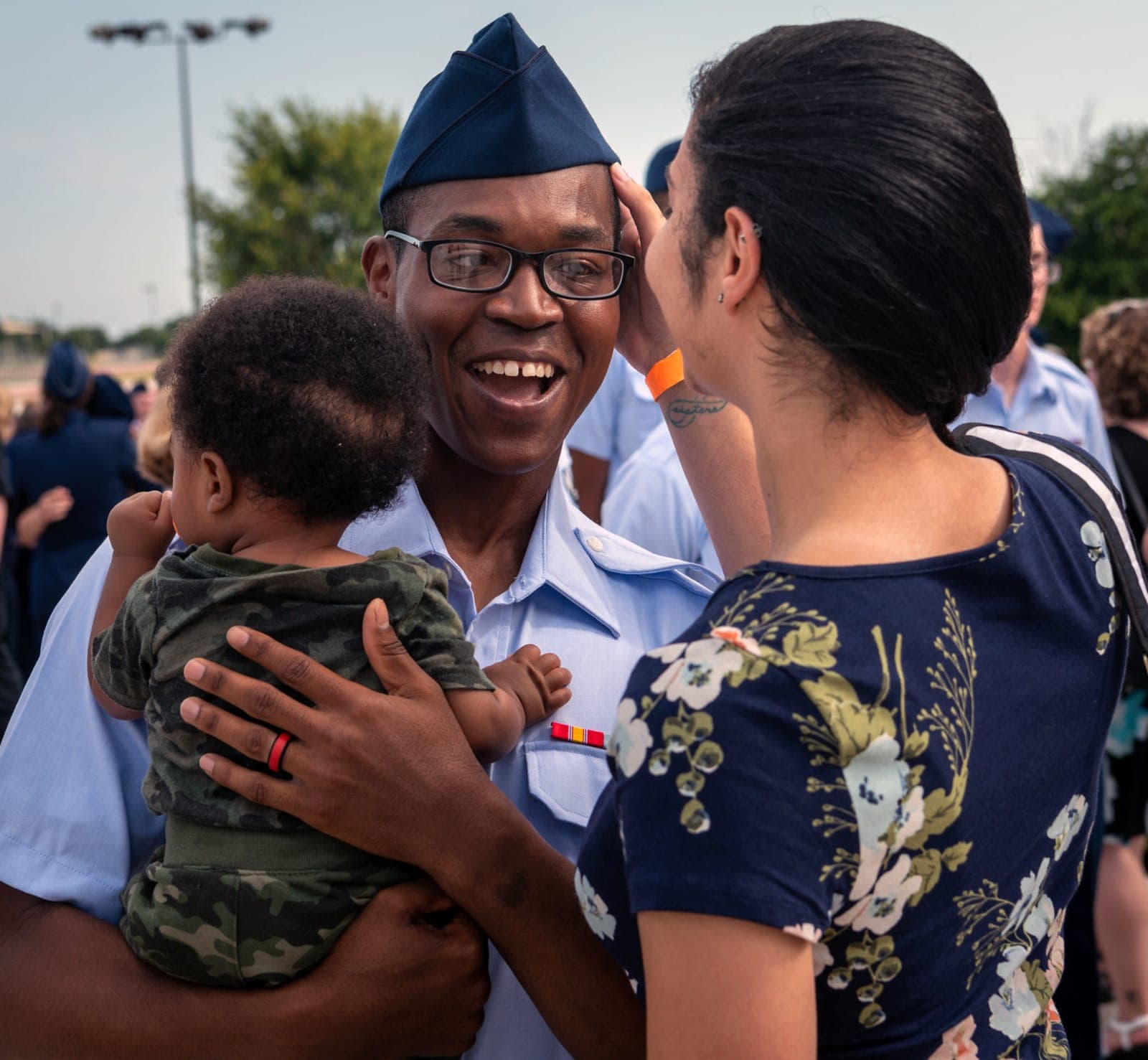
How to Write to Your Trainee at Air Force BMT (Exact Mailing Address Format)
The exact BMT mailing address format at JBSA-Lackland, how to get your trainee's specific address, when mail arrives, and who to call in an emergency.
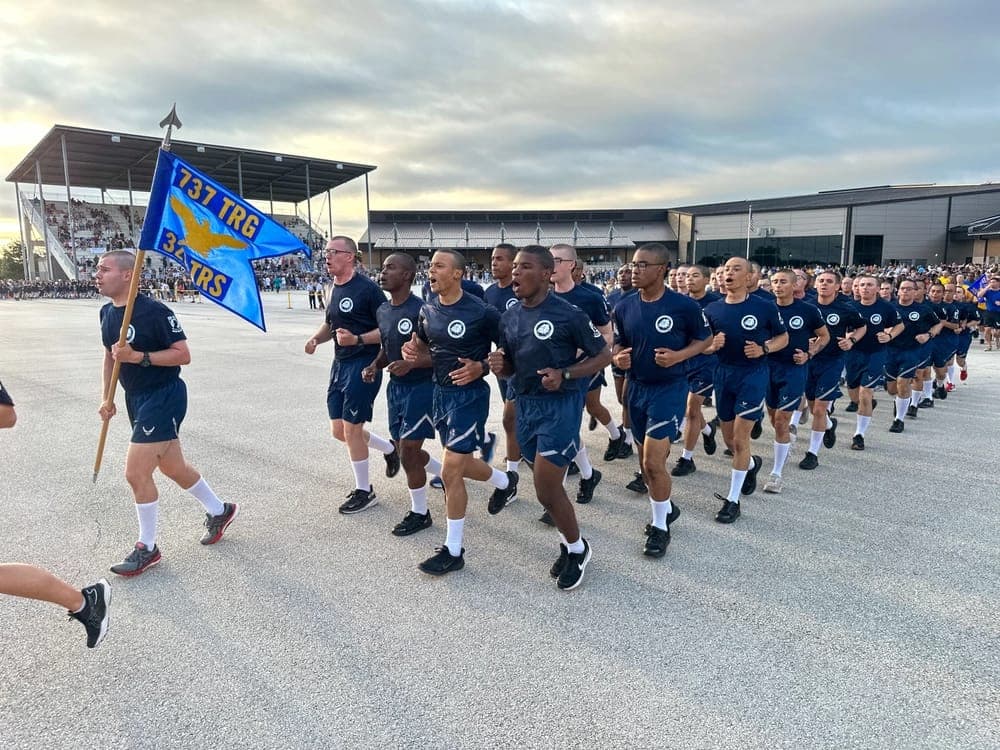
Air Force BMT PT Test: The Exact Standards to Graduate (2026)
What it takes to pass the BMT fitness test: the 75-point composite, run/push-up/sit-up scoring, week-5 final eval, run groups, and what happens if you fail.
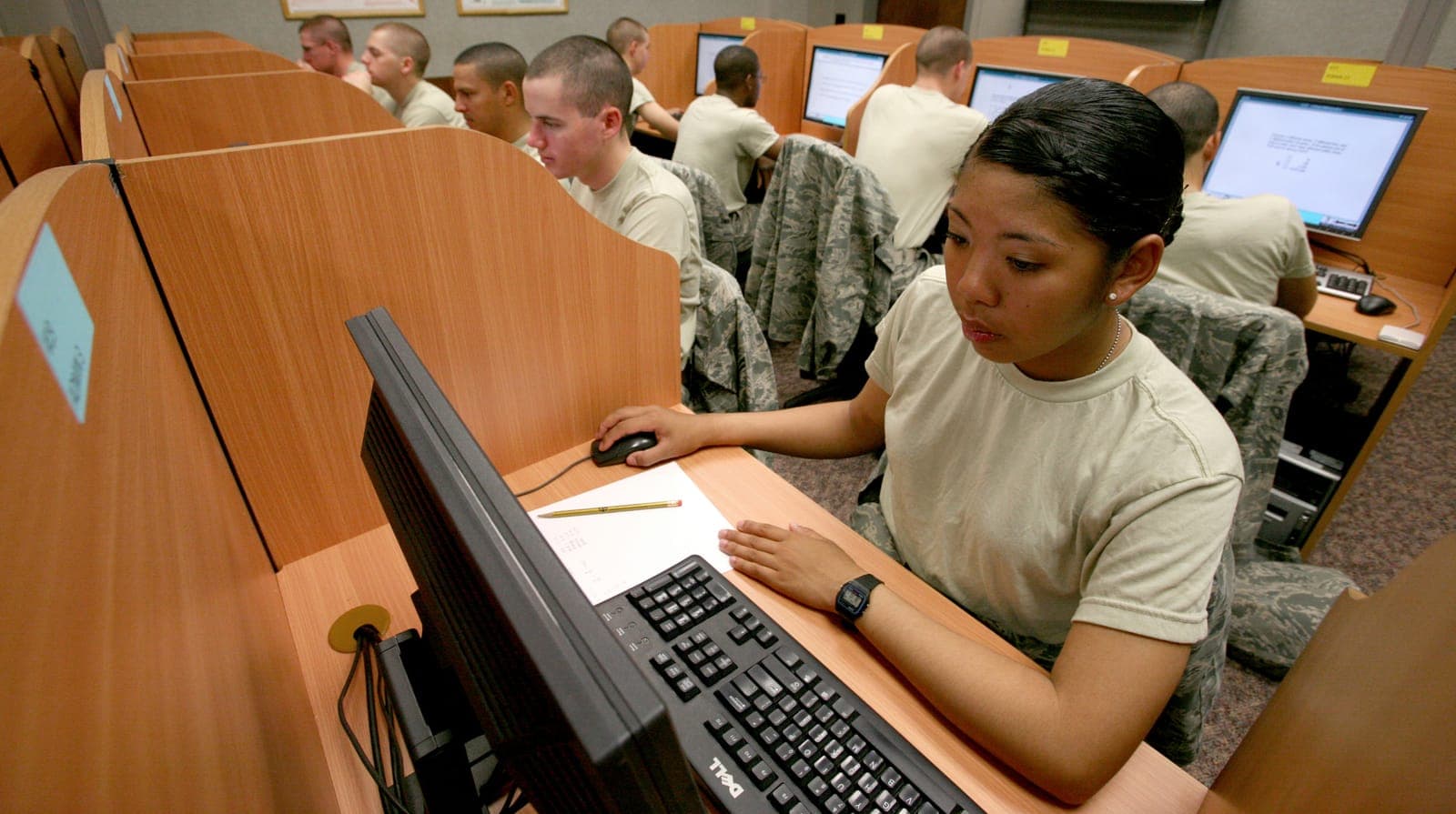
The BMT End of Course (EOC) Test: What's on It and How to Pass
Yes, there's a final exam at Air Force basic training. The BMT EOC test explained: 100 questions, the 22 subjects covered, passing scores, and how to study.
How Long Is Air Force Basic Training? (7.5 Weeks, Explained)
Air Force BMT is 7.5 weeks of training, about 8.5 weeks door to door. Why you see three different numbers, the weekly rhythm, and what can add time.