AF099 · Lesson 40 of 71
Professional Interpersonal Interactions
Table of ContentsShow
- Overview
- Introduction to Professional Interpersonal Interactions
- Definition
- Example 1
- Example 2
- Importance of Professional Interpersonal Interactions
- When there's a lack of trust…
- What Makes an Interpersonal Interaction Professional?
- Professional language
- Professional behavior
- Definition of sexual harassment
- Types of sexual harassment
- Caring for and helping others
- Indicators of Unprofessional Interpersonal Interactions
- Indicators specifically prohibited in BMT
- What to do if you notice unprofessional interpersonal interactions
- Sexual Assault Response Coordinator (SARC)
- Summary
Over the course of BMT and your whole career, you'll learn the Air Force expectation around professional conduct. Whether you're in a training role or operational role, the expectation is the same - be professional in all your interactions, with everyone, all the time.
When you build relationships, accountability is what holds the whole thing together. This section covers how to recognize what makes an interaction professional, what tells you it's unprofessional, and what to do when you spot a problem. Your MTI will reinforce these expectations throughout training, including during Airmen's Time discussions.
Overview
Objective: Identify basic facts and general principles about culture fundamentals in the Air Force.
Learning Outcomes
- Define professional interpersonal interactions.
- Discuss the importance of professional interpersonal interactions.
- Recognize what makes an interpersonal interaction professional.
- Recognize indicators of unprofessional interpersonal interactions.
Foundational Competencies
- Accountability - Accepts full responsibility for self and team; displays honesty and truthfulness.
- Information Seeking - An underlying curiosity; a desire to know more about things, people, oneself, the mission, or issues; an eager, aggressive learner.
Summary
- Introduction to Professional Interpersonal Interactions
- Definition
- Importance of Professional Interpersonal Interactions
- What Makes an Interpersonal Interaction Professional?
- Indicators of Unprofessional Interpersonal Interactions
Introduction to Professional Interpersonal Interactions
The Air Force has a lot of expectations around professional conduct. Professional interpersonal interactions - among Airmen, at all times and in all places - is one of the most important.
This expectation applies to:
- You as a new member of the Air Force
- Career Air Force personnel
The same expectation applies to members in training and operational roles. Your MTI will reinforce it throughout training during Airmen's Time discussions and through your flight Peer-to-Peer mentor during weekly debriefings.
Definition
Professional Interpersonal Interactions are "interactions which aim to treat others with dignity and respect."
Two examples of how that plays out at BMT:
Example 1
To be respectful of others in their flights, trainees put aside old habits they may not have thought twice about at home - like running around naked or using profanity. As professionals who know these acts are offensive and prohibited in BMT, trainees stop displaying those behaviors. Airmen pay attention to how their words and actions might impact others.
Example 2
MTIs are extremely tough and demanding, sometimes to the point where you'll think it's more than you can handle. They follow the same rules of professional conduct that apply to you. Their goal in training hard and being demanding - while still treating you with respect and dignity - is to motivate you to give your best in preparing for the rigors of war.
Importance of Professional Interpersonal Interactions
Professional interpersonal interactions are essential for trust. A team with dysfunctional interactions can still get the job done, but it'll never reach the level of excellence that comes when everyone treats each other respectfully.
Trust - built on mutual respect and dignified treatment - is the most essential ingredient for teamwork. Every single member of the team is vital. Every person counts.
Teamwork is a fundamental building block of overall mission success. We must earn and trust our fellow Wingman because everything we do depends heavily on our ability to work as a team. Teamwork is also necessary for public trust: when the team is strong, the public stays confident the Air Force is able to defend the Nation.
When there's a lack of trust…
Among team members - individual success is at risk; members pull for themselves and not each other or the team as a whole.
In the team leader - the team has greater difficulty pulling together, and the leader struggles to achieve objectives.
When there's a lack of trust, there's no chance for the team to perform at its highest potential. This is a life-and-death matter in the military. A team founded on trust equates to top performance and the greatest chance for success in battle. Public trust is jeopardized if the team isn't strong, and the Nation is put at risk of failure.
So everyone's job in the Air Force is to build trust through professional interpersonal interactions that aim to treat everyone with respect and dignity.
What Makes an Interpersonal Interaction Professional?
Professional language
Self-discipline in using professional language - including humor - means using language that does not demean, degrade, or offend others. Language that seeks to motivate, inspire, or encourage performance or optimism is professional.
Jokes of an ethnic, racist, or sexual nature aren't appropriate since the potential to offend is high. Don't use them. Such conduct can also lead to disciplinary action under the UCMJ.
Professional behavior
Self-discipline in showing professional behavior means having emotional self-control, a desire to understand others, and the willingness to resolve conflict diplomatically.
Physical or verbal threatening, or physically doing something that could hurt someone - like throwing an object in anger - is unprofessional. It reflects a lack of self-control and has the potential to hurt someone. Such conduct can also lead to disciplinary action under the UCMJ.
Definition of sexual harassment
Sexual harassment - unwelcome sexual advances, requests for sexual favors, and other verbal or physical conduct of a sexual nature - constitutes sexual harassment when:
- Submission is made explicitly or implicitly a term or condition of employment.
- Submission to or rejection of the conduct is used as the basis for employment decisions affecting the individual.
- The conduct unreasonably interferes with work performance or creates an intimidating, hostile, or offensive working environment.
Types of sexual harassment
- Verbal - using verbal communication to make jokes, remarks, suggestions, or statements of a sexual nature; also includes asking someone out on a date repeatedly.
- Non-verbal - using gestures to suggest or establish the idea of sex (winking, licking the lips, suggestive facial expressions, eyebrow movement, etc.).
- Quid Pro Quo - Latin for "this for that." A favor or advantage granted or expected in return for something - usually sexual in nature.
- Hostile work environment - when behavior makes the workplace difficult or uncomfortable to work in, or when conduct is severe and pervasive enough to seem intimidating, hostile, or abusive to reasonable people.
- Unwanted physical contact - physical contact that's unwanted or unwelcome. May be considered sexual assault if any of the following exist: one person touched the other in a sexual or provocative manner, the touch was in a sexual zone (discuss the no-go zones on both the male and female body), or the person being touched perceives that the person touching has received sexual gratification from it.
- Social media - any form of electronic communication that's sexual in nature, including sending or receiving texts, pictures, emojis, etc.
Caring for and helping others
Self-discipline to care for and help others is the application of the Air Force core value "Service Before Self" in everything you do. No one is successful as an island - human beings are highly interdependent. Reflect on how that applies to your life: your access to food, medicine, shelter - all the result of contributions from many others.
Giving your talent to help others gives a higher sense of purpose and life satisfaction. And when you say or do something with the intention of helping others, they generally know it, appreciate it, and return help in kind.
Examples of caring for and helping others:
- While MTIs are extremely demanding and trainees won't always like or appreciate it in the moment, very often at the end of training they'll express sincere gratitude to their MTI for preparing them for the demands of the Air Force and for making them a better person. This is no different from how NCOs in the operational Air Force prepare Airmen for deployments - making sure the Airman has everything they need for success before going into harm's way.
- As fellow trainees help each other through difficult tasks with an unselfish, caring attitude, they form an unbreakable professional bond. Helping others is contagious.
These examples show that caring for and respecting others creates a bond. Over time, that becomes an unshakable bond of trust that leads warriors to success in battle - even under the toughest circumstances. As the saying goes, warriors in battle accomplish extraordinary feats of heroism not so much for an abstract ideal but, at the moment of life and death, for the person next to them - for Airmen, that's their wingmen. The bond is unbreakable, and even under threat of death, it becomes stronger.
Indicators of Unprofessional Interpersonal Interactions
Indicators specifically prohibited in BMT
- Sexually provocative jokes, talking about one's sex life, or having sex - strictly prohibited. In BMT, 100% of focus must be on mission objectives - graduating BMT.
- Personal, intimate, and/or sexual relationships between trainees or with any permanent party staff - strictly prohibited. This covers trainee to trainee, trainee to trainer, and trainee to permanent party staff. Even if both parties consent, it's a violation of the law. This behavior damages good order and discipline and undermines the training mission.
- Favoritism or preferential treatment without appropriate justification - strictly prohibited. Example: a trainee receiving an additional phone call as a reward for training excellence is appropriate; a trainee being permitted to violate policy isn't. MTIs apply different leadership techniques and training strategies depending on what's needed to get the trainee to respond - so every trainee will experience training differently. That's not favoritism - that's tailoring training to what's required.
- Sharing inappropriate personal information - like disagreement with policy or fear over potential disciplinary action - is strictly prohibited. It's very important supervisors never do this. In BMT, MTIs are your first-line supervisor. They should never express disagreement with Air Force or BMT policy, or their own vulnerability to disciplinary action, to you as their subordinate. The right way for them to express disagreement is by channeling concerns upward, through the chain of command. Sharing personal information to help trainees better understand training objectives or other questions about the Air Force is appropriate - for example, an MTI sharing what they learned from a problem similar to one many new Airmen face.
What to do if you notice unprofessional interpersonal interactions
It's not uncommon to find yourself in challenging situations with someone close to you - friends in the dorm, a coworker on the job, supervisors, etc. You may have thought, "I can handle anyone who insults or acts wrong to me; I'll just fight them" or "I'll just ignore them." In the Air Force, we deal with these issues more professionally.
Even things considered relatively minor should be addressed. In addition to being wrong, sometimes such behaviors are indicators of more significant problems that need to be addressed to prevent worse things from happening.
Use the "Immediate Chain of Command" outline you have in the Learning Management System (LMS) and posted in the dormitory as a guide for the right level of resolution. Some things must be reported immediately to leadership, while smaller issues may be worked at the lowest level.
What to report
You must report any inappropriate touching - including "good-game" pats - and any other sexual contact or sexual acts. You must also report any bullying, any sexual, derogatory, ethnic, or racist comments, or any other violations of the Trainee Rules of Conduct.
How to report
Report in person any violations of the Trainee Rules of Conduct directly to your MTI. Remember: student leaders are not in your official chain of command, so you don't report to them first for these situations. You may, however, report issues to others in your chain of command or any support personnel.
You may also use the feedback system. This is the same as using the chain of command. Civilians assigned outside your squadron process the feedback sheets - and feedback sheets may be submitted anonymously.
Some issues - personality conflicts, teamwork challenges, formation of cliques - may be helped by student leaders at the lowest level. But since they aren't in your chain of command, you never need to go through them to speak to your MTI. When in doubt, report problems directly to your MTI.
Sexual Assault Response Coordinator (SARC)
As you go through BMT training, you'll receive training on sexual assault at various points, which may trigger difficult emotions. You always have the option to meet with a SARC anonymously - that is, without anyone in your flight, your MTI, your wingman, or anyone in the chain of command knowing the specific reason. Follow the guidance below to meet anonymously with a SARC representative. You may also use the Trainee Hotline Phones, available 24/7.
Being caring Wingmen to each other can go a long way in preventing conflicts. Every member has the responsibility to uphold the integrity and honor of the Air Force as a professional organization. Professionalism begins and ends with each Air Force member. It's everyone's job to behave professionally and hold others accountable to do the same.
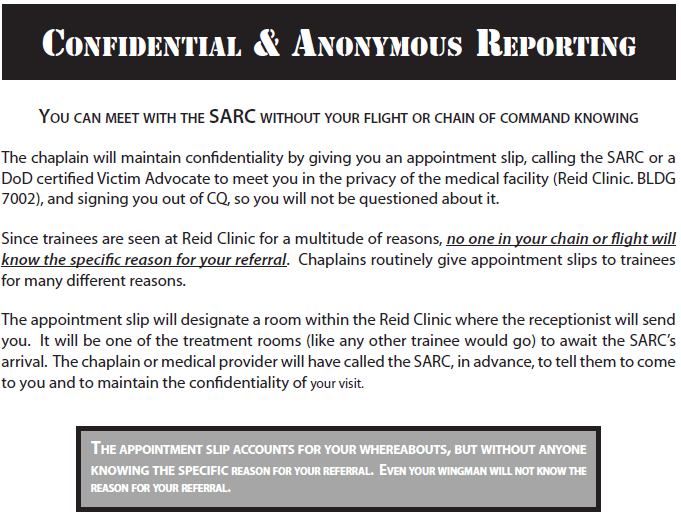
Fig 24-1: SARC confidential & anonymous reporting flow.
Summary
The Air Force is strong because of the people who serve. It's everyone's responsibility to treat everyone with respect, regardless of who they are. This section covered both professional and unprofessional interactions - and sometimes the line between the two can blur, so make sure you're aware of the difference. If you notice it happening to someone else, don't hesitate to report it.