How Air Force Enlisted Promotions Work (Amn – TSgt)
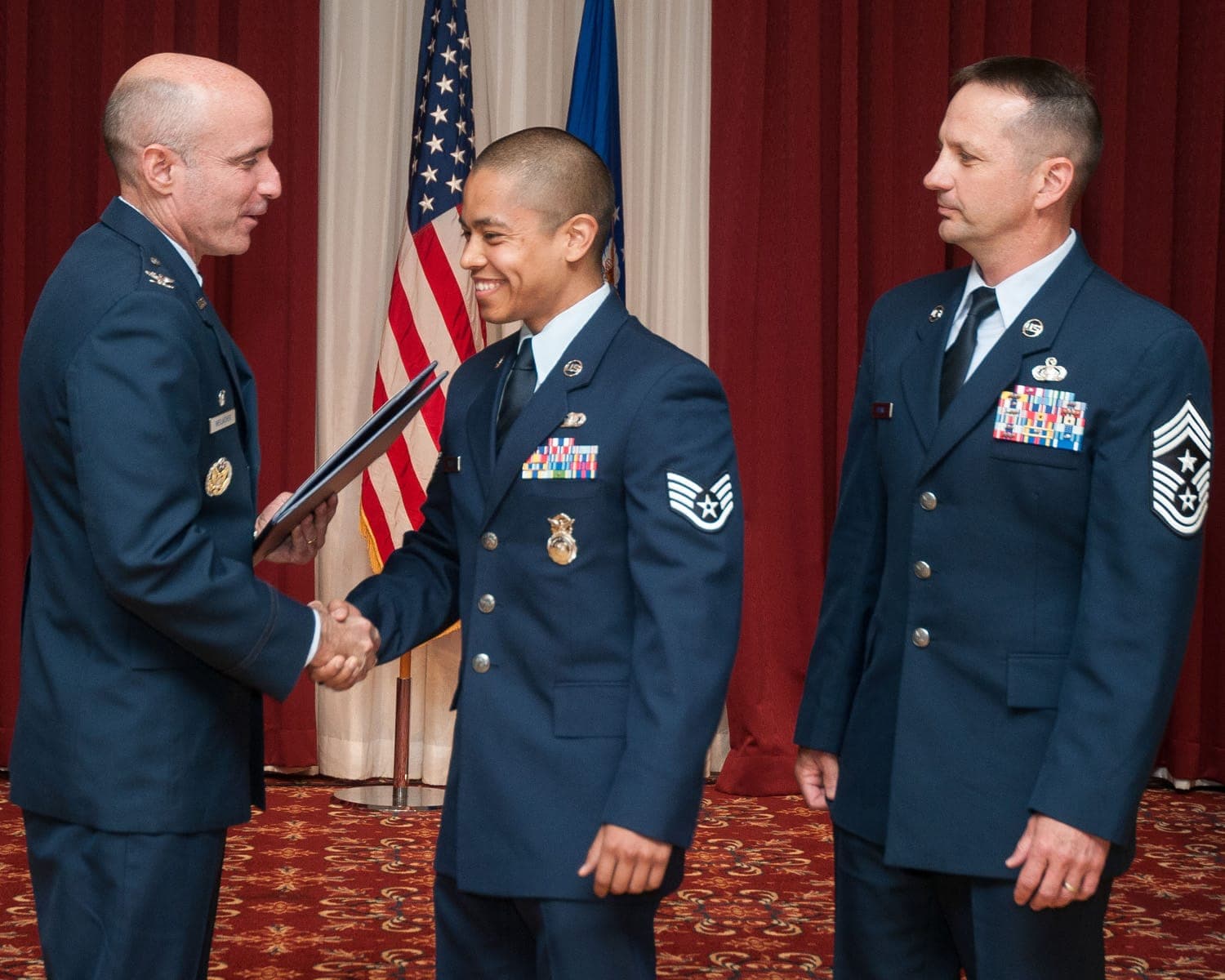
To an outsider, the Air Force enlisted promotions is a web of complexities, but fear not…I’ve outlined the basics to get you off on the right foot.
Now there are circumstances that warrant exceptions to the below guidelines (deployments, retraining, etc.), but overall this is what you’re up against.
Also, there have been a lot of changes in the last year (2015/2016) regarding promotions in the Air Force. Specifically how promotions weigh performance reports, time in service and time in grade. Be sure you are getting the most current information when you are doing your research.
Let’s get started.
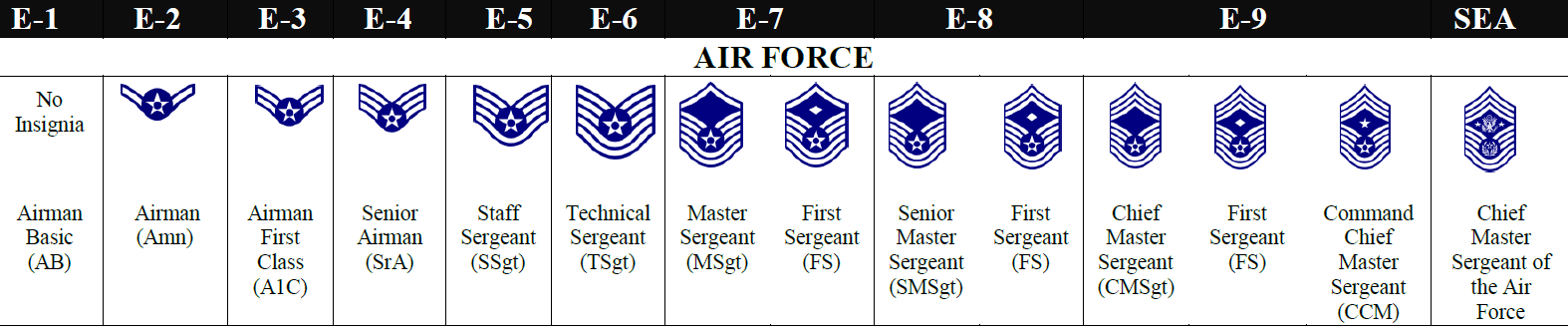
Air Force Ranks
Terms you should know
TIS: Time in Service, total amount of time in the Air Force. Determined from Service date (the day you shipped to basic training) to month leading up to testing cycle.
TIG: Time in Grade, total amount of time wearing current rank. Determined from Date of Rank (DOR) to month leading up to testing cycle.
HYT: High Year of Tenure, the highest amount of TIS you can have for a given rank
How it works and eligibility
Amn (E-2)
To be eligible, you will need at least 6 months TIG. There is no TIS requirement. Some individuals might qualify for E-2 if you have college, JROTC, or other type experience. Talk to your recruiter for eligibility!
A1C (E-3)
You’ll need at least 10 months TIG OR individuals initially enlisting for a period of 6 years are promoted after completion of either technical training or 20 weeks of technical training (start date of the 20 week period is the date you completed BMT), whichever occurs first.
SrA (E-4)
You’ll need 36 months TIS and 20 months TIG OR just 28 months TIG (whichever occurs first). For SrA, you’ll also need your 3 Skill Level.
The cool thing about SrA is that the Air Force has a Below-The-Zone (BTZ) promotion program. This is a one-time promotion consideration to advance to SrA 6 months early. You’ll compete with other Airman who are eligible on your base and usually entails a written package, and in some circumstances going before a selection board. As of writing this, there is a 15% selection rate.
SSgt and TSgt (E-5 and E-6)
SSgt: 6 months TIG, 3 years TIS, and your 5 Skill Level.
TSgt: 23 months TIG, 5 years TIS, and your 7 Skill Level.
In order to obtain these ranks, there are more requirements. On top of TIS, TIG, and AFSC Skill Level, you’ll start testing for these ranks.
Welcome to the Weighted Airman Promotion System (WAPS)!
WAPS Components and Point Breakdown
There is a lot relating to Air Force life that you don’t have control over …testing for rank isn't one of them. Testing is directly related to the amount of effort YOU put into it. If you study, then you can make rank quickly….if not, well you get the point.
Let’s breakdown the components of the promotion system.
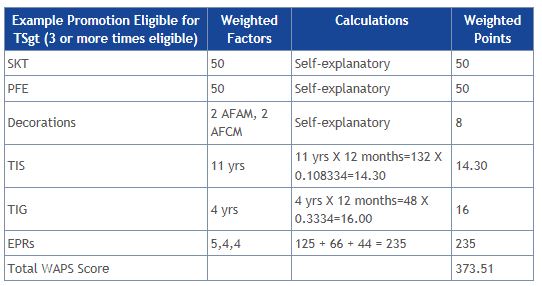
Skills Knowledge Test (SKT) – 100 Points
The SKT is much like testing for your Skill Level. In fact, you’ll even use your CDC books to study for this portion. This test consists of 50 multiple choice questions (from a test bank) all about your AFSC. You must have a minimum score of 40 on the SKT.
Promotion Fitness Examination (PFE) – 100 Points
The PFE is all about the Air Force. It consists of 50 multiple choice questions (from a test bank) that cover topics like AF history, customs and courtesies, dress and appearance, and leadership. You must have a minimum score of 40 on the PFE. Check out the link to the Official PFE Study Guides Below!
NOTE: You must have a combined score of at least 90 between the SKT and PFE
Enlisted Performance Reports (EPRs) – 250 Points
There have been a lot of changes made to the enlisted performance reports within the last year. Long story short, nearly every Airman received a high rating which began to inflate the system. Now the Air Force initiated what is called “Forced Distribution.” This means that commanders can only give out a certain percentage of ratings which is intended to preserve the integrity of the rating process.
There is a lot of debate about this but it shouldn’t concern you this early in your career. Just know that you’ll be competing against your peers for EPR ratings which could affect your total points in this component of the promotion process.
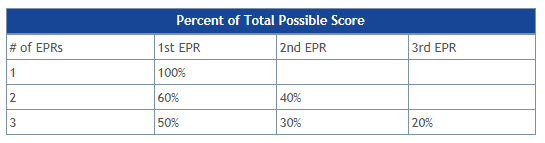
The last 3 TIG EPRs will be taken into account with the most recent ones having more weight.
Time in Grade (TIG) – 40 Points
You’ll be awarded .3334 of a point for each month of TIG up to 10 years.
Time in Service (TIS) – 26 Points
You’ll be awarded .108334 of a point for each month of Total Active Federal Military Service (TAFMS), up to 20 years.
Decorations – 25 Points
As you progress in your Air Force career, you’ll start to accumulate decorations. These decorations have point values that can help in the promotion process. For example, an Achievement Medal is 1 point. The Medal of Honor is 15 points…but don’t get your hopes up for that one!
Check out the link to MSgt Chuck Lane’s WAPS Calculator below for some more information on point values.
Example
A little confused on all of this? Let’s take a look at an example.
How you are selected and sewing on
Ok, so now you have your WAPS score. Congrats on getting through it. You’ll now be “racked and stacked” against other individuals in your AFSC that are in your promotion cycle.
Read more about decoding AFSCs here
Each AFSC will then set the percentage/number of promotions for each grade based on things like projected gains, losses, promotions and manning. It is WAY more complicated than just these things but just know that a lot of thought goes into it and out comes a total number of promotions needed. The Air Force Personnel Center then takes that number of individuals with the highest score. The lowest score of those selected is the “cut off score.” So, if your AFSC needs 100 SSgt’s, then the top 100 individuals with the highest score get selected. This means that the cut off score varies from year to year based on how well people test and the total number of promotions that year.
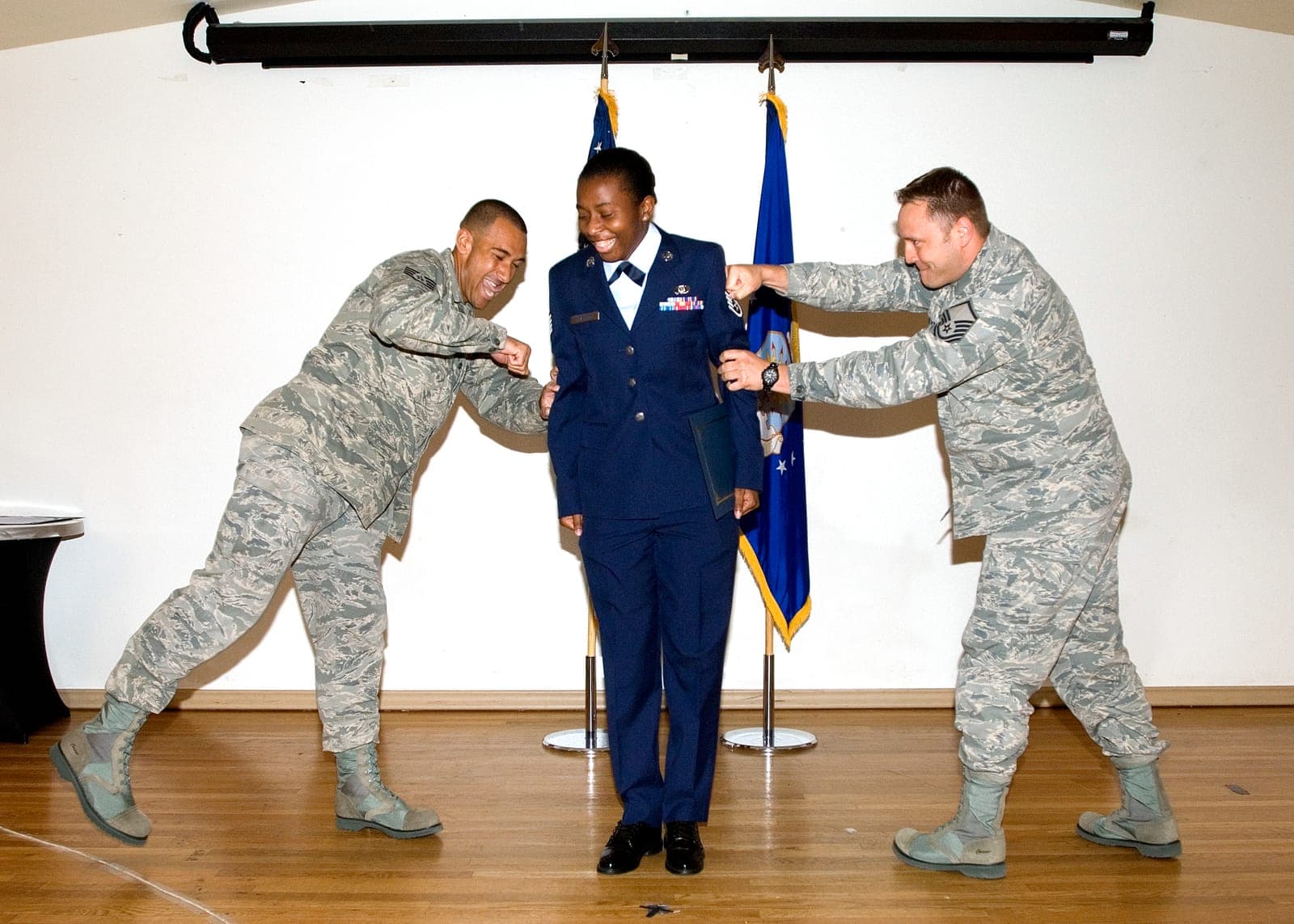
Once the list of selectees is created then they release the results across the Air Force at one time. Leadership get the first look at the list so they can make a big deal about it. Promotion result days are pretty cool with a lot of energy in the air and you’ll usually be “surprised” by your Commander, Command Chief, First Sergeant, and/or supervisor and they’ll announce to everyone around of your selection for promotion. Some bases/units have a ceremony where they’ll call all the selectees up on stage to publicly recognize them.
One tradition the Air Force has is tacking on the new rank. Back in the not so politically correct days, the selectees would get punched in the shoulder by their peers to “tack” on the new rank. Now-a-days, it is mostly symbolic with a gentle punch…BUT there will be some people who might let one loose! It mostly depends on the unit dynamics and personality of those people involved.
For the Airman Tier promotions (E2-E4), you’ll be given a sew-on date, which is your Date of Rank (DOR). This is also the date that you start getting paid for that grade as well! Yeah money!
For the NCO Tier (E5-E6) you’ll be given a “Line Number” for sewing on and getting paid. This is determined by taking the total number of selectees and dividing them by 12 months. If you were the number 1 selectee for your AFSC then you’ll be sewing on the following month. If you were the last selectee on the list then you have to wait a year to sew on. Clear? Good.
Promotion Statistics/Information
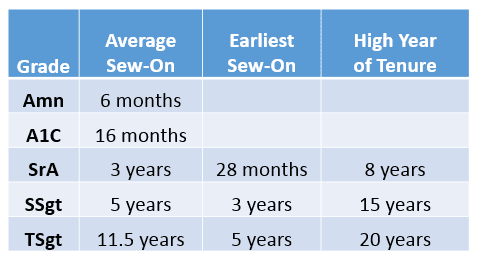
Here you'll find the average sew-on, earliest sew-on and high year tenure (HYT) for each rank. Remember that these are across the AF, not specific to your AFSC.
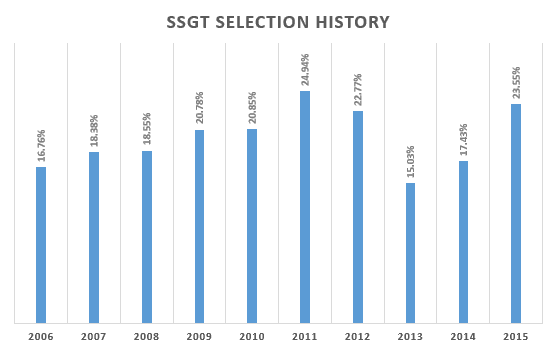
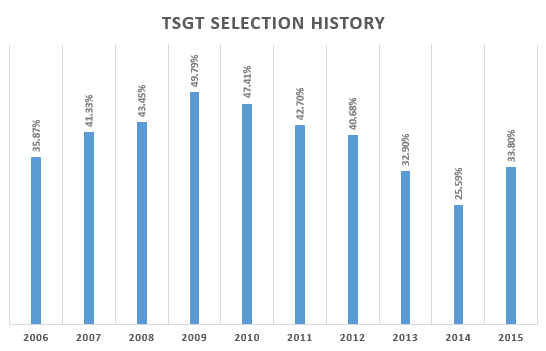
Here you’ll see a 10 year history of selection across the Air Force, but keep in mind that you are competing against individuals in your AFSC. Your AFSC may have a higher or lower selection rate than the AF average. These charts will give you an idea of your chances though.
Here comes the motivational speech
Making rank for the Airman Tier is pretty automatic IF you keep to the straight and narrow path. Stay out of trouble and you’ll move up and get paid more! Don’t be stupid by ruining your future because of one bad decision during one crazy night. The decisions you make today WILL affect you tomorrow. Remember that.
As for testing, this is where you can shine. You can take your career into your own hands by putting in the effort to STUDY. If you don’t study, then don’t get upset for being passed up for promotion again. Amount of effort increases chances of promotion.
Also, be sure to explore how other people study for rank. I’m sure they’ll be more than happy to download their experience to help you out and increase your chances!
Want more?
Official Air Force PFE Study Guides and other study material: http://www.studyguides.af.mil/
AFI 36-2502, Enlisted Airman Promotion/Demotion Programs, 12 DEC 2014 (139 Pages): http://static.e-publishing.af.mil/production/1/af_a1/publication/afi36-2502/afi36-2502.pdf
WAPS Calculator (by MSgt Chuck Lane): http://www.wapscalc.com
Keep Reading
What are some of the challenges of serving in the Air Force?
In this post, we dive into and address some of the more common challenges of serving in the Air Force. Deployments, PCSing, Spouses Employment, etc...

GI Bill and Tuition Assistance
GI Bill and Tuition Assistance
An Overview of Enlisted Military Pay
An Overview of Enlisted Military Pay
Thinking of Enlisting in the Air Force?
A starting guide for anyone thinking of enlisting in the Air Force: questions to ask, mistakes to avoid, recruiting, job selection, pay, and benefits.