3E9X1 · Support
Emergency Management
Also known as: EM
Last updated
At a glance
- ASVAB minimums
- G 62
- Security clearance
- Secret
- Tech school
- Fort Leonard Wood, Missouri · 67 days
- Career field size
- 653 Airmen
- Possible bases
- 44 stateside · 19 overseas
- Civilian equivalent pay
- $41k–$116k
- U.S. citizenship required
Table of ContentsShow
What does the Emergency Management career field do?
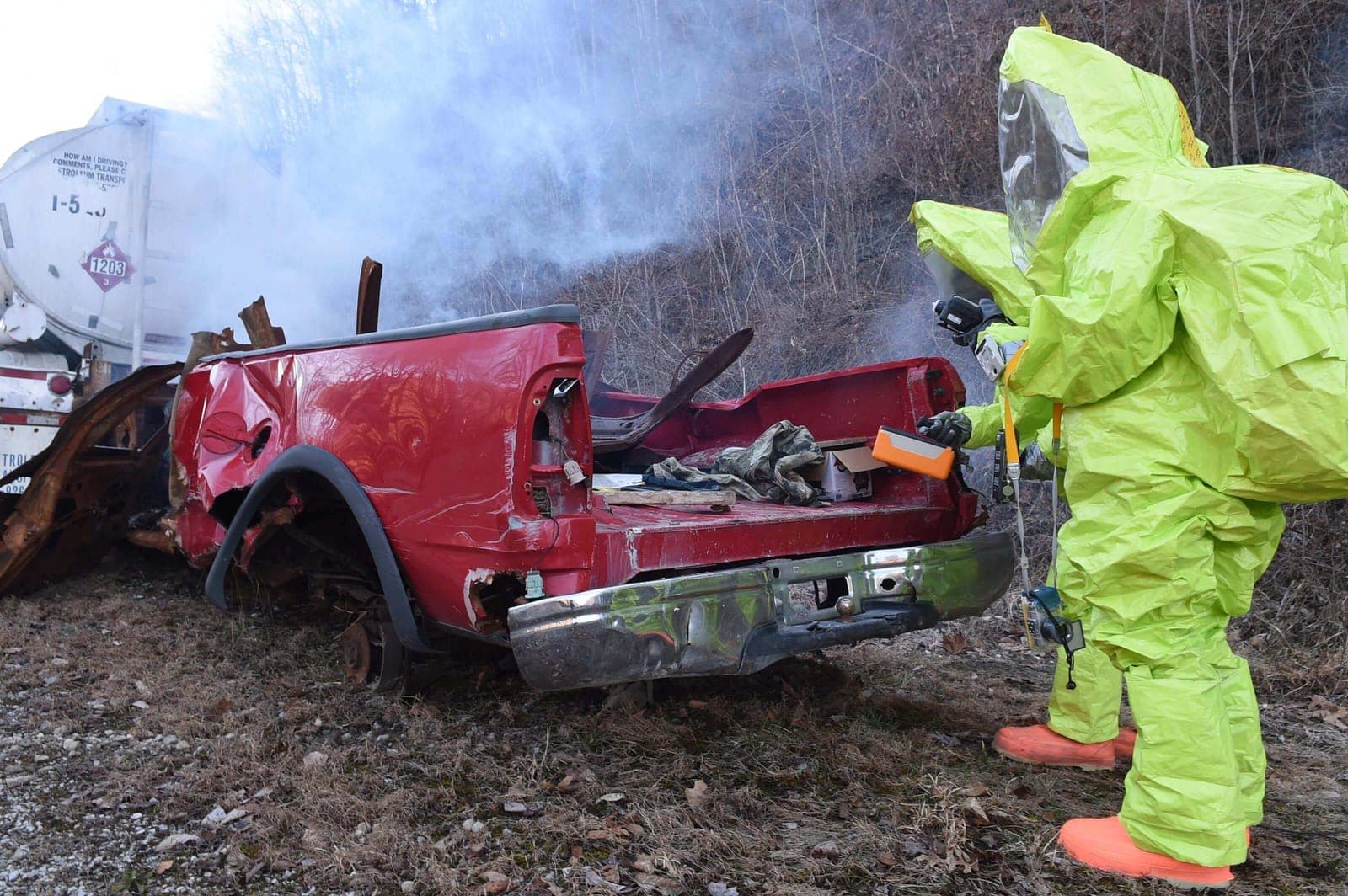
Administers the Department of the Air Force’s unifying all-phase, all-hazards counter-effects program. Organizes mission-driven activities and investments across planning, preparation, mitigation, and response phases of execution to support data driven decisions for commanders at all levels. Conducts education, training, exercises, and validation events to prepare assigned and apportioned forces to execute mission command during major accidents, natural disasters and state and non-state employment of Weapons of Mass Destruction (WMD) against air, space and cyber projection platforms. Responds to nuclear weapons incidents and accidents to preserve global deterrence. Performs Chemical, Biological, Radiological and Nuclear (CBRN) response, warning and reporting to limit the ability of adversaries to affect changes to the permissibility operating environment and incur cost on friendly forces. Delivers intelligence analysis and operational recommendations to each echelon of command to sustain combat power. Provides CBRN passive defense expertise to building partnership capacity efforts and coalition, joint and interagency boards, bureaus, centers, cells and working groups (B2C2WG) to integrate service missions into operational planning activities. Related DoD Occupational Subgroup: 149400.
Duties and responsibilities
- Conducts installation level Emergency Management (EM) activities. Executes CBRN response operations utilizing specialized testing equipment to identify and quantify threats during hazardous materials (HAZMAT) and suspected weapons of mass destruction (WMD) events. Establishes, monitors, and maintains specialized CBRN threat detection network to identify contamination, mitigate hazards, protect personnel, and restore Air, Space and Cyber mission sets Coordinates actions to ensure prompt response during EM operations including immediate mobilization of resources and participation of agencies and organizations. Utilizes scientific computer systems and software to construct detailed CBRN plume models to predict contamination and hazard footprints. Collects, interprets, and analyzes CBRN threat data to provide classified risk assessments for commanders and senior enlisted leaders to perform their missions. Determines contamination levels, identifies contaminated areas, and predicts CBRN hazard duration timelines. Collects and prepares samples and ensures proper transport of samples from suspected CBRN and weapons of mass destruction (WMD) events. Advises, directs, and supervises EM and CBRN specialized teams Establishes, monitors, and maintains an integrated CBRN detection, warning, and reporting system. Conducts individual protection determinations, decontamination, warning, and reporting activities. Administers electronic systems to track training and equipment statistics and conducts Defense Readiness Reporting System updates. Manages all aspects of EM Education and Training Program. Develops and distributes multimedia presentations, lesson plans, educational pamphlets, and handouts to support training and preparedness efforts. Instructs indoor and outdoor training using lecture and demonstration-performance methods for assigned installation populations. Determines resource requirements, develops budgets, executes, and monitors expenditures for EM and CBRN materials and equipment. Ensures authorized and required CBRN protective equipment and clothing, detection devices and monitoring instruments are available, calibrated and in serviceable operating condition. Acts as the installation liaison to the local emergency planning committee (LEPC) to foster collaborative relationships before incidents, accidents, and other engagements. Develops and coordinates EM support and mutual aid agreements. Manages and executes the Installation Emergency Management (EM) Program. Implements DoD, AF, and national consensus standards and guidance into installation level instructions, plans, guides, and checklists. Develops and coordinates EM planning activities. Provides input to and develops program guidance, local support agreements and other documents supporting homeland defense and expeditionary operations. Integrates with allies and partners to standardize coalition tactics, techniques and procedures using an all-hazard approach to strengthen deterrence and operational feasibility across the range of military and humanitarian aid operations. Performs Quality Assessment Evaluation and reviews Performance Work Statements on nontechnical contracts for compliance.
- Conduct Headquarters, Center, and Agency EM activities. Conducts CBRN and WMD Planning, Programming Budgeting and Execution activities. Attends DoD, DAF, MAJCOM, and center B2C2WGs to advocate for DAF EM program policy and resourcing equities. Evaluates EM force strength and equipment resourcing levels against applicable campaign, operational and concept plans and where present, branch and sequel plans. Monitor joint and commercial technological advances and integrate into joint and service resourcing strategies. Represent DAF equities to the DoD Emergency Management Steering Group. Maintain professionalization for enlisted, officer and civilian career paths. Continuously evaluate DAF EM training products and exercise use case scenarios against adversary fielded threats, intelligence products and operational concepts.
Specialty qualifications
Knowledge. is mandatory of the characteristics and effects of CBRN weapons is mandatory; detection and identification of CBRN contamination; threat and hazard analysis; passive defense measures; principles of contamination control; related technical information, policies, procedures, techniques, and equipment; and EM and contingency planning, training, operations, equipment supply procedures, directives, and policies.
Must have a working knowledge about DAF EM program operations, training, and logistics functions. This includes (but not limited to) force bed down, phases of response, deployment operations, and organizations for response, principles of mitigation preparedness, response, and recovery from major accidents and natural disasters, CE contingency training, operations, and equipment
Education. For entry into this specialty, completion of high school with courses in algebra, biology, physics, chemistry, typing, computer operations, and speech are recommended.
Training. The following training is mandatory for award of the AFSC indicated:
- 3E931. Completion of the basic EM Apprentice course and the CBRN Responders Course.
- 3E951. Completion of the CE 3-Level Common Core Concept; EM Journeyman Distance Learning (DL) Course; FEMA IS-100, IS 200, IS 700, and IS 800 courses; and Automated Readiness Information System (ARIS) training offered by Air Force Civil Engineer Center.
- 3E971. Completion of the Craftsman (7-skill level) EM course.
- 3E991. Complete of the Superintendent (9-skill level) EM SNCO course.
Experience. The following experience is mandatory for award of the AFSC indicated:
- 3E951. Qualification in and possession of AFSC 3E931. Also, experience performing functions supervised activities associated with EM operations, training, and logistics functions.
- 3E971. Qualification in and possession of AFSC 3E951. CBRN Team Lead. Also, experience performing or supervising functions associated with EM operations, training, and logistics functions.
- 3E991. Qualification in and possession of AFSC 3E971. CBRN Superintendent. Also, experience directing functions such as EM programs, or evaluating, planning, and organizing installations-level EM activities.
- Other. The following are mandatory as indicated:
- See attachment 4 for additional entry requirements.
- For entry, award, and retention of these AFSCs:
- Ability to speak distinctly.
- Normal color vision as defined in DAFMAN 48-123, Medical Examinations and Standards.
- For AFSCs 3E911/31/51, must possess a valid state driver’s license to operate government motor vehicles (GMV) in accordance with AFI 24-301, Ground Transportation.
- For AFSCs 3E911/31/51, qualification to operate government motor vehicles and vehicular equipment for “Maintenance Purposes Only” according to AFI 24-301.
- AFSCs 3E911/31/51/71, no record of claustrophobia or claustrophobic tendencies.
- Must be able to lift 50 lbs.
- For award and retention of these AFSCs:
- Must maintain local network access IAW AFI 17-130, Cybersecurity Program Management and DAFMAN 17-1301, Computer Security.
- Specialty requires routine access to Tier 3 (T3) information, systems, or similar classified environments. For award and retention of AFSCs 3E9XX, completion of a current T3 Investigation required IAW DoDM 5200.02, AFMAN 16-1405, Air Force Personnel Security Program, is mandatory.
- For retention of the AFSC if awarded 3 skill level, 2 years of lack of recent performance AFSC is withdrawn IAW DAFMAN 36-2100.
- For retention of the AFSC if awarded 5 skill level, 4 years of lack of recent performance then downgraded to 3 skill level and then 2 more years of non performance AFSC is withdrawn IAW DAFMAN 36-2100.
- For retention of the AFSC if awarded 7 or 9 skill level, 6 years of lack of recent performance then downgraded to 3 skill level and then 2 more years of non performance AFSC is withdrawn IAW DAFMAN 36-2100.
- Retraining into AFSC 3E9X1 is restricted to the grades of E-6 and below with less than 10 years of Total Active Federal Military Service. CBRN operators require experienced technical leadership to successfully execute their mission sets. NOTE: Award of the entry level without a completed T3 Investigation is authorized provided an interim Secret security clearance has been granted according to DoDM 5200.02, AFMAN 16-1405.
Civilian career paths
Comparable civilian careers for this field pay roughly $40,980 to $115,640 per year (median salaries; varies by role and location):
- Biological Technicians: $46,340
- Broadcast Technicians: $43,570
- Business Continuity Planners: $77,420
- Chemical Technicians: $49,820
- Compliance Officers: $71,100
- Dispatchers: $40,980
- Emergency Management Directors: $76,250
- Environmental Engineering Technologists and Technicians: $51,630
- Environmental Engineers: $92,120
- Environmental Science and Protection Technicians, Including Health: $46,850
- Environmental Scientists and Specialists, Including Healt: $73,230
- Financial Risk Specialists: $83,660
- First-Line Supervisors of Firefighting and Prevention Workers: $78,870
- First-Line Supervisors of Office and Administrative Support Workers: $58,450
- Forensic Science Technicians: $60,590
- General and Operations Managers: $103,650
- Hazardous Materials Removal Workers: $45,270
- Logisticians: $76,270
- Nuclear Monitoring Technicians: $84,190
- Nuclear Technicians: $84,190
- Occupational Health and Safety Specialists: $76,340
- Occupational Health and Safety Technicians: $53,340
- Public Safety Telecommunicators: $43,290
- Technical Writers: $74,650
- Telephone Operators: $37,710
- Training and Development Managers: $115,640
- Training and Development Specialists: $62,700
- Transportation, Storage, and Distribution Managers: $96,390
ASVAB requirements
To qualify for 3E9X1, you need:
Enter your scores in the AFSC explorer and this section will check each requirement for you.
Entry requirements
Medical profile (PULHES)ShowHide
PULHES scale: lower numbers mean a stricter medical standard. Tap a letter for what it measures.
Vision requirementsShowHide
Medical disqualifiersShowHide
These screened conditions disqualify a candidate for this AFSC:
Physical requirementsShowHide
Security & backgroundShowHide
Where you could be stationed
Stateside (44)
- Altus, Oklahoma
- Barksdale, Louisiana
- Beale, California
- Bolling, District Of Columbia
- Cannon, New Mexico
- Columbus, Mississippi
- Creech, Nevada
- Davis-Monthan, Arizona
- Dover, Delaware
- Dyess, Texas
- Eglin, Florida
- Ellsworth, South Dakota
- F E Warren, Wyoming
- Fairchild, Washington
- Fort George Meade, Maryland
- Goodfellow AFB, Texas
- Grand Forks, North Dakota
- Hill, Utah
- Holloman, New Mexico
- Hurlburt Field, Florida
- JB Andrews, Maryland
- JB Charleston, South Carolina
- JB Langley-Eustis, Virginia
- JBSA Randolph, Texas
- Joint Base McGuire-Dix-Lakehurst, New Jersey
- Keesler, Mississippi
- Laughlin, Texas
- Little Rock, Arkansas
- Luke, Arizona
- MacDill, Florida
- Malmstrom, Montana
- McConnell, Kansas
- Minot, North Dakota
- Moody, Georgia
- Mountain Home, Idaho
- Nellis, Nevada
- Robins, Georgia
- Scott, Illinois
- Seymour Johnson, North Carolina
- Shaw, South Carolina
- Travis, California
- Tyndall, Florida
- Vance, Oklahoma
- Whiteman, Missouri
Overseas (19)
- Alconbury, United Kingdom
- Andersen, Guam
- Aviano, Italy
- Daegu AB, South Korea
- Eielson, Alaska
- Incirlik AB, Turkey
- JB Elmendorf-Rich, Alaska
- JB Prl Hbr-Hickam, Hawaii
- Kadena, Japan
- Kunsan, South Korea
- Lajes, Portugal
- Lakenheath, United Kingdom
- Mildenhall, United Kingdom
- Misawa, Japan
- Moron, Spain
- Osan AB, South Korea
- Ramstein, Germany
- Spangdahlem AB, Germany
- Yokota, Japan
Badges & identifiers
Duty badges
The occupational badge worn by Airmen in this career field.
- Emergency Management Badge
Duty identifiers
Special duty patches and identifiers associated with this AFSC.
- CBRN Duty Identifier
Degrees & training plan
While serving in 3E9X1 you can earn an associate degree through the Community College of the Air Force:
- Emergency Management
- Career Field Education & Training Plan (CFETP)View CFETP (PDF, opens in a new tab)
The CFETP is the official Air Force document describing this career field's full training pipeline, from tech school through advanced skill levels.
Videos, Reddit & resources
3E9X1 videos(12)
These do not reflect official U.S. Air Force views and may contain inaccuracies — negative opinions are often overrepresented online.
Air Force Emergency Managers (3E9X1)
Airman Vision · 9/12/2025
1 of 12 videos
Reddit discussions(5)
These do not reflect official U.S. Air Force views and may contain inaccuracies — negative opinions are often overrepresented online.
Official links & resources(3)
Researching other jobs too? Every career field's videos and discussions are collected the same way — browse all AFSCs.
Frequently asked questions
- What ASVAB score do you need for Emergency Management (3E9X1)?
- You need General 62+ on the ASVAB to qualify for 3E9X1.
- Where can Emergency Management Airmen get stationed?
- 3E9X1 Airmen serve at 63 bases: 44 stateside and 19 overseas, including Alconbury, United Kingdom, Andersen, Guam, Aviano, Italy.
- Does 3E9X1 require a security clearance?
- Yes — Emergency Management requires a Secret clearance.
- How long is tech school for Emergency Management?
- Tech school for 3E9X1 runs about 67 days at Fort Leonard Wood, Missouri.
Where this data comes from
Most of the data on this page comes from the Air Force Enlisted Classification Directory (AFECD) and recruiter TTMS readouts, which are no longer released publicly. Pulling it together and keeping it accurate takes real time, so I update these pages as often as I can.
Requirements do change between updates. Before you make any decisions, confirm the details with your recruiter. They always have the latest word.