2W2X1 · Logistics & Maintenance
Nuclear Weapons
Last updated
At a glance
- ASVAB minimums
- M 55
- Security clearance
- Top Secret
- Tech school
- Sheppard, Texas · 67 days
- Career field size
- 683 Airmen
- Possible bases
- 7 stateside · 7 overseas
- Civilian equivalent pay
- $35k–$109k
- U.S. citizenship required
Table of ContentsShow
What does the Nuclear Weapons career field do?
The Nuclear Weapons Systems career field is responsible for the safety, security, life-cycle logistics, and accountability of all nuclear munitions and select strategic systems in the United States Air Force stockpile. This career field is also responsible for the maintenance, production, and systems operations needed to sustain, modify, inspect, assemble, account for, and handle nuclear munitions in support of national security objectives. Airmen assigned to the Nuclear Weapons Systems career field develop skills toward gaining industry recognized professional degrees and certifications in Supply Chain Management, Logistics, Project Management, Commercial Driver’s License, Hazardous Materials Management, Instructional Trainer, Safety, and more. Related DoD Occupational Subgroup: 114000.
Duties and responsibilities
- Supply Chain Management. Airmen working in this career field learn to manage nuclear weapons materiel and components throughout the supply chain from delivery into Department of Defense custody through all life-cycle phases until returned to final Department of Energy custody. Airmen will utilize various transportation modes such as ground and air while managing the shipment of hazardous cargo globally. Additionally, they will perform nuclear weapons materiel management, logistics, and accounting functions to ensure compliance with U.S. law, U.S. Treaties, Mutual Defense Agreements as well as Department of Defense and Department of Energy policy. This involves managing inventory processes and controlling auditable source documentation to ensure validity and completeness. Airmen learn how to monitor excess materiel, develop maintenance schedules, and operate inventory management software for materiel accounting, reporting, and configuration control. Nuclear Weapons Airmen will oversee periodic surveillance inspection cycles and coordinate maintenance activities on reliability status of and corrective actions for components.
- Production Management. Airmen learn the process and art of maintenance, inspection, troubleshooting, and assembly on nuclear weapons, weapon systems, handling equipment, support equipment, and test equipment to meet mission requirements. They will install and remove nuclear warheads, bombs, missiles and reentry vehicles and systems from/to weapon system platforms. Additionally, they will learn how to collaborate and prioritize operational requirements to optimize internal and external customer support.
- Program and Project Management. As their experience increases, Airman will develop plans, schedules, dynamic teams and techniques required to establish key milestones, identify opportunities to improve, develop long-term organizational goals and track performance indicators. Airman performing these roles will provide updates to senior leaders on the management of facilities, personnel, and programs in accordance with United States, Department of Defense, and international policies.
- Resource Management. Nuclear Weapons Systems Airmen learn to procure, manage, operate, and maintain nuclear weapons specific testing equipment as well as a wide range of vehicles and handling equipment commonly used in the private sector suck as flatbed trucks, 4k-25k forklifts, 25-40-foot tractor trailers, pallet jacks, pneumatic hoists and gantries, and aerospace ground equipment. They will develop the skills and techniques required to manage programs, facilities, personnel, and data in accordance with the Air Force, Department of Defense, state, federal, and international policies.
- Leadership and Human Capital Development. Upon arrival at their first duty station, Airmen immediately begin learning how to be a team member during nuclear weapons maintenance operations. As Airmen gain experience and are awarded the Journeyman skill-level they will become a team chief and lead small teams supporting nuclear weapons sustainment including maintenance, accountability, transportation, and command and control while adhering to explosive safety and Occupational Safety and Health Administration standards. Upon award of the craftsman skill level, Nuclear Weapons Systems Airmen are tasked with roles such as production supervisors, and/or Noncommissioned Officer in Charge (NCOIC), and are responsible for leading several teams within the Flight/Squadron organizational structure. Lastly, as Nuclear Weapons Systems Airmen continue to refine their leadership skills, they will be awarded the Superintendent skill level. As Superintendents, they will have the responsibility to lead multiple NCOIC teams within the Production, Munitions Systems, Air Launched Cruise Missile, or Special Weapons flights or be assigned as a Senior Enlisted Leader, Major Command Functional Manager, or Career Field Functional Manager.
- Training and Development. The Nuclear Weapons Systems career field places significant focus on training and development of Airmen with initial technical training programs being held ad Sheppard AFB, Texas. Throughout an Airman’s career, they may be expected to attend advancement courses to qualify for key positions, skill level upgrade, and college credits towards the Munitions Systems Technology degree from the Community College of the Air Force. They also have opportunities to earn logistics, acquisition, information technology, and project management certifications, as well as serve in key roles as instructors, advisors, evaluators, managers, and leaders at all Air Force organizational levels. Additionally, nuclear weapons units also establish local recurring training and development programs for all skill levels and ranks, ensuring continued growth for Airmen throughout their career.
Specialty qualifications
Knowledge. Knowledge of the following is mandatory: electrical and mechanical principles; nuclear weapons safety, storage, security, environmental requirements and procedures; inventory and stock control techniques; interpreting block diagrams, technical guidance, and drawings; precise measuring tools and equipment; and proper handling, use, and disposition of hazardous and nonhazardous waste and materials.
Education. For entry into this specialty, completion of high school or General Educational Development equivalency is mandatory. Courses in mechanics, physics, or basic electricity are desirable.
Training. The following in-residence training is mandatory for award of the AFSC indicated:
- 2W231. Completion of the Nuclear Weapons Apprentice Course, J3ABR2W231-047A.
- 2W251. Completion of the 2W251 Career Development Course (CDC), 12 months of on-the-job training (OJT), and 12-month certification as a team member on a weapons maintenance, mate/demate, or handling task as outlined in AFMAN 21-204, Nuclear Weapons Maintenance.
- 2W271. Completion of the 2W271 CDC, 12 months OJT, and 12-month certification as a team chief on a weapons maintenance, mate/demate, or handling task as outlined in AFMAN 21-204.
- 2W291. Completion of the Advanced Nuclear Munitions System Course (J3AAR2W291 047X).
Experience. The following experience is mandatory for award of the AFSC indicated:
- 2W251. Qualification in and possession of AFSC 2W231. Also, experience in functions such as inspecting, maintaining, storing, handling, and repairing nuclear weapons, weapon components, and using related test and handling equipment.
- 2W271. Qualification in and possession of AFSC 2W251. Also, experience in performing or supervising functions such as inspecting, maintaining, storing, handling, and repairing nuclear weapons, weapon components, and related test and handling equipment.
- 2W291. Qualification in and possession of AFSC 2W271 and completion of the Advanced Nuclear Munitions System Course (J3AAR2W291 047X). Also, experience managing nuclear weapons and associated resources to include directing functions such as inspecting, maintaining, storing, handling, repairing nuclear weapons, weapon components, and related test and handling equipment.
Other. The following are mandatory as Indicated:
- For entry into this specialty
- No fear of working around nuclear weapons or components, nor have an identifiable negative opinion of the role of nuclear weapons within our nation’s strategic deterrence mission.
- Meet mandatory AFSC aptitude, physical profile, and citizenship entry requirements identified in attachment 4.
- Normal color vision as defined in DAFMAN 48-123, Medical Examinations and Standards. Note: 55 on the CCT or 10/14 on the PIP is acceptable for entry into the career field. CCT should be utilized as primary testing choice, but PIP is acceptable if CCT is not available at testing site.
- Normal depth perception as defined in the Medical Standards Directory, a companion document to DAFMAN 48-123, Medical Examinations and Standards.
- No history of excessive alcohol use or been arrested in the past two years for two or more alcohol related incidents regardless of disposition, except when found not guilty.
- Must not have used a substance (sniffing/huffing) to obtain an altered conscious state from aerosol spray, lighter fluid, petrochemical, adhesives, Freon, or any other chemical for a purpose not intended for use.
- Within three years prior to entry into military service, not have been terminated from civilian employment more than twice for reasons of misconduct, theft, or alcohol use.
- No current diagnosis of Attention Deficit Disorder/Attention Deficit Hyperactivity Disorder or perceptual or learning disorder(s), with no use of medication(s) to treat same in the last 12 months.
- Never been convicted of domestic violence IAW the Lautenberg amendment to the Gun Control Act of 1968 and AFI 31-117, Arming and Use of Force by Air Force Personnel.
- Accessions must be screened for eligibility and meet requirements of the Personnel Reliability Assurance Program (PRAP) as outlined in the HQ AETC PRP Prescreening guidance. Retraining applicants must be PRP Prescreened prior to retraining selection. While in technical training applicants will be Administratively Qualified in accordance with PRP standards as outlined in the DoDM 5210.42_DAFMAN 13-501, Nuclear Weapons Personnel Reliability Program (PRP).
- See attachment 4 for additional entry requirements.
- For award, and retention, the following is mandatory:
- Must maintain entry requirements.
- Must attain/maintain training standards and task certifications according to specific duty position Job Qualification Standard.
- No recorded evidence of personality disorder that negatively affects duty performance.
- No record of sustained, untreatable emotional instability as specialty requires continued access to nuclear weapons and components.
- Must meet eligibility requirements to fill critical PRP positions in accordance with DoDM 5210.42_DAFMAN 13-501.
- Must maintain local network access IAW AFI 17-130, Cybersecurity Program Management and AFMAN 17-1301, Computer Security (COMPUSEC).
- Specialty requires routine access to Tier 5 (T5) information, systems, or similar classified environments. For award and retention, completion of a T5 Investigation is mandatory in accordance with DoDM 5200.02_AFMAN 16-1405, Air Force Personnel Security Program. NOTE: Award of the entry level without a completed T5 Investigation is authorized provided an interim Top Secret security clearance has been granted according to DoDM 5200.02_AFMAN 16-1405.
- Individuals with suspended clearances greater than 180 calendar days will be considered for removal from the AFSC.
- NOTE: All AFSC withdrawals must be coordinated with AF/A4LW.
Civilian career paths
Comparable civilian careers for this field pay roughly $35,260 to $108,790 per year (median salaries; varies by role and location):
- Aviation Inspectors: $78,400
- Electrical and Electronic Engineering Technologists and Technicians: $67,550
- Electrical and Electronics Repairers, Commercial and Industrial Equipment: $62,010
- Electro-Mechanical and Mechatronics Technologists and Technicians: $59,800
- Emergency Management Director: $76,250
- Explosives Workers, Ordnance Handling Experts, and Blasters: $48,510
- First-Line Supervisors of Mechanics, Installers, and Repairers: $70,240
- Hazardous Materials Removal Workers: $45,270
- Heavy and Tractor-Trailer Truck Drivers: $47,130
- Helpers--Installation, Maintenance, and Repair Workers: $31,760
- Industrial Production Managers: $108,790
- Inspectors, Testers, Sorters, Samplers, and Weighers: $40,460
- Light Truck Drivers: $37,050
- Maintenance and Repair Workers, General: $40,850
- Maintenance Workers, Machinery: $50,100
- Office Clerks, General: $35,330
- Operating Engineers and Other Construction Equipment Operators: $49,770
- Order Clerks: $35,590
- Quality Control Systems Managers: $108,790
- Shipping, Receiving, and Inventory Clerks: $35,260
- Transportation, Storage, and Distribution Managers: $96,390
ASVAB requirements
To qualify for 2W2X1, you need:
Enter your scores in the AFSC explorer and this section will check each requirement for you.
Entry requirements
Medical profile (PULHES)ShowHide
PULHES scale: lower numbers mean a stricter medical standard. Tap a letter for what it measures.
Vision requirementsShowHide
Medical disqualifiersShowHide
These screened conditions disqualify a candidate for this AFSC:
Education prerequisitesShowHide
Security & backgroundShowHide
Where you could be stationed
Stateside (7)
- Barksdale, Louisiana
- Eglin, Florida
- F E Warren, Wyoming
- Kirtland, New Mexico
- Malmstrom, Montana
- Minot, North Dakota
- Whiteman, Missouri
Overseas (7)
- Aviano, Italy
- Buchel, Germany
- Ghedi, Italy
- Incirlik AB, Turkey
- Kleine Brogel, Belgium
- Ramstein, Germany
- Volkel, Netherlands
Badges & identifiers
Duty badges
The occupational badge worn by Airmen in this career field.
- Maintenance Badge
Duty identifiers
Special duty patches and identifiers associated with this AFSC.
- 2W2X1 Duty Identifier
- NUCMX Duty Identifier
- NUKES Duty Identifier
Degrees & training plan
While serving in 2W2X1 you can earn associate degrees through the Community College of the Air Force:
- Munitions Systems Technology
- Nuclear Weapons Systems Technology
- Career Field Education & Training Plan (CFETP)View CFETP (PDF, opens in a new tab)
The CFETP is the official Air Force document describing this career field's full training pipeline, from tech school through advanced skill levels.
Videos, Reddit & resources
2W2X1 videos(3)
These do not reflect official U.S. Air Force views and may contain inaccuracies — negative opinions are often overrepresented online.
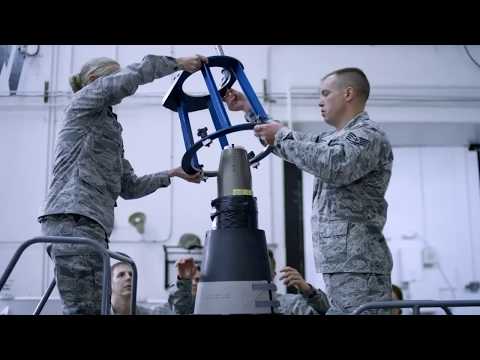
Air Force Jobs - Nuclear Weapons
Sandboxx · 10/3/2016
1 of 3 videos
Reddit discussions(4)
These do not reflect official U.S. Air Force views and may contain inaccuracies — negative opinions are often overrepresented online.
Official links & resources(1)
Researching other jobs too? Every career field's videos and discussions are collected the same way — browse all AFSCs.
Frequently asked questions
- What ASVAB score do you need for Nuclear Weapons (2W2X1)?
- You need Mechanical 55+ on the ASVAB to qualify for 2W2X1.
- Where can Nuclear Weapons Airmen get stationed?
- 2W2X1 Airmen serve at 14 bases: 7 stateside and 7 overseas, including Aviano, Italy, Buchel, Germany, Ghedi, Italy.
- Does 2W2X1 require a security clearance?
- Yes — Nuclear Weapons requires a Top Secret clearance.
- How long is tech school for Nuclear Weapons?
- Tech school for 2W2X1 runs about 67 days at Sheppard, Texas.
Where this data comes from
Most of the data on this page comes from the Air Force Enlisted Classification Directory (AFECD) and recruiter TTMS readouts, which are no longer released publicly. Pulling it together and keeping it accurate takes real time, so I update these pages as often as I can.
Requirements do change between updates. Before you make any decisions, confirm the details with your recruiter. They always have the latest word.