2M0X1 · Logistics & Maintenance
Missile and Space Systems Elect Maintenance
Last updated
At a glance
- ASVAB minimums
- M 55+E 50
- Security clearance
- Top Secret
- Tech school
- Vandenberg, California · 59 days
- Career field size
- 812 Airmen
- Possible bases
- 8 stateside · 1 overseas
- Civilian equivalent pay
- $36k–$109k
- U.S. citizenship required
Table of ContentsShow
- What does the Missile and Space Systems Elect Maintenance career field do?
- Duties and responsibilities
- Specialty qualifications
- Civilian career paths
- ASVAB requirements
- Entry requirements
- Where you could be stationed
- Badges & identifiers
- Degrees & training plan
- Specialties (shred-outs)
- Videos, Reddit & resources
- Frequently asked questions
What does the Missile and Space Systems Elect Maintenance career field do?
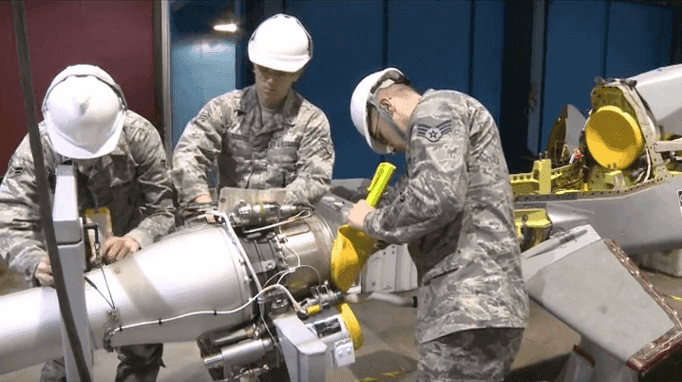
Maintains, operates, and supervises maintenance on ground and air missiles, spacelift boosters, payloads, guidance and control systems, and subsystems. Monitors, analyzes, and compiles system performance data. Performs and supervises maintenance on automated and manual electronic test, launch control, checkout, and support equipment (SE). Designs and supervises assembly, calibration, operation, troubleshooting, and testing of research and development (R&D) systems and SE. Related DoD Occupational Subgroup: 112100.
Duties and responsibilities
- Monitors, operates, and supervises operation of consoles, fault display panels, and checkout equipment. Monitors status of airlaunched cruise missiles, intercontinental ballistic missile (ICBM), space lift boosters, payloads, subsystems, and SE. Operates or oversees checkout and test equipment operation.
- Supervises and performs missile, space lift booster, and payload systems maintenance and launch processing. Coordinates and oversees activities of contractor personnel during space launch activities. Operates, calibrates, inspects, maintains, or oversees these actions on missiles, missile and aircraft integration systems, aerospace vehicle equipment, operational ground equipment, automated and manual test equipment, space lift boosters, and payloads. Diagnoses flight data gathered during operational and test launches. Performs ICBM coding activities.
- Performs or assists malfunction analysis and repair of missile, space lift booster, and payload systems and subsystems. Determines system status. Operates or supervises operation of automated and manual test and checkout equipment to include performing calibrations. Disassembles, inspects, services, and replaces components and wiring. Modifies and repairs airframe and surfaces. Reassembles and verifies repairs, or supervises these actions on electronic components of cruise missiles, ICBMs, space lift boosters, and payloads. Maintains technical orders and publication files. Records findings.
- Performs or supervises maintenance on electronic equipment, and coordinates launch processing and maintenance activities. Performs or supervises electronic equipment maintenance. Uses or monitors use of manual and automatic checkout and test equipment to check integrated missile, space lift booster, payload systems, subsystems, and related electronic equipment.
- Performs laboratory R&D activities. Assembles, maintains, and operates specialized R&D systems such as energetic materials, propulsion, composites, optical, satellite, space structures and power. Collects and analyzes R&D test data. Designs, maintains, modifies, and operates support equipment such as data acquisition devices, fiber optic, instrumentation, vacuum systems, and environmental control systems.
Specialty qualifications
Knowledge. Knowledge is mandatory of electronic theory, circuitry, and schematic diagrams; and electronic principles of missiles, space lift boosters, and payloads.
Education. For entry into this specialty, completion of high school or General Education Development (GED) equivalency is mandatory. Courses in mechanics, physics, or basic electricity are desirable.
Training. For award of AFSC 2M031A/31B, completion of a specific basic 3-level missile and space systems electronic maintenance course is mandatory.
Experience. The following experience is mandatory for award of the AFSC indicated:
- 2M051A/51B. Qualification in and possession of AFSC 2M031A/31B and experience maintaining or operating missiles.
- 2M071. Qualification in and possession of AFSC 2M051A/51B and experience performing or supervising missile maintenance.
Other. The following are mandatory as indicated:
- For entry into this specialty, the following are mandatory:
- Screened for eligibility and meet requirements of the Personnel Reliability Program (PRP) as outlined in HQ AETC PRP Prescreening guidance.
- Passing color vision, as defined by correctly identifying at least 10 of 14 Ishihara Plates.
- Within 12 months of arrival at first duty station obtain civilian driver’s license and operate government vehicles according to AFI 24-301, Ground Transportation.
- Freedom from fear of heights and claustrophobia
- See attachment 4 for additional entry requirements.
- For award and retention of AFSCs 2M031A, and 2M031B:
- Must be Administratively Qualified IAW PRP standards outlined in the DoDM 5200.02, AFMAN 13-501, Nuclear Weapons Personnel Reliability Program (PRP) prior to departing technical Training.
- For award of AFSC 2M051/71 and retention of AFSC 2M031A, 2M031B, or 2M031/51/71, the following are mandatory:
- Must meet eligibility requirements to fill critical PRP positions IAW DoDM 5200.02, AFMAN 13-501.
- Must maintain local network access IAW AFI 17-130, Cybersecurity Program Management and AFMAN 17-1301, Computer Security.
- Specialty requires routine access to Tier 5 (T5) information, systems, or similar classified environment.
- For award and retention of AFSCs 2M031A, 2M031B, 2M051A, 2M051B, or 2M071/71:
- Completion of a Tier 5 Investigation according to AFMAN 16-1405, Personnel Security Program Management, is mandatory. NOTE: Award of the entry level without a completed Tier 5 Investigation is authorized provided an interim Top Secret security clearance has been granted.
Civilian career paths
Comparable civilian careers for this field pay roughly $36,390 to $108,790 per year (median salaries; varies by role and location):
- Aerospace Engineering and Operations Technologists and Technicians: $68,570
- Aircraft Mechanics and Service Technicians: $66,440
- Aviation Inspectors: $78,400
- Avionics Technicians: $67,840
- Computer, Automated Teller, and Office Machine Repairers: $41,090
- Electrical and Electronic Engineering Technologists and Technicians: $67,550
- Electrical and Electronic Equipment Assemblers: $36,390
- Electrical and Electronics Repairers, Commercial and Industrial Equipmen: $62,010
- Electro-Mechanical and Mechatronics Technologists and Technicians: $59,800
- Electronics Engineers: $107,540
- Explosives Workers, Ordnance Handling Experts, and Blasters: $48,510
- First-Line Supervisors of Mechanics, Installers, and Repairers: $70,240
- Helpers--Installation, Maintenance, and Repair Workers: $31,760
- Inspectors, Testers, Sorters, Samplers, and Weighers: $40,460
- Maintenance and Repair Workers, General: $40,850
- Maintenance Workers, Machinery: $50,100
- Quality Control Systems Managers: $108,790
ASVAB requirements
To qualify for 2M0X1, you need:
Enter your scores in the AFSC explorer and this section will check each requirement for you.
Entry requirements
Medical profile (PULHES)ShowHide
PULHES scale: lower numbers mean a stricter medical standard. Tap a letter for what it measures.
Vision requirementsShowHide
Medical disqualifiersShowHide
These screened conditions disqualify a candidate for this AFSC:
Education prerequisitesShowHide
Security & backgroundShowHide
Where you could be stationed
Stateside (8)
- Barksdale, Louisiana
- F E Warren, Wyoming
- Hill, Utah
- Malmstrom, Montana
- Minot, North Dakota
- Tyndall, Florida
- Vandenberg, California
- Whiteman, Missouri
Overseas (1)
- Bellows, Hawaii
Badges & identifiers
Duty badges
The occupational badges worn by Airmen in this career field.
- Maintenance Badge
- Missile Badge
Duty identifiers
Special duty patches and identifiers associated with this AFSC.
- 2MO Duty Identifier
Degrees & training plan
While serving in 2M0X1 you can earn an associate degree through the Community College of the Air Force:
- Electronic Systems Technology
- Career Field Education & Training Plan (CFETP)View CFETP (PDF, opens in a new tab)
The CFETP is the official Air Force document describing this career field's full training pipeline, from tech school through advanced skill levels.
2M0X1 specialties (shred-outs)
This career field splits into 2 specialties — you may be assigned to one of these:
- 2M0X1AICBMEducation: HS Diploma
- 2M0X1BALCMAlso screens for: Claustrophobia
Shred-outs share the 2M0X1 career path; where a specialty sets its own minimums or screens, they're noted above.
Videos, Reddit & resources
2M0X1 videos(6)
These do not reflect official U.S. Air Force views and may contain inaccuracies — negative opinions are often overrepresented online.
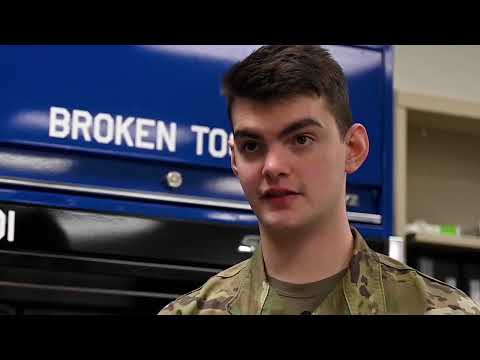
Air Force Electronics Laboratory Technician (2M0X1)
Airman Vision · 8/10/2025
1 of 6 videos
Reddit discussions(10)
These do not reflect official U.S. Air Force views and may contain inaccuracies — negative opinions are often overrepresented online.
Official links & resources(2)
Researching other jobs too? Every career field's videos and discussions are collected the same way — browse all AFSCs.
Frequently asked questions
- What ASVAB score do you need for Missile and Space Systems Elect Maintenance (2M0X1)?
- You need Mechanical 55+ and Electrical 50+ on the ASVAB to qualify for 2M0X1.
- Where can Missile and Space Systems Elect Maintenance Airmen get stationed?
- 2M0X1 Airmen serve at 9 bases: 8 stateside and 1 overseas, including Bellows, Hawaii.
- Does 2M0X1 require a security clearance?
- Yes — Missile and Space Systems Elect Maintenance requires a Top Secret clearance.
- How long is tech school for Missile and Space Systems Elect Maintenance?
- Tech school for 2M0X1 runs about 59 days at Vandenberg, California.
Where this data comes from
Most of the data on this page comes from the Air Force Enlisted Classification Directory (AFECD) and recruiter TTMS readouts, which are no longer released publicly. Pulling it together and keeping it accurate takes real time, so I update these pages as often as I can.
Requirements do change between updates. Before you make any decisions, confirm the details with your recruiter. They always have the latest word.