2A7X3 · Logistics & Maintenance
Aircraft Structural Maintenance
Also known as: Low Observable Aircraft Structural Maintenance (2A7X5)
Last updated
At a glance
- ASVAB minimums
- M 47
- Security clearance
- Secret
- Tech school
- Pensacola NAS Che, Florida · 79 days
- Career field size
- 2,221 Airmen
- Possible bases
- 49 stateside · 19 overseas
- Civilian equivalent pay
- $34k–$104k
- U.S. citizenship required
Table of ContentsShow
What does the Aircraft Structural Maintenance career field do?
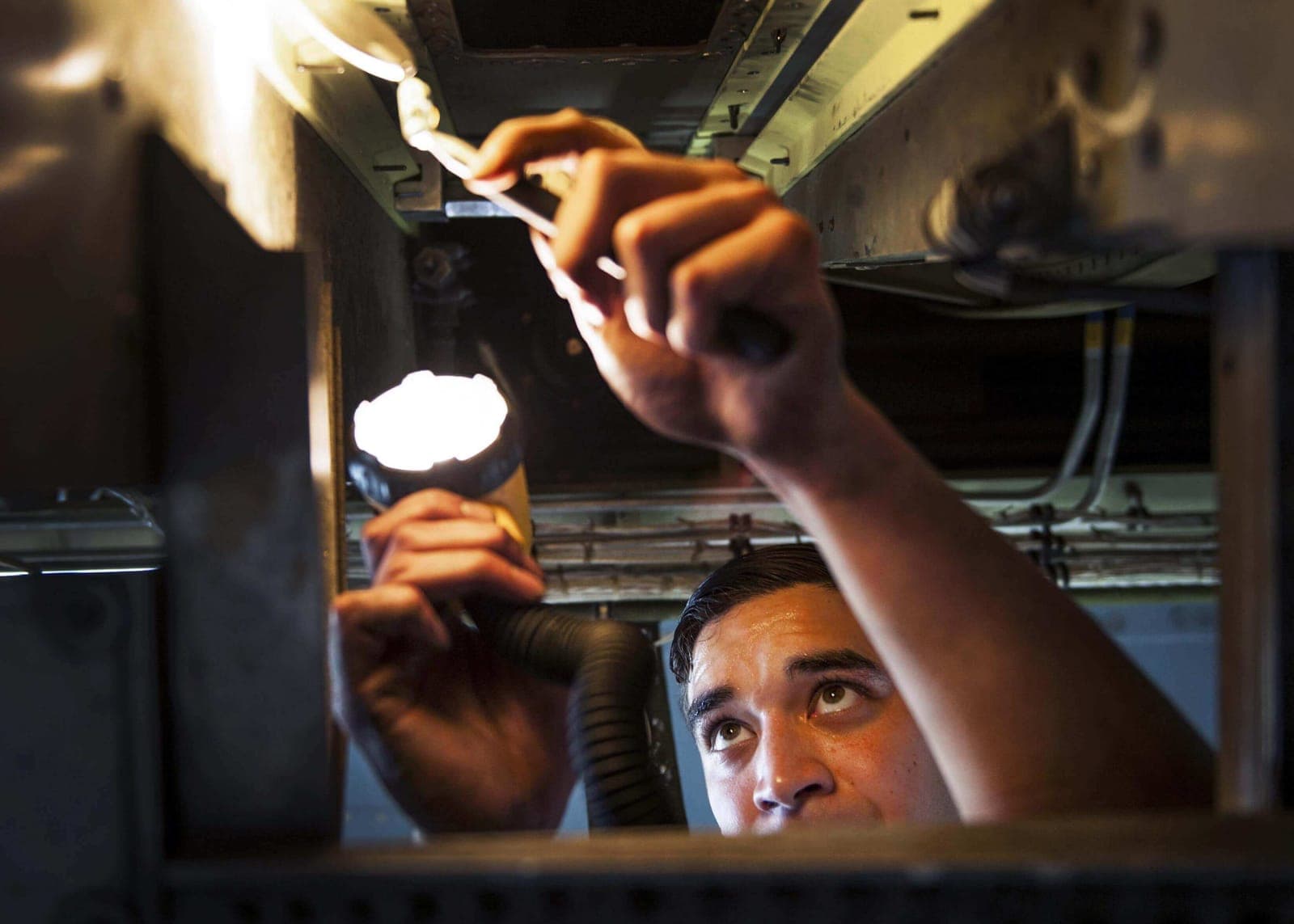
Designs, repairs, modifies, and fabricates aircraft, metal, plastic, composite, advanced composite, low observables (LO) coatings, and bonded structural parts and components. Evaluates, installs, removes, and repairs LO coatings. Applies corrosion preservative treatments to aircraft, missiles, and support equipment (SE). Related DoD Occupational Subgroup: 160300.
Duties and responsibilities
- Assembles and repairs structural and LO parts and components to meet requirements for preserving structural integrity and LO qualities. Assesses damage to aircraft structural components and LO coatings. Applies LO materials and coatings to aircraft. Assesses damage impacts to aircraft signatures. Performs assembly and repair on aircraft structures using special fasteners and adhesives. Inspects standard structural and LO repairs to ensure compliance with technical data specifications. Advises on structural and LO repair, modification, and corrosion protection treatment with respect to original strength, weight, and contour to maintain structural and LO integrity. Ensures aircraft component weight and balance is maintained. Inspects repairs for serviceability according to specifications and technical publications. Manufactures jigs, fixtures, forms, and molds. Uses metalworking equipment and tools to form, cut, bend, and fasten replacement or repair parts to damaged structures and components. Fabricates, repairs, and assembles cable and tubing assemblies for aerospace weapon systems and AGE/(SE). Maintains and inspects tools and equipment. Performs operator maintenance and service inspections on shop equipment and tools. Ensures lockout and tagout procedures are accomplished prior to performing shop equipment maintenance. Stores, handles, and disposes of hazardous waste and materials according to environmental standards.
- Paints aircraft, missiles, and (SE). Identifies, removes, and treats corrosion using mechanical and chemical procedures. Applies corrosion protective and LO coatings. Applies aircraft paint schemes and markings. Removes Radar Absorbent Material (RAM) by sanding, scraping, or pulling using manual or powered methods. Fabricates repair parts from RAM utilizing cutting tools and adheres them to aircraft surfaces and fasteners using vacuum bags, fixtures, and other pressure-inducing processes. Applies scrim material to RAM and aircraft surfaces in preparation for RAM cover strip installation. Installs RAM cover strips to panel and skin gaps. Applies RAM pastes to aircraft surface gaps, voids, and sand/skives to ensure required contours. Repairs low-observable treatments on polycarbonate transparencies using edge sealing compounds, adhesives, primers, and conductive films. Performs repair actions to ceramic RAM coatings associated with engine hot areas and adjacent fairings using grit blasters and approved high temperature curing equipment. Inspects structures and components and determines operational status. Interprets inspection findings and determines corrective action adequacy. Posts entries and maintains maintenance and inspection records. Recommends methods to improve equipment performance and maintenance procedures. Uses automated maintenance systems. Inputs, validates, and analyzes data processed to automated systems. Clears and closes out completed maintenance discrepancies in automated maintenance systems.
- Removes finishes and treatments by sanding, scraping, cutting, gouging, and pulling, using manual and powered methods. Sands surface finishes to specified depths and widths to prepare them for proper reapplication of finishes using manual and powered methods. Determines extent of damage and/or scope of task and performs finish and treatment removal tasks accordingly. Removes panel, door, and skin fasteners to gain access to aircraft interior and replaces fasteners following maintenance. Cleans aircraft exterior surfaces and gaps to prepare them for filler treatments, fairing materials, and other follow-on maintenance. Mixes multi-part adhesives, sealants, fillers, fairing materials, and organic topcoats. Uses maintainer-fabricated enclosures with environmental control units, heaters, and climate control equipment to stabilize repair sites. Applies, sands, and skives fillers and fairing materials to specifications for waviness, step condition, and aerodynamic smoothness. Applies organic low-observable topcoats and rain erosion materials using spray equipment, brushes, and rollers. Uses ambient and accelerated cure processes to cure adhesives, sealants, fillers, fairing materials, and organic topcoats. Uses planform alignment procedures to determine proper repair angles and dimensions for low observable finishes and treatments.
- Inspects coatings, structures, and components to determine operational status. Interprets inspection findings and determines corrective actions. Posts entries and maintains maintenance and inspection records. Recommends methods to improve equipment performance and maintenance procedures. Uses Portable Maintenance Aids and automated maintenance systems. Evaluates structural damage to aircraft structures or items and applies appropriate repair procedures to include application of adhesive films, prepregs, foam, and tape, and scarfing, layup, vacuum bagging, and accelerated curing techniques. Performs inspection and repair procedures for graphite Bismaleimide resin, graphite epoxy woven fabric, and uni-directional assemblies to include the use of adhesive film, foam, tape, scarfing, lay-up, and bagging techniques associated with hot bonders. Selects core materials to complete repairs, makes templates to use as patterns, and assures proper ply orientation and de-bulking. Selects bond form and prepares tools; lay-up; mixes and applies two-part adhesives and sealants; installs temperature monitoring devices; cures adhesives; and otherwise completes repairs. Specifies curing process/specification to autoclave/curing oven operator for the part to be cured. Removes completed items from bond forms after the cure cycle. Inspects final assembly for visual damage or flaws. Inspects structures and components and determines operational status. Interprets inspection findings and determines corrective action adequacy.
Specialty qualifications
Knowledge. Knowledge is mandatory of: aircraft and LO construction features; identification and characteristics of aerospace materials; repair of coating, LO materials, metal, tubing, cable, plastic, fiberglass, bonded honeycomb, and composite/advanced composite structural components; shop drawing and sheet metal layout techniques; shop mathematics; corrosion identification, removal, repair, and prevention; cleaning of coatings, LO materials and metals; application of protective coatings, LO materials, and markings; proper use, mixing, and storage of acids, solvents, alcohol, caustics, primers, and paints; and proper handling and disposal of hazardous waste and materials.
Education. For entry into this specialty, completion of high school with courses in mathematics, algebra, chemistry, physics, mechanical drawing, and metal working is desirable.
Training. The following training is mandatory for award of the AFSC indicated:
- For award of AFSC 2A733, completion of a basic aircraft structural maintenance course is mandatory.
Experience. The following experience is mandatory for award of the AFSC indicated:
- 2A753. Qualification in and possession of AFSC 2A733. Also, experience in functions such as fabricating, repairing, assembling, or installing aircraft metals, LO materials, plastics, fiberglass, composites, or honeycomb parts; or corrosion identification, removal, and applying coatings and markings.
- 2A773. Qualification in and possession of AFSC 2A753. Also, experience supervising functions dealing with corrosion identification, prevention, and repair; applying protective coatings and markings; or fabricating, assembling, and repairing metal, fiberglass, composites, honeycomb, and plastics.
Other. The following are mandatory as indicated:
- See attachment 4 for entry requirements.
- For award and retention of these AFSCs: must maintain local network access IAW AFI 17-130, Cybersecurity Program Management and AFMAN 17-1301, Computer Security.
- Current special access for the specific weapon system program (F-22, F-35, B-2 or and/or B-21) is required IAW AFI 16-701, The US Air Force Special Programs, for assigned MDS. Specialty requires routine access to Tier 3 (T3) information, systems, or similar classified environment. Completion of a current T3 Investigation required IA DoDM 5200.02, AFMAN 16-1405, Air Force Personnel Security Program, is mandatory. Reinvestigation must be opened prior to expiration of current investigation.
Civilian career paths
Comparable civilian careers for this field pay roughly $33,550 to $103,650 per year (median salaries; varies by role and location):
- Aircraft Mechanics and Service Technicians: $66,440
- Aircraft Structure, Surfaces, Rigging, and Systems Assemblers: $53,160
- Aviation Inspectors: $78,400
- Coating, Painting, and Spraying Machine Setters, Operators, and Tenders: $39,060
- Cutting, Punching, and Press Machine Setters, Operators, and Tenders, Metal and Plastic: $36,980
- First-Line Supervisors of Mechanics, Installers, and Repairers: $70,240
- First-Line Supervisors of Production and Operating Workers: $62,850
- General and Operations Managers: $103,650
- Inspectors, Testers, Sorters, Samplers, and Weighers: $40,460
- Machinists: $45,840
- Maintenance and Repair Workers, Genera: $40,850
- Milling and Planing Machine Setters, Operators, and Tenders, Metal and Plastic: $43,150
- Plating Machine Setters, Operators, and Tenders, Metal and Plastic: $34,850
- Sheet Metal Worker: $51,370
- Structural Metal Fabricators and Fitters: $41,780
- Team Assemblers: $33,550
- Welders, Cutters, Solderers, and Brazers: $44,190
ASVAB requirements
To qualify for 2A7X3, you need:
Enter your scores in the AFSC explorer and this section will check each requirement for you.
Entry requirements
Medical profile (PULHES)ShowHide
PULHES scale: lower numbers mean a stricter medical standard. Tap a letter for what it measures.
Medical disqualifiersShowHide
These screened conditions disqualify a candidate for this AFSC:
Security & backgroundShowHide
Where you could be stationed
Stateside (49)
- Barksdale, Louisiana
- Beale, California
- Birmingham, Alabama
- Buckley, Colorado
- Cannon, New Mexico
- Columbus, Mississippi
- Creech, Nevada
- Dane Co Regional, Wisconsin
- Davis-Monthan, Arizona
- Dover, Delaware
- Duke Field, Florida
- Dyess, Texas
- Edwards, California
- Ellsworth, South Dakota
- Fairchild, Washington
- Fort Worth NAS Jr, Texas
- Grand Forks, North Dakota
- Holloman, New Mexico
- Homestead, Florida
- Hurlburt Field, Florida
- JB Charleston, South Carolina
- Joint Base Lewis-McChord, Washington
- Joint Base McGuire-Dix-Lakehurst, New Jersey
- Kingsley, Oregon
- Kirtland, New Mexico
- Laughlin, Texas
- Little Rock, Arkansas
- Luke, Arizona
- MacDill, Florida
- March, California
- McConnell, Kansas
- McEntire, South Carolina
- Minot, North Dakota
- Montgomery, Alabama
- Moody, Georgia
- Mountain Home, Idaho
- Nellis, Nevada
- Offutt, Nebraska
- Robins, Georgia
- Scott, Illinois
- Seymour Johnson, North Carolina
- Shaw, South Carolina
- Sheppard, Texas
- Tinker, Oklahoma
- Travis, California
- Tyndall, Florida
- Westover, Massachusetts
- Whiteman, Missouri
- Wright Patterson, Ohio
Overseas (19)
- Andersen, Guam
- Aviano, Italy
- Eielson, Alaska
- Geilenkirchen, Germany
- Incirlik AB, Turkey
- JB Elmendorf-Rich, Alaska
- JB Prl Hbr-Hickam, Hawaii
- Kadena, Japan
- Kunsan, South Korea
- Lakenheath, United Kingdom
- Mildenhall, United Kingdom
- Misawa, Japan
- Osan AB, South Korea
- Ramstein, Germany
- Rota NS, Spain
- Sigonella, Italy
- Souda, Greece
- Spangdahlem AB, Germany
- Yokota, Japan
Badges & identifiers
Duty badges
The occupational badge worn by Airmen in this career field.
- Maintenance Badge
Duty identifiers
Special duty patches and identifiers associated with this AFSC.
- ASM Duty Identifier
- LO Duty Identifier
Degrees & training plan
While serving in 2A7X3 you can earn an associate degree through the Community College of the Air Force:
- Aircraft Structural Maintenance Technology
- Career Field Education & Training Plan (CFETP)View CFETP (PDF, opens in a new tab)
The CFETP is the official Air Force document describing this career field's full training pipeline, from tech school through advanced skill levels.
Videos, Reddit & resources
2A7X3 videos(12)
These do not reflect official U.S. Air Force views and may contain inaccuracies — negative opinions are often overrepresented online.
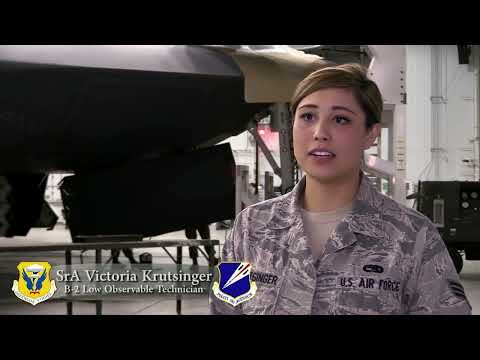
Air Force Low Observable Aircraft Structural Maintenance (LO) 2A7X5
Airman Vision · 8/8/2025
1 of 12 videos
Reddit discussions(10)
These do not reflect official U.S. Air Force views and may contain inaccuracies — negative opinions are often overrepresented online.
Official links & resources(4)
Researching other jobs too? Every career field's videos and discussions are collected the same way — browse all AFSCs.
Frequently asked questions
- What ASVAB score do you need for Aircraft Structural Maintenance (2A7X3)?
- You need Mechanical 47+ on the ASVAB to qualify for 2A7X3.
- Where can Aircraft Structural Maintenance Airmen get stationed?
- 2A7X3 Airmen serve at 68 bases: 49 stateside and 19 overseas, including Andersen, Guam, Aviano, Italy, Eielson, Alaska.
- Does 2A7X3 require a security clearance?
- Yes — Aircraft Structural Maintenance requires a Secret clearance.
- How long is tech school for Aircraft Structural Maintenance?
- Tech school for 2A7X3 runs about 79 days at Pensacola NAS Che, Florida.
Where this data comes from
Most of the data on this page comes from the Air Force Enlisted Classification Directory (AFECD) and recruiter TTMS readouts, which are no longer released publicly. Pulling it together and keeping it accurate takes real time, so I update these pages as often as I can.
Requirements do change between updates. Before you make any decisions, confirm the details with your recruiter. They always have the latest word.