2A7X1 · Logistics & Maintenance
Aircraft Metals Technology
Last updated
At a glance
- ASVAB minimums
- M 47
- Tech school
- Sheppard, Texas · 67 days
- Career field size
- 820 Airmen
- Possible bases
- 46 stateside · 17 overseas
- Civilian equivalent pay
- $32k–$104k
- U.S. citizenship required
Table of ContentsShow
What does the Aircraft Metals Technology career field do?
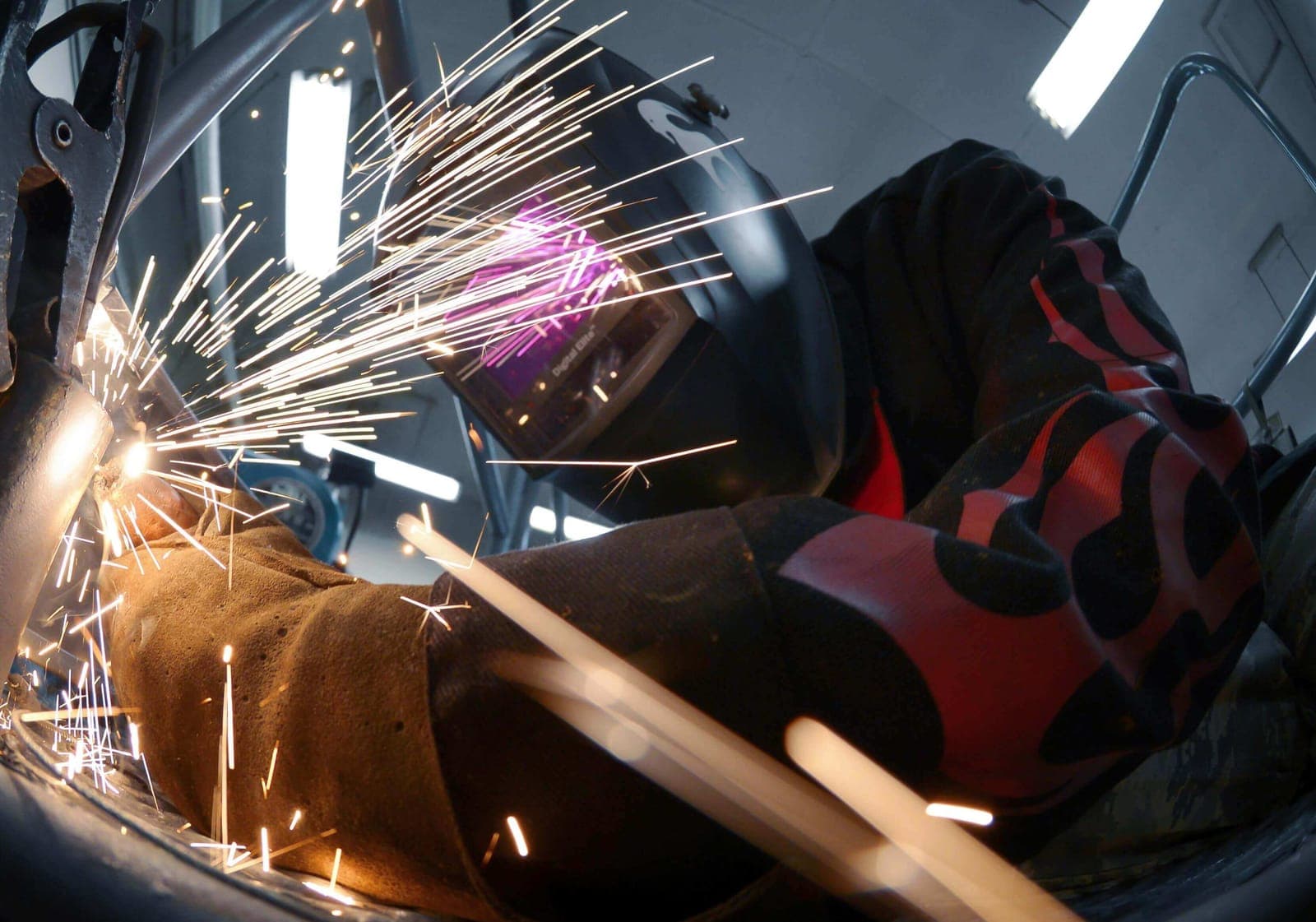
Designs, welds, heat treats, fabricates, and machines precision tools, components, and assemblies for aerospace weapon systems and related support equipment (SE). Related DoD Occupational Subgroup: 170000.
Duties and responsibilities
- Advises on metals machining, welding, designing, and production problems. Designs, manufactures, or modifies special precision tools, gauges, dies, and fixtures to facilitate metal working operations. Performs metals technology shop calculations such as determining cutting speeds and settings, welding processes, and preheat and postheat requirements. Welds, brazes, solders, and heat treats metals. Uses manual, additive manufacturing, and computer numerical controlled (CNC) metal working machines, mills, and lathes to manufacture and repair aircraft components and SE. Writes programs for CNC machines using manual and Computer Aided Design-Computer Aided Manufacturing (CAD-CAM) methods. Checks completed components and determines serviceability in accordance with drawings and specifications.
- Disassembles, assembles, and fits component parts using machine screws, bolts, rivets, press fits, and welding techniques. Uses metal working equipment, tools, and supplies to produce surface finishing specifications for components. Extracts broken or damaged hardware. Checks components for wear tolerances using precision measuring devices.
- Maintains and inspects hand tools and metal working machinery. Performs operator maintenance and service inspections on shop equipment and tools. Ensures lock out and tag out procedures are accomplished prior to maintenance on all equipment. Uses and disposes of hazardous waste and materials according to environmental standards.
Specialty qualifications
Knowledge. Knowledge is mandatory of: metal repair and fabrication processes; composition of metals and machinable materials; weld specifications; metal tempering; forging; mechanical drawings; use of precision measuring devices and tools; metal fabricating by oxyacetylene, metallic arc, and inert gas shielded arc; operation and capacity of metal working and welding equipment; use and fabrication of layout and fixture devices; safety codes and practices regarding equipment and supplies; hazards of explosive gasses, hazardous rays, and fumes; and proper handling, use, and disposal of hazardous waste and materials.
Education. For entry into this specialty, completion of high school with courses in shop mathematics, metal working, or mechanical drawing is desirable.
Training. The following training is mandatory for award of the AFSC indicated:
- For award of AFSC 2A731, completion of a basic aircraft metals technology course is mandatory.
Experience. The following experience is mandatory for award of the AFSC indicated:
- 2A751. Qualification in and possession of AFSC 2A731. Also, experience in functions such as gas and electric welding, boring, milling, shaping, grinding metal, or using precision measuring devices.
- 2A771. Qualification in and possession of AFSC 2A751. Also, experience performing or supervising functions dealing with welding, using precision measuring devices, and machining.
Other. The following are mandatory as indicated:
- See attachment 4 for entry requirements.
- For entry, award, and retention of AFSCs 2A711/31/51/71: normal depth perception as defined in DAFI 48-123, Medical Examinations and Standards.
- For award and retention of these AFSCs: must maintain local network access IAW DAFI 17-130, Cybersecurity Program Management and DAFMAN 17-1301, Computer Security.
Civilian career paths
Comparable civilian careers for this field pay roughly $31,630 to $103,650 per year (median salaries; varies by role and location):
- Aircraft Mechanics and Service Technicians: $66,440
- Aircraft Structure, Surfaces, Rigging, and Systems Assemblers: $53,160
- Computer Numerically Controlled Tool Operators: $42,260
- Computer Numerically Controlled Tool Programmers: $57,740
- Cutters and Trimmers, Hand: $31,630
- First-Line Supervisors of Mechanics, Installers, and Repairers: $70,240
- Forging Machine Setters, Operators, and Tenders, Metal and Plasti: $41,430
- General and Operations Managers: $103,650
- Grinding, Lapping, Polishing, and Buffing Machine Tool Setters, Operators, and Tenders, Metal and Plastic: $36,880
- Heat Treating Equipment Setters, Operators, and Tenders, Metal and Plastic: $39,530
- Lathe and Turning Machine Tool Setters, Operators, and Tenders, Metal and Plastic: $41,380
- Machinists: $45,840
- Maintenance and Repair Workers, General: $40,850
- Milling and Planing Machine Setters, Operators, and Tenders, Metal and Plastic: $43,150
- Model Makers, Metal and Plastic: $54,780
- Molders, Shapers, and Casters: $35,440
- Multiple Machine Tool Setters, Operators, and Tenders, Metal and Plastic: $37,510
- Sheet Metal Workers: $51,370
- Welders, Cutters, Solderers, and Brazers: $44,190
- Welding, Soldering, and Brazing Machine Setters, Operators, and Tenders: $39,410
ASVAB requirements
To qualify for 2A7X1, you need:
Enter your scores in the AFSC explorer and this section will check each requirement for you.
Entry requirements
Medical profile (PULHES)ShowHide
PULHES scale: lower numbers mean a stricter medical standard. Tap a letter for what it measures.
Vision requirementsShowHide
Medical disqualifiersShowHide
These screened conditions disqualify a candidate for this AFSC:
Security & backgroundShowHide
Where you could be stationed
Stateside (46)
- Barksdale, Louisiana
- Beale, California
- Birmingham, Alabama
- Buckley, Colorado
- Cannon, New Mexico
- Creech, Nevada
- Dane Co Regional, Wisconsin
- Davis-Monthan, Arizona
- Dover, Delaware
- Dyess, Texas
- Edwards, California
- Eglin, Florida
- Ellsworth, South Dakota
- Fairchild, Washington
- Fort Worth NAS Jr, Texas
- Grand Forks, North Dakota
- Hill, Utah
- Holloman, New Mexico
- Homestead, Florida
- Hurlburt Field, Florida
- JB Charleston, South Carolina
- JB Langley-Eustis, Virginia
- Joint Base Lewis-McChord, Washington
- Joint Base McGuire-Dix-Lakehurst, New Jersey
- Kirtland, New Mexico
- Little Rock, Arkansas
- Luke, Arizona
- MacDill, Florida
- Malmstrom, Montana
- McConnell, Kansas
- McEntire, South Carolina
- Minot, North Dakota
- Montgomery, Alabama
- Moody, Georgia
- Mountain Home, Idaho
- Nellis, Nevada
- Offutt, Nebraska
- Patrick, Florida
- Robins, Georgia
- Scott, Illinois
- Seymour Johnson, North Carolina
- Shaw, South Carolina
- Tinker, Oklahoma
- Travis, California
- Tyndall, Florida
- Whiteman, Missouri
Overseas (17)
- Andersen, Guam
- Aviano, Italy
- Eielson, Alaska
- Geilenkirchen, Germany
- Incirlik AB, Turkey
- JB Elmendorf-Rich, Alaska
- JB Prl Hbr-Hickam, Hawaii
- Kadena, Japan
- Kunsan, South Korea
- Lakenheath, United Kingdom
- Mildenhall, United Kingdom
- Misawa, Japan
- Osan AB, South Korea
- Ramstein, Germany
- Sigonella, Italy
- Spangdahlem AB, Germany
- Yokota, Japan
Badges & identifiers
Duty badges
The occupational badge worn by Airmen in this career field.
- Maintenance Badge
Duty identifiers
Special duty patches and identifiers associated with this AFSC.
- MTECH Duty Identifier
Degrees & training plan
While serving in 2A7X1 you can earn an associate degree through the Community College of the Air Force:
- Metals Technology
- Career Field Education & Training Plan (CFETP)View CFETP (PDF, opens in a new tab)
The CFETP is the official Air Force document describing this career field's full training pipeline, from tech school through advanced skill levels.
Videos, Reddit & resources
2A7X1 videos(12)
These do not reflect official U.S. Air Force views and may contain inaccuracies — negative opinions are often overrepresented online.
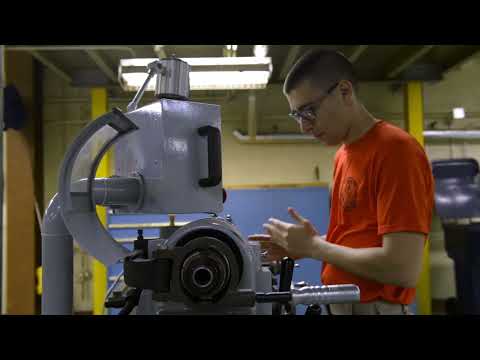
Air Force Metals Technology - 2A7X1
Airman Vision · 8/4/2025
1 of 12 videos
Reddit discussions(10)
These do not reflect official U.S. Air Force views and may contain inaccuracies — negative opinions are often overrepresented online.
Official links & resources(3)
Researching other jobs too? Every career field's videos and discussions are collected the same way — browse all AFSCs.
Frequently asked questions
- What ASVAB score do you need for Aircraft Metals Technology (2A7X1)?
- You need Mechanical 47+ on the ASVAB to qualify for 2A7X1.
- Where can Aircraft Metals Technology Airmen get stationed?
- 2A7X1 Airmen serve at 63 bases: 46 stateside and 17 overseas, including Andersen, Guam, Aviano, Italy, Eielson, Alaska.
- How long is tech school for Aircraft Metals Technology?
- Tech school for 2A7X1 runs about 67 days at Sheppard, Texas.
Where this data comes from
Most of the data on this page comes from the Air Force Enlisted Classification Directory (AFECD) and recruiter TTMS readouts, which are no longer released publicly. Pulling it together and keeping it accurate takes real time, so I update these pages as often as I can.
Requirements do change between updates. Before you make any decisions, confirm the details with your recruiter. They always have the latest word.