2A6X1 · Logistics & Maintenance
Aerospace Propulsion
Also known as: Pro Shop, Engine Shop
Last updated
At a glance
- ASVAB minimums
- M 56
- Security clearance
- Secret
- Tech school
- Sheppard, Texas · 61 days
- Career field size
- 4,835 Airmen
- Civilian equivalent pay
- $32k–$104k
- U.S. citizenship required
Table of ContentsShow
What does the Aerospace Propulsion career field do?
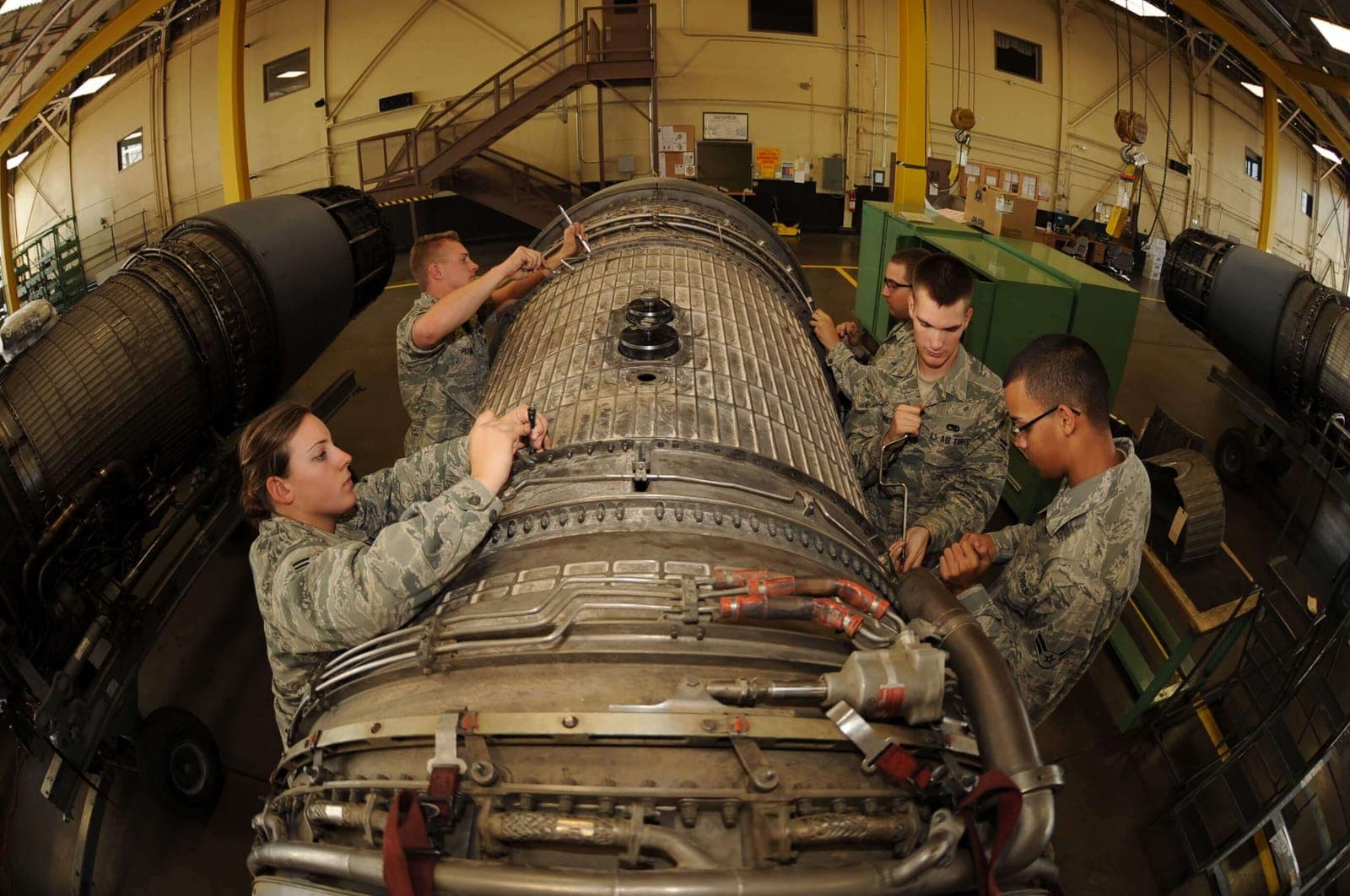
Inspects, maintains, modifies, tests, and repairs propellers, turboprop and turboshaft engines, jet engines, small gas turbine engines, and engine ground support equipment (SE). Manages aerospace propulsion functions and activities. Related DOD Occupational Subgroup: 160100.
Duties and responsibilities
- Plans, organizes, and directs aerospace propulsion maintenance activities. Interprets and implements directives and publications pertaining to maintenance functions, including environmentally safe maintenance practices. Determines resource requirements, including facilities, equipment, and supplies. Inspects and evaluates maintenance activities.
- Advises, performs troubleshooting, performs engine health management, and determines repair procedures on aircraft engines. Diagnoses and repairs malfunctions using technical publications and Interactive Electronics Technical Manuals (IETMS). Solves maintenance problems by studying drawings, wiring and schematic diagrams, technical instructions, and analyzing operating characteristics of aircraft engines and propellers. Inspects, certifies, and approves completed maintenance actions.
- Removes, installs, inspects, repairs, and modifies engines, engine modules and components, and propellers and propeller components. Disassembles and assembles engines and propellers adhering to prescribed procedures. Prepares engines and propellers for installation, storage, or transportation. Tests components using bench mockups and test equipment. Installs and removes engines on test stands, and operates, evaluates, and performs test stand functions on engines. Accomplishes operator maintenance on test stands. Inspects and maintains engine ground SE. Operates and performs operator inspections on related SE. Selects, uses, and cares for special tools, hand tools, and test equipment. Uses and disposes of hazardous waste and materials.
- Analyzes, interprets, and recommends maintenance actions based on unscheduled engine removals and engine monitoring system data. Coordinates with the base engine manager to analyze scheduled engine removals; recommends forecast actions to the weekly or monthly maintenance schedules.
Specialty qualifications
Knowledge. Knowledge is mandatory of: mechanical, hydro mechanical, electrical, and hydraulics principles applying to jet and turboprop engines, and propellers; oil analysis principles; wear metal criteria and guidelines; concepts and application of maintenance directives; using and interpreting diagrams and technical publications; and the proper handling, use, and disposal of hazardous waste and materials.
Education. For entry into this specialty, completion of high school with courses in general science, mechanics, or mathematics is desirable.
Training. For award of AFSC 2A631C/D/E or H, completion of a basic, suffix specific, aerospace propulsion maintenance course is mandatory.
Experience. The following experience is mandatory for award of the AFSC indicated:
- 2A651C. Qualification in and possession of AFSC 2A631C. Also, experience in functions such as installing, maintaining, isolating malfunctions, or repairing aircraft turbine engines.
- 2A651F. Qualification in and possession of AFSC 2A631D or 2A631E. Also, experience in functions such as installing, maintaining, or repairing aircraft turbine engines or propellers.
- 2A651H. Qualification in and possession of AFSC 2A631H. Also, experience in functions such as installing, maintaining, isolating malfunctions, or repairing aircraft turbine engines or propellers.
- 2A671C. Qualification in and passion of AFSC 2A651C. Also, experience performing or supervising repair functions involving installation, repair, analyzing and isolating malfunctions, testing, or modification of engines.
- 2A671F. Qualification in and possession of AFSC 2A651F. Also, experience performing or supervising functions involving installation, repair, analyzing and isolating malfunctions, testing, or modification of engines.
- 2A671H. Qualification in and possession of AFSC 2A651H. Also, experience performing or supervising functions involving installation, repair, analyzing and isolating malfunctions, testing, or modification of engines and/or propellers.
- 2A691. Qualification in and possession of AFSC 2A671F. Also, experience managing or directing repair activities for aerospace aircraft engines, propellers, and associated maintenance functions.
Other. The following are mandatory as indicated:
- For entry into this specialty:
- Normal color vision as defined in AFI 48-123, Medical Examinations and Standards.
- See attachment 4 for additional entry requirements.
- For award and retention of these AFSCs:
- Must maintain local network access IAW AFI 17-130, Cybersecurity Program Management and AFMAN 17-1301, Computer Security.
- Specialty requires routine access to Tier 3 (T3) information, systems, or similar classified environment.
- Completion of a current T3 Investigation required IAW DoDM 5200.02, AFMAN 16-1405, Air Force Personnel Security Program, is mandatory NOTE: Award of the entry level without a completed T3 Investigation is authorized provided an interim Secret security clearance has been granted according to DoDM 5200.02, AFMAN 16-1405.
Civilian career paths
Comparable civilian careers for this field pay roughly $31,760 to $103,650 per year (median salaries; varies by role and location):
- Aerospace Engineering and Operations Technologists and Technicians: $68,570
- Aircraft Mechanics and Service Technicians: $66,440
- Aircraft Structure, Surfaces, Rigging, and Systems Assemblers: $53,160
- Aviation Inspectors: $78,400
- Avionics Technicians: $67,840
- Bus and Truck Mechanics and Diesel Engine Specialists: $50,200
- Electrical and Electronics Repairers, Commercial and Industrial Equipment: $62,010
- Engine and Other Machine Assemblers: $45,770
- First-Line Supervisors of Mechanics, Installers, and Repairers: $70,240
- First-Line Supervisors of Production and Operating Workers: $62,850
- General and Operations Managers: $103,650
- Helpers--Installation, Maintenance, and Repair Workers: $31,760
- Inspectors, Testers, Sorters, Samplers, and Weighers: $40,460
- Maintenance Workers, Machinery: $50,100
- Non-Destructive Testing Specialists: $64,190
- Outdoor Power Equipment and Other Small Engine Mechanics: $37,530
- Power Plant Operators: $84,650
ASVAB requirements
To qualify for 2A6X1, you need:
Enter your scores in the AFSC explorer and this section will check each requirement for you.
Entry requirements
Medical profile (PULHES)ShowHide
PULHES scale: lower numbers mean a stricter medical standard. Tap a letter for what it measures.
Vision requirementsShowHide
Medical disqualifiersShowHide
These screened conditions disqualify a candidate for this AFSC:
Security & backgroundShowHide
Badges & identifiers
Duty badges
The occupational badge worn by Airmen in this career field.
- Maintenance Badge
Duty identifiers
Special duty patches and identifiers associated with this AFSC.
- ENGS Duty Identifier
Degrees & training plan
While serving in 2A6X1 you can earn an associate degree through the Community College of the Air Force:
- Aviation Maintenance Technology
- Career Field Education & Training Plan (CFETP)View CFETP (PDF, opens in a new tab)
The CFETP is the official Air Force document describing this career field's full training pipeline, from tech school through advanced skill levels.
2A6X1 specialties (shred-outs)
This career field splits into 5 specialties — you may be assigned to one of these:
- 2A6X1CPW 2040, F138 and F139 Jet Engines (Airlift, Tanker, Special Mission, and B-52 aircraft)Has its own entry requirements
- 2A6X1DF100, F119, F135 Jet Engines (F-15, F-16, F-22 aircraft)Has its own entry requirements
- 2A6X1EF101, F110, F118, TF34 Jet Engines (A-10, B- 1, B-2, F-16, and U-2 aircraft)Has its own entry requirements
- 2A6X1FF100, F101, F110, F118, F119, TF34 Jet Engines (A-10, B-1, B-2, F-15, F-16, F-22, F-35, and U-2 aircraft)
- 2A6X1HT700, T108 and T56 Turboprop and Turboshaft Engines (HH- 60, MC-12, and C-130)Has its own entry requirements
Shred-outs share the 2A6X1 career path; where a specialty sets its own minimums or screens, they're noted above.
Videos, Reddit & resources
2A6X1 videos(12)
These do not reflect official U.S. Air Force views and may contain inaccuracies — negative opinions are often overrepresented online.
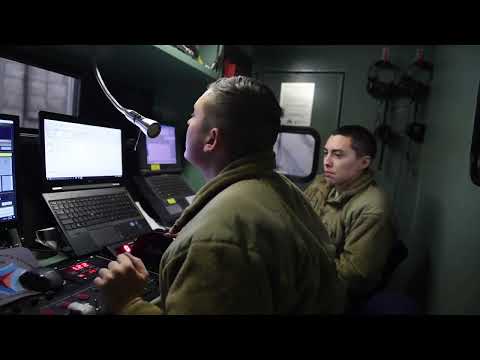
Aerospace Propulsion 2A6X1 - Hush House Test Cell
Airman Vision · 4/2/2025
1 of 12 videos
Reddit discussions(10)
These do not reflect official U.S. Air Force views and may contain inaccuracies — negative opinions are often overrepresented online.
Official links & resources(4)
Researching other jobs too? Every career field's videos and discussions are collected the same way — browse all AFSCs.
Frequently asked questions
- What ASVAB score do you need for Aerospace Propulsion (2A6X1)?
- You need Mechanical 56+ on the ASVAB to qualify for 2A6X1.
- Does 2A6X1 require a security clearance?
- Yes — Aerospace Propulsion requires a Secret clearance.
- How long is tech school for Aerospace Propulsion?
- Tech school for 2A6X1 runs about 61 days at Sheppard, Texas.
Where this data comes from
Most of the data on this page comes from the Air Force Enlisted Classification Directory (AFECD) and recruiter TTMS readouts, which are no longer released publicly. Pulling it together and keeping it accurate takes real time, so I update these pages as often as I can.
Requirements do change between updates. Before you make any decisions, confirm the details with your recruiter. They always have the latest word.