
WWII spurred the further development of US air power with increased budgets and technology. The depression- constricted Air Corps got a boost from unpleasant world events and even made President Franklin Roosevelt believe in air power.
Hitler’s forces rapidly overran Europe starting in September 1939. The German Blitzkrieg spearheaded the use of dive bombers for flying artillery and troop support. Hitler’s forces also used terror bombings of cities by the first-class Luftwaffe fighters, and easily swept the skies clean of opposition.
Fears and Challenges for the US
Arnold contended with fears and challenges occurring in the world. If the US was not careful, Arnold believed that Hitler’s forces would overcome the Army AF just as easily as it had taken over Germany. The US needed to take a breathtaking leap forward, to contend with the battle-hardened German and Japanese forces. Facing this meant that US plane production needed rebuilding from top to bottom.
Arnold became the czar of aircraft manufacturing in the US. He convinced manufacturers to build new plants in the south and mid-west where labor was plentiful. Four plane manufacturing companies grew to eleven. Arnold forced builders to share designs and licenses to speed production.
He also found solutions to big training problems. For example, he rented idle hotel rooms to house the huge number of trainees and he contracted with civilian flying schools to solve instructor shortages. Arnold also established the Air Transport Command (ATC) to solve the need for airlift support in different military missions.
The ATC used leadership, equipment and personnel from established airline industries to start up their operations. It functioned flawlessly from the onset.
Pearl Harbor (7 December 1941)
The Japanese attacked Pearl Harbor on 7 December 1941, causing the US to officially enter WWII. Arnold’s urgency with gearing up for plane production had not come a moment too soon. This was the Army AF’s first great crises.
Doolittle Raid

Gen Jimmy Doolittle
The US coordinated the Doolittle Raid as a plan to stop the bleeding morale on the US home front. It was named after Jimmy Doolittle who developed this long-shot plan and operation. He was asked to find a plane and plan to turn the war around.
The military leaders wanted an aircraft that could take off in 500 feet, fly 2,000 miles and drop a 2,000 pound bomb load. The operation was untried in every way and the technical hurdles alone were huge.
For the first time in warfare, twin-engine Army bombers took off fully loaded from Navy aircraft carriers. The bombers were to hit targets in Japan that were formerly too far away to hit.
The Doolittle Raiders took immense risks. First, the US placed aircraft carriers within 450 miles of the target. Second, US aircraft took off from aircraft carriers, a new and untried procedure.
Third, Tokyo was far out of reach of Allied land-based bombing and premature discovery of the 16 B-25s would mean complete annihilation. Finally, the landings were also a problem. The B-25s planned on landing in China if the plan worked. However, if the plan failed, they did not have a back up landing site.
Doolittle had a huge role in the raid. Despite all the great obstacles and risks associated with the mission, he never flinched. What the crew had in common was that each of them displayed great characteristics of Airmanship, leadership and courage.
The crew practiced gaining experience and a comfort level at taking off from a deck of a ship. Formerly, the pilots used only long land-based runways. Doolittle provided the training they needed taking off from a heaving ship and using such a short take off roll.
The plan became reality. The pilots and crews had never faced longer odds, greater danger or higher stakes. On 18 April 1942, the raiders began their mission by taking off from the aircraft carrier, the Hornet.
Their long-shot raid on Tokyo ran out of luck early. They had to sink a small Japanese boat, which may have warned Japan beforehand. They had to decide quickly whether to call off the mission or to forge ahead; the raiders decided to go ahead.
At this point, they risked so many things happening to include running out of fuel, not having a landing site, being detected, failing in the mission and being shot down.
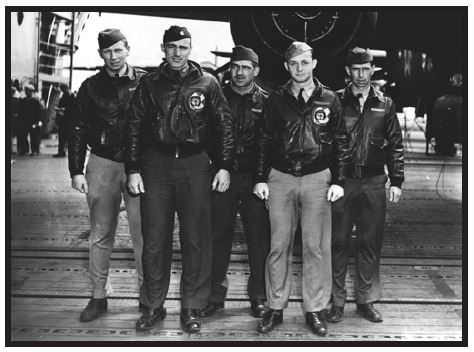
The Doolittle Raid had several positive outcomes. First and foremost, America wildly cheered the Doolittle heroes and their victory helped achieve the primary objective of raising the morale on the US home front.
In fact, Jimmy Doolittle was awarded the Medal of Honor for his accomplishments. Secondly, the raiders achieved surprise and made strikes that hit Tokyo and four other cities. Japanese defenses did not succeed in hitting a single US plane. The US aircraft caused little material damage, but they achieved big damage to Japan’s pride and war plans.
The plan also had a few negative outcomes as well. A few of the pilots paid the biggest sacrifice—they gave their lives for the mission. Several of the fuel-starved planes were lost in China, Russia or the sea and three people died in these crashes.
Eight other members were captured and tortured; three of these members were executed. Doolittle was sad and bitter over each of these Airmen’s fate.
Operation Tidal Wave (1 August 1943)
This was the aerial bombing mission to destroy the Ploesti oil refineries. The US wanted to cripple Hitler’s forces who received one third of their power from this field. Ploesti was a difficult target because it lay deep in open country, far beyond fighter escort capabilities.
The mission was disastrous because the US had received bad intelligence and believed the target was only lightly defended. Ploesti was heavily defended by both Romanians and Germans.
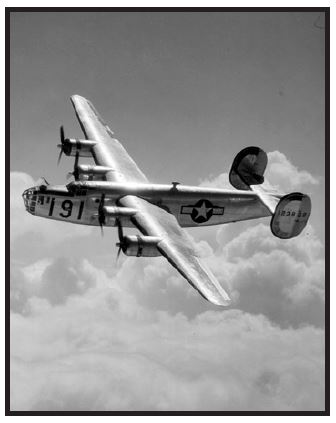
B-24
The pilots faced major problems during Operation TIDAL WAVE. The lead navigation plane crashed, killing its expert navigator and leaving navigation to a far less experienced crew. Two formations made wrong turns and flew into extremely bad flak; causing the rest of the pilots to drop their planned bombing runs and bomb whatever they could to survive.
Destruction came as a result of flying at 50 feet. Defenders hit the US planes with many weapons, even pistols. Delayed action bombs dropped by planes in the front caught other B-24s that were behind them.
Balloon cables sheared off many of their wings. The US planes that survived were scattered, shattered and subjected to waves of attacks. They continued losing planes to enemy fighters who followed them all the way home. They came down anywhere they could after their 12-hour torment.
The US suffered grave outcomes from Operation TIDAL WAVE. 55 planes were lost to enemy fire and other causes, 310 Airmen died and only 30 planes were still flyable. Over 40% of the Ploesti oil facilities were put out of action. These losses were a tribute to the tenacity of the aircrew who risked everything for this mission.
New Targets, Equipment and Tactics
Under leadership of Gen Arnold, Army AF leaders chose to redesign the previously failed North American P-51 Mustang. Before the redesign it was nimble, short-ranged and underpowered.
The model was improved with the addition of a British Rolls- Royce Merlin engine to increase its speed and improve its high altitude performance. High capacity fuel tanks were added in the wings. This new model was faster, longer ranged, more powerful and ready for use in 1944.
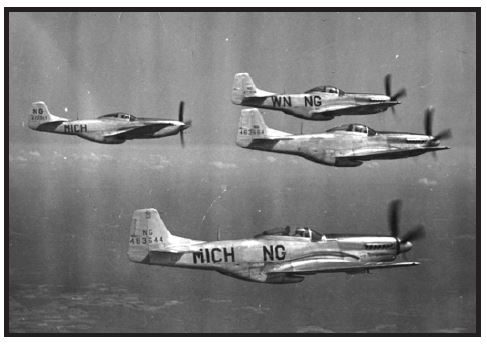
P-51
The US also developed new tactics. Since there were not enough fighters, the bombers would no longer receive escort. The thinking was that the bombers would always get through, even without help.
The US paid dearly in the cost of lost lives and planes for this tactic. However, this tactic helped reduce bomber pilot errors as the Mustangs were cut loose to hit Nazi interceptors wherever they were.
Big Week (February 1944)
The turning point of WWII was called “Big Week.” The US sent out fleets of strategic bombers to Germany with the long-range escorts. They levied enormous attacks on German aircraft production facilities.
Within 9 days, the Army AF smashed the Luftwaffe. The strategic bombers earned big headlines as the Luftwaffe lost ¼ of their active duty fighter force monthly.
The US and Germany used their pilots very differently. US fighter pilots flew a tour length and went home to train new aviators. This would result in a greater number of highly trained pilots.
On the other hand, the Luftwaffe fighter pilots flew until they died; meaning the more superbly trained US pilots faced newer, poorly trained and less experienced pilots—a definite plus for the US!
D-Day (6 June 1944)
D-Day was WWII’s most critical day. It was when the US invaded Hitler’s Fortress in Europe at Normandy. The brilliance and heroism of low-level missions made the plan possible.
The landings in Normandy were successful because US had already gained air superiority over the Luftwaffe in Germany. Only two German fighters even appeared to defend Normandy’s beaches. Plus, German reinforcements could not move under the hostile skies.
The pilots and crews were the biggest heroes of the time. Some dropped bombs and used strafing tactics (firing at close range from low-flying aircraft) to accomplish the mission. Other pilots operated troop carrier aircraft; some of the most dangerous flying jobs in WWII.
While being fired at, the pilots had to maintain steady glide paths to deliver paratroopers on their targets. As well, they occasionally used towing gliders, forcing them to fly even lower and slower, making them even bigger targets.
The airborne troops were also heroes. Over 17,000 troops parachuted in behind enemy lines to secure roads and fight enemy defenses. Many people gave their lives flying these missions.
Fighting the Global War
The gigantic Army AF was stretched thin. They had to support fighting fronts spread over thousands of miles. Each site faced furious dangers, and these dangers varied dramatically from place to place. However, several units distinguished themselves and the following paragraphs highlight their achievements.
The Tuskegee Airmen was another unit to achieve fame. Formed in 1944, they were an all black fighter squadron assigned to the 332d Fighter Group. They trained at Tuskegee Airfield in Alabama. The Tuskegee Airmen flew 311 missions from May 1944 - April 1945.
Although a great fighting unit, bombers under the escort of the Tuskegee Airmen were shot down by enemy aircraft on seven different days during this timeframe while shooting down 94 German fighters. Truly great feat!
The Women’s Air Service Pilots (WASPs) also played a pivotal role in the war effort. The WASP provided extra manning to ferry big planes across the ocean. While women were doing their part in the war effort, many military traditionalists strongly objected to using females in this role or believed women could never handle a four-engine plane.
Despite these objections, the WASPs successfully performed their role, and they set the mold for a new kind of AF.
Aircraft Technology
German airplane production and technology reached new heights at the end of 1944. The Germans’ accomplished this despite all the heavy bombing against them. The Nazis fielded a secret weapon—jet fighters; the Messerschmitt 262 and the Comet 163. These jets were able to assault bombers with uncatchable speeds of 500 miles per hour and use new fast-firing 30mm cannons.
The two German jet fighters greatly affected US forces. The outclassed P-51s fought back fearlessly, but were no match for the overpowering planes. The US suffered heavy losses against them. In fact, Hap Arnold felt that the US had been ambushed by greater technology and hoped the US had not come too late to save Germany.
War in the Pacific
The Army AF successes above Europe were overshadowed by other events. The Japanese military and industry still remained virtually untouched by US bombers and seemed prepared to fight the war forever. Also, there were a large number of deaths still occurring in planes—which needed attention.
Because of these factors, the Army AF ruthlessly reorganized by moving B-29 operations to the newly captured Marianna Islands and placing Gen Curtis LeMay in command. LeMay was a dedicated strategic bomber commander, an experienced combat leader and well respected by the pilots. Morale improved.
The high altitude missions over Japan were unsuccessful. Many problems were linked to the winds being over 200 knots. This made planes slow down when bombing targets and the enemy could easily shoot at them.
The Japanese fighters applied two new tactics. They used ramming techniques to either outright ram the enemy or to destroy the other plane’s propeller or wing controls. Japanese fighters also used Kamikaze pilots to perform suicide attacks.
In these attacks, Japanese pilots would deliberately attempt to crash their aircraft into naval vessels and other ships. Their objective was to cause as much damage as possible to stop the enemy from further advancements. Both of these tactics caused US losses to soar.
The Army AF tried to increase effectiveness by changing tactics as well. Under General LeMay’s command, the Army AF switched to a new fire-rate strategy using the B-29s. The technique consisted of dropping high-intensity incendiary weapons at low-altitudes during hours of darkness.
These weapons created huge firestorms that would burn large areas and destroy priority targets. To employ this new technique, the Army AF equipped the B-29s with bigger bomb loads by stripping the planes of their electrical gun systems, carrying less crew and less fuel. Each plane could start around 1,000 fires using this technique.
Top Army AF leaders claimed that this was the way to win wars–or what they called–“total war.”