
The military departments consist of the AF, Army and Navy (includes the Marine Corps and, in wartime, the Coast Guard). The military departments and the Service Secretaries are responsible for providing efficiently organized, trained and equipped forces to combatant commanders.
Each service develops and trains its forces to perform functions that support the efforts of other services and to accomplish overall military objectives.
Functions of Military Departments
Functions are the traditional roles and mission of each branch of service as established by the Key West Agreement of 1948, revised in 1953 and 1958. The general functions of the Armed Forces are to:
- Support and defend the US Constitution against all enemies, foreign and domestic
- Ensure the security of the US, its possessions and areas vital to its interests
- Uphold and advance the national policies and interests of the US
In order to maximize warfighting capability, the U.S. capitalizes on the strengths of each service. Each service possesses unique capabilities and strengths to the fight as part of a joint team.
The Air Force delivers sovereign options for the defense of the U.S. and global interests, to fly, fight and win…in air, space and cyberspace. The Army conducts prompt, sustained combat and stability operations on land and provides logistics and support to enable other services to accomplish their missions.
The Navy maintains, trains, and equips combat-ready naval forces capable of winning wars, deterring aggression and maintaining freedom of the seas.
The Marine Corps conducts prompt and sustained amphibious landings and ground operations. They specialize in the ability to gain access to denied areas, often from great distances.
The Coast Guard protects the public, environment, and U.S. economic securities and interests in any maritime region where these securities and interests may be at risk to include international waters, U.S. coastline, ports, and inland waterways. Some Coast Guard functions fall under Title 14 USC – Department of State, and some fall under Title 10 USC – Department of Defense.
Total Force Concept
The AF uses the Total Force concept to meet its mission. Total Force consists of all of the components (organizations, units and individuals) that comprise the AF’s resources and includes regular, Guard, Reserve, civilian and auxiliary members from the Civil Air Patrol (CAP).
As an Airman, the working relationship is seamless among the AF, ANG, and AFRC. The Total Force vision is the dynamic and effective integration of all AF components to provide unparalleled air, space and cyberspace power for the joint warfighter.
Total Force Integration
Total Force Integration (TFI) is a combination of active, reserve, retired military (Reserve), federal civilian, contractor, and allied support personnel structured to protect the nation’s interests. United States Air Force TFI is made up of three components:
- Regular Air Force (Reg AF)
- Air National Guard (ANG)
- Air Force Reserve Command (AFRC)
TFI provides strategic oversight and direction to leverage combined resources and capabilities. TFI transforms organizational constructs to enhance combat capability to deter, defend, and defeat every adversary who threatens the American way of life.
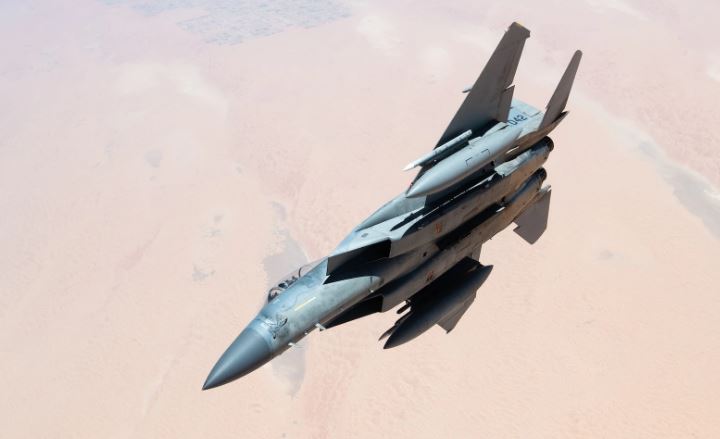
Air Force Mission
THE MISSION OF THE USAF IS TO FLY, FIGHT AND WIN … IN AIR, SPACE AND CYBERSPACE.
To achieve this mission, the AF has six distinctive capabilities:
- Air and Space Superiority: the ability to control what moves through air and space. Success in air, land and sea operations depends upon air and space superiority. For example, consider Operation DESERT STORM. Through a coordinated and integrated air campaign, coalition forces achieved air and space superiority. These actions included attacks by helicopters and F-117s, orbiting decoys and drones, electronic jamming aircraft, cruise missiles and all the actions of personnel.
- Information Superiority: the ability to control and exploit information to our nation’s advantage. During Operation DELIBERATE FORCE (1995, NATO bombing of Bosnia and Herzegovina), E-8 J-STARS, U-2 aircraft, unmanned aerial vehicles and reconnaissance satellites monitored ground-to-ground operations. Information was gathered, which enabled forces to protect United Nations forces and civilians.
- Global Attack: the ability to engage adversary targets anywhere, anytime. This means the AF can attack rapidly and persistently with a wide range of munitions anywhere on the globe. For instance, the AF can initiate a powerful response to aggression with space forces, intercontinental ballistic missiles or bombers. The AF can also help provide humanitarian aid.
- Precision Engagement: the ability to deliver desired effects with minimal risk and collateral damage. During the Vietnam War, it took US forces 11 years to destroy five bridges. During Operation DESERT STORM, 72 bridges were destroyed in just 6 weeks. Precision engagement includes advances in weapons and delivery systems and all of the people who purchase, operate and maintain these systems.
- Rapid Global Mobility: the ability to rapidly position forces anywhere in the world. This consists of all the personnel and aircraft involved in operations such as dropping cargo and delivering troops. During Operation ENDURING FREEDOM, airlift assets provided all of the logistical support in the early phases. Since US forces overseas have been dramatically reduced, rapid global mobility has increased in importance to where it is required in nearly all operations.
- Agile Combat Support: the ability to sustain flexible and efficient combat operations. Agile combat support includes the process for ordering supplies and tracking the time and place of delivery. It goes beyond traditional logistics functions by ensuring items can be maintained and supported as weapon systems are designed.