
The history of our modern Air Force (AF) contains many stories showing a proud legacy. Combat, air battles and campaigns dot the path to success, which includes numerous records of professionalism, duty and honor by the members who have served over the years.
That professionalism, duty and honor exhibited early in our AF history has evolved into our AF Core Values of Integrity First, Service Before Self and Excellence In All We Do.
It is important to remember that no matter what job members of the AF complete, all of them are important and help the AF continue to be the best in the world.
Background of the Air Force
The AF has come a long way since America’s first powered flight in 1903. The Wright brothers along with flying the first airplane trained the first AF pilots; men who would later become some of the military’s greatest leaders. Through the 20th century, American airpower flew past its mightiest enemies in flaming skies.
Aircraft were developed continuously over many decades. What started out as rickety box kites became supersonic machines that possess decisive power. Both the death and the genius of brave Airmen helped advance technology. To review and reflect on the history of airpower is to live some of the proudest moments of our history.
Struggling into the Air
The AF’s mastery of the skies has become so overwhelming in recent times that it is hard to remember when it was ever overmatched or even seriously challenged. It is important to remember that air superiority is perishable. Aviation and AF history teaches this lesson well.
The United States (US) uses this same principle to keep its democratic government alive; every generation must fight for it or it may be lost. The penalty for not controlling the skies over the US could spell disaster.
Early Struggles
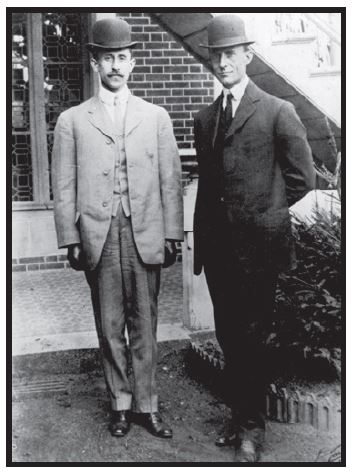
Wright Brothers
US aviation often struggled pathetically to build its military air forces. The Wright brothers were more than inspired tinkerer’s; they were visionaries and hardheaded businessmen.
No sooner had they received the patent for their flying machine in 1906 then they headed for funding from the US government. They proposed their amazing invention as a war machine.
Early aircraft development began slowly. In 1906–1907, the US, supported by President Roosevelt, realized that flight was going to occur and helped create the Aeronautical Division (1907 - 1914) within the Army Signal Corps.
The Aviation Section developed specifications for the first airplane and created expectations for what they wanted it to do. The Wright Brothers and the Army Signal Corps signed a contract to build a plane on 19 February 1908, just 2 months after the Wright’s proposal.
Early air pioneers paid heavily with life and limb. Less than a year after the creation of the Aviation Section, Lt Thomas Selfridge became the first military officer in the Air Service to die. He lost his life when a plane piloted by Orville Wright crashed.
The Army organized the Aviation Section (1914 - 1918) within the Signal Corps. It operated airplanes and lighter-than-air machines. They acquired airfields and began pilot training, much of it conducted by Wilbur Wright himself. Lt Fredrick Humphries soloed to become the first Army pilot. By 1911, there were twenty-one young officers in pilot training within the new division.
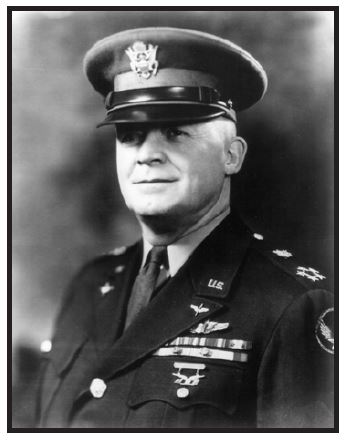
General Henry "Hap" Arnold
Nobody knew it then, but future AF leaders had already started their careers. Perhaps the best known of these early giants was General Henry “Hap” Arnold. He became the fourth Army Aviator; surviving the terrors and errors of early training. Arnold would eventually lead the Air Service into becoming a separate Air Force.
Benny Foulois was another top-notch young officer of the time. He was known as a rough, blunt methodical wizard. Along with Orville Wright, he made the first cross-country flight in the US. Mason Patrick was an engineer who did not learn to fly planes until he was 59. He worked miracles with many logistic processes.
Most of all, he worked within the system and chain of command to advocate for an independent AF. Patrick helped create the Air Corps Act of 1926, which gave the Air Service similar status to the Marine Corps. All three of these early leaders were great pilots that were later promoted to the rank of General.
Mexican Expedition (14 March 1916 - 7 February 1917)
Battle came soon enough for the relatively new Army air unit in 1916. The US conducted the Mexican Expedition against the military forces of Pancho Villa because Villa’s forces had invaded Columbus, NM and killed US soldiers and citizens.
Gen John Pershing commanded the big, slow US Army during this battle. The Army formed and used its first air combat unit ever, the First Aero Squadron. The government assigned eight Curtis JN-3 planes to the new unit; however, it was not enough and the First Aero Squadron floundered blindly in the huge hostile spaces of Mexico.
The First Aero Squadron’s mission to hunt Pancho Villa’s forces failed miserably. The unit suffered serious losses to their planes due to heavy winds and mountainous territory. They also faced numerous logistical, operational and mechanical problems throughout their mission. In fact, their biggest defeat was that the US had no operational aircraft left at the end of the mission. Despite this huge let down for the first air combat unit, the US forces pushed on.