5R0X1 · Professional
Religious Affairs
Also known as: Chaplain Assistant
Last updated
At a glance
- ASVAB minimums
- A 51
- Career field size
- 291 Airmen
- Possible bases
- 54 stateside · 21 overseas
- Civilian equivalent pay
- $45k–$80k
Table of ContentsShow
What does the Religious Affairs career field do?
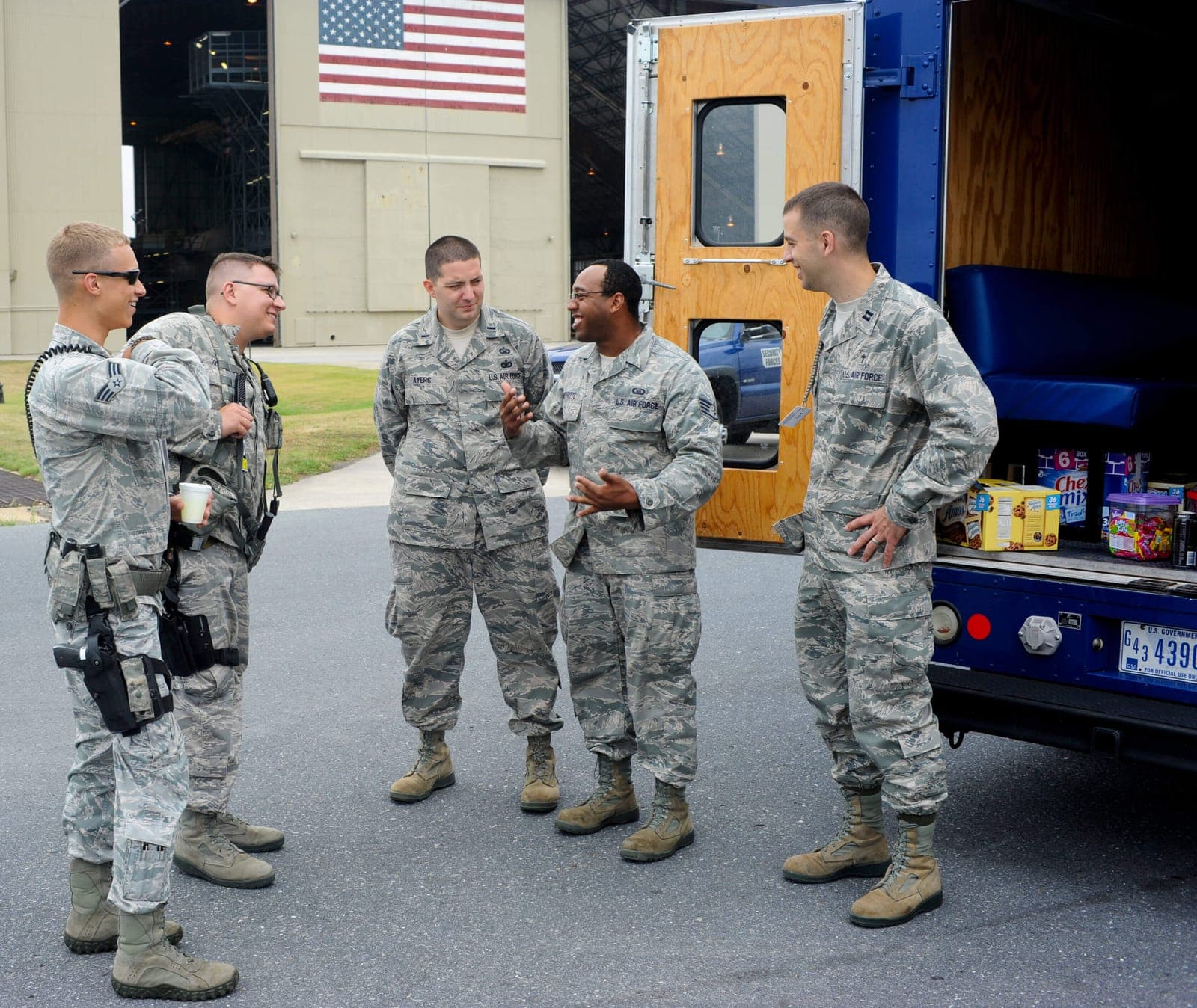
The Chaplain Corps’ core capabilities are Religious Accommodation, Spiritual Fitness and Leadership Advisement. The Religious Affairs Career Field builds a culture of spiritual fitness and facilitates the free exercise of religion for assigned service members, their families, and other authorized personnel. As experts in principles of religious diversity, religious accommodation, spirituality, privileged communication, religious program management, and the spiritual domain of Comprehensive Airmen Fitness, Religious Affairs Airmen advise leaders at all levels on religious accommodation, ethical, moral and morale issues, especially for the enlisted force. Religious Affairs Airmen meet the diverse needs of military communities through religious program management, administrative, financial, and facility support. They recruit, train, and organize volunteers for Chaplain Corps programs and events. As the enlisted component of Religious Support Teams (RST), Religious Affairs Airmen are uniquely trained in crisis intervention and triage to include intervention counseling in moments of crisis, response to crises, suicide prevention, intervention and postvention. In addition, Religious Affairs Airmen are actively engaged and intentionally integrated into unit engagement plans to include unit meetings, commander calls, exerciseS, training events and other unit activities. They also are trained to equip themselves and teammates to perform religious support and force protection functions to successfully operate in any given environment or Area of Responsibility (AOR). In combat settings, Religious Affairs Airmen are responsible for coordinating the force protection of their non-combatant Chaplain counterparts. Religious Affairs conduct themselves in a manner that brings credit, pride and honorable distinction to the Department of the Air Force and its Chaplain Corps. Related DoD Occupational Subgroup: 156100.
Duties and responsibilities
Religious Accommodation
- Manage religious programs. Religious Affairs Airmen partner with chaplains to develop, manage, control, and evaluate religious programs to ensure effectiveness. This capability is critical to Airmen, Guardians, and their dependents in contingency and steady state environments.
- Resource and manage support of religious observances to include worship, liturgies, rites, and other religious requirements for all faith groups.
- Manage, in conjunction with Chaplain Corps personnel (e.g., Chaplains, GS [General Service] employees) manpower positions, personnel, volunteers, appropriated funds, Chapel Tithes and Offerings Funds (CTOF), non-appropriated and Morale, Welfare, and Recreation (MWR) funds, religious facilities, supplies and equipment.
- Manage chapel administration to include records management, forms, publications, publicity, professional correspondence, background checks, operating instructions, suspense actions and other administrative needs of the Chaplain Corps mission.
Spiritual Fitness
- Fortifying warfighter and family readiness and the spirit of the warfighter through strong bonds courses, HOPE spiritual fitness initiative, and holistic wellness partnership with integrated resilience teams.
- Conduct crisis intervention counseling. The Chaplain Corps is the only function with 100% privileged communication (see 10 U.S.C. Chapter 47A, Military Rules of Evidence, Rule 503) and Religious Affairs Airmen are commonly the first line of triage and care for Airmen and Guardians in need. Facilitating care for Airmen and Guardians early in a crisis enhances resiliency, mission readiness and capability.
- Crisis intervention counseling is an immediate, interventional approach to providing mental and moral support with the aim of restoring the person to the level of functioning prior to the crisis. This capability includes counseling in moments of crisis, response to crises and suicide prevention, intervention, and postvention.
- While every NCO performs counseling, (see AFH 1, Airman Handbook), Religious Affairs Airmen possess the core capability to care for Airmen and Guardians at the point of crisis. They are specially trained to identify potential problems and assist individuals in getting the professional help and resources they need. Through crisis intervention counseling, Religious Affairs Airmen mitigate crises such as suicide, grief, traumatic stress, moral injury, combat stress, or other forms of crisis.
- Religious Affairs Airmen will not, at any time, conduct religious/pastoral counseling and will immediately refer individuals in need of religious/pastoral counseling to a chaplain. Religious Affairs Airmen may make referrals to other agencies for issues not of a spiritual nature as appropriate.
- Conducts Unit Engagement. Intentionally integrate, as part of the RST, into unit ministry and engagement plans as a resource for meeting the spiritual needs of Airmen, Guardians, and their families. Unit engagement is best defined when unit members embrace Religious Affairs Airmen as “one of them” through participation in unit meetings, commander calls and other unit activities. Religious Affairs Airmen conduct unit engagement jointly with their RST partner(s) or independently.
- Manages RST functions, personnel readiness, and deployment taskings. Develops, coordinates and reviews operation plans and annexes. Coordinates religious and pastoral support requirements with base supporting agencies. Manages religious support during contingencies for combat or humanitarian relief operations. Prepares and presents religious customs and culture briefings.
- Responds to aircraft crashes, mass casualty sites, hostage situations, casualty collection points, evacuation, and deployment processing points and work centers. Conducts spiritual triage by applying listening, observation, and interviewing skills. Protects privileged communication obtained through chaplain pastoral counseling and intervention counseling. Coordinates and facilitates force protection and security measures for the RST.
Leadership Advisement
- Advises leadership at all levels on religious accommodation, ethical, moral, morale issues and needs, primarily for, and regarding, the enlisted force. Commanders, Command Chiefs, Senior Enlisted Leaders (SEL), Senior Enlisted Advisors (SEA), first sergeants and supervisors at all levels should know the issues affecting DoW authorized personnel and their families and how to best address them. Religious Affairs are a trusted source of valid, real-time information.
Specialty qualifications
Knowledge. Knowledge is mandatory of the concepts and principles of religious diversity, religious accommodation, major faith group requirements, privileged communications, conflict management, screening and interview techniques, crisis intervention counseling, trauma response, suicide prevention, intervention and postvention, volunteer management, Chaplain Corps projects and programs management, resource administration and internal controls, contingency planning, deployment and mobilization procedures, personnel readiness, force protection and physical security of resources.
Education. For entry into this specialty, completion of courses in English composition, accounting, computer operations, world religions and human behavior is desirable.
Training.
- For award of AFSC 5R031, successful completion of the Air Force Religious Affairs Apprentice Course is mandatory.
- For award of AFSC 5R051, Completion of Career Development Course 5R051, Religious Affairs Journeyman, and STS core tasks/behaviors are mandatory.
- For award of AFSC 5R071, Religious Affairs Craftsman Courses include E6ACW5R071 00AB, distance learning/TDY in-place course and E3ACR5R071 00AA, in-residence course. Successful completion of both courses and STS core tasks/behaviors are mandatory.
- For award of AFSC 5R091, STS core tasks/behaviors are mandatory.
Experience. The following experience is mandatory for award of the AFSC indicated:
- 5R051. Qualification in and possession of AFSC 5R031. Experience in religious program management, advising leadership, crisis intervention counseling and unit engagement. Observable behaviors should align with intermediate occupational competency level.
- 5R071. Qualification in and possession of AFSC 5R051. Experience in managing personnel and resources to advise leadership, conducting crisis intervention counseling, engaging in units, and managing religious programs, which align with the advanced occupational competency levels.
- 5R091. Qualification in and possession of AFSC 5R071. Experience in leading and managing Chaplain Corps activities, with observable behaviors at the expert occupational competency levels.
Other. The following are mandatory for entry into this AFSC:
- Ability to speak English clearly and distinctly.
- No unaddressed mental wellbeing concerns (e.g., failure to engage in help-seeking behaviors, chronic mental health disorders, a pattern of relapses in symptoms/illness, unwillingness, or inability to properly manage mental health disorders to meet mission demands). NOTE: Given the caregiver role of this AFS in response to crises, Religious Affairs Airmen are susceptible to vicarious trauma, compassion fatigue, burnout, and/or moral injury; this mental wellness check will serve as a risk assessment for the member and AFS.
- Must have eligibility to deploy and mobilize worldwide (Retraining Only). NOTE: Due to a high demand for 5R0X1 deployments, Airmen coded as unable to maintain deployment eligibility or worldwide clearance for more than 12 months will not be considered for retraining into this AFS.
- RegAF Only Entry Requirements:
- The AETC Religious Affairs MAJCOM Functional Manager is the primary POC for the 5R0 accessions process, however, all processes must be approved by the 5R0X1 Career Field Manager.
- Non-Prior Service applicants must undergo a standardized entry interview process with designated Religious Affairs Airmen, coordinated by the AETC Religious Affairs MAJCOM Functional and be recommended for entry by interviewer(s). The AETC Religious Affairs MAJCOM Functional Manager coordinates with the Air Force Recruiting Service (AFRS) to identify eligible applicants and Religious Affairs interview panels are leveraged to identify AFSC prior to Basic Military Training shipment. The selection memorandum is endorsed by the AETC Religious Affairs MAJCOM Functional Manager.
- Non-Prior Service students in a reclassification status must undergo a standardized entry interview process. The AETC Religious Affairs MAJCOM Functional Manager, coordinates with 2 AF/Det 1 to identify eligible applicants and process administrative requirements for new AFSC assignment alongside Religious Affairs interview panels at technical training locations. AFRC and ANG do not assess Non-Prior Service students into Religious Affairs career field.
- All components (RegAF, Reserve & Guard) Retraining Entry Process and Requirements: Current qualification in any AFSC at the 5-skill level or higher (or 3-skill level if no 5-skill level exists).
- Retraining recommendation letters are valid for the current fiscal year (FY). If the retraining window overlaps a FY and/or applicant wants to re-apply for 5R0X1 retraining later, an updated recommendation letter is required that confirms that the applicant is still qualified for retraining into the 5R0X1 career field.
- The following are mandatory for entry, award, and retention of 5R0X1 AFSCs:
- Must have the ability to arm with rifle AND handgun (primary weapon) to serve as a combatant to noncombatant chaplain; permanent Do Not Arm (DNA) status is a disqualifier.
- No convictions by courts-martial or convictions by civilian court except for minor traffic violations and similar infractions.
- No record of disciplinary action for sexual assault, sexual harassment, discrimination, domestic violence, or child abuse.
- No record of disciplinary action for recurring/habitual financial irresponsibility.
- Never convicted in a civilian criminal court or UCMJ proceedings (to include judicial and nonjudicial punishment) for any type of drug abuse or drug-related offense.
- No history of disciplinary action (Letter of Reprimand (LOR), or Article 15) for displaying religious bias or unauthorized disclosure of privileged/confidential communication.
- No history of disciplinary action (Article 15 or court-martial) for engaging in an unprofessional or inappropriate relationship as defined in AFI 36-2909, Professional and Unprofessional Relationships.
- No record of disciplinary action (Letter of Reprimand [LOR] or Article 15) within the last 3 years for lack of integrity, for violating ethical standards, or failure to exercise sound leadership with respect to morale or welfare of subordinates.
- If member receives paperwork or punishment for the above-mentioned offenses, coordination with Commander (with G-Series Orders) and First Sergeant for suitability, award, and retention of AFSC and/or recommendation to return to previously held AFSC is required.
- 5R031 Religious Affairs Apprentice Course class dates/training seat will be removed from retraining applicant if disqualifying offenses occur between selection for retraining and class start date.
- Must maintain local network access IAW AFI 17-130, Cybersecurity Program Management and AFMAN 17-1301, Computer Security.
- See attachment 4 for additional entry requirements.
- Air Force Reserve Entry Requirements:
- Applications are accepted for SrA (E-4) - TSgt (E-6). MSgt (E-7) will be considered with understanding and prior agreement to begin at the TSgt (E-6) grade. SMSgt (E-8) - CMSgt (E-9) IMA or TR will not be considered.
- Current qualification in any AFSC at the 5-skill level or higher (or 3-skill level if no 5-skill level exists).
- Recommendation by the Superintendent/NCOIC, Religious Affairs, that the individual is acceptable for entry into the career field and recommended approval by the AFRC/HC Chief Enlisted Manager.
- Air National Guard Entry Requirements:
- Current qualification in any AFSC at the 5-skill level or higher (or 3-skill level if no 5-skill level exists).
- Recommendation by the Superintendent/NCOIC, Religious Affairs, that the individual is acceptable for entry into the career field and recommended approval by the ANG/HC Career Field Manager. 4. 5R0X1 Retraining Process.
- Applicants contact their local Superintendent/NCOIC, Religious Affairs to start the process.
- Deployed applicants will work with deployed Superintendent/NCOIC, Religious Affairs to start the process. However, applicant’s retraining packet requirements outlined below will come from home-station unit leadership. Completed retraining packets will be routed to applicant’s home-station Religious Affairs MAJCOM/FLDCOM Functional Manager.
- GSU applicants will process retraining requests through nearest local base chapel.
- The Superintendent/NCOIC, Religious Affairs is the retraining recommendation authority at the local level. They should include the chapel staff in all aspects of the retraining process and seek Wing Chaplain counsel and advisement as needed. NOTE: The local level may determine if the Wing Chaplain provides recommendations on the Religious Affairs MAJCOM/FLDCOM Functional Manager Recommendation Memo
- If, at any time during the retraining process, it is determined by the Superintendent/NCOIC, Religious Affairs that the applicant does not qualify, they will stop the retraining process, advise the applicant of their non-recommendation, and inform their Religious Affairs MAJCOM/FLDCOM. Functional Manager.
- Religious Affairs MAJCOM/FLDCOM Functional Managers will contact AETC Religious Affairs MAJCOM Functional Manager to discuss unique applicant circumstances.
- Retraining Packet Submitted to Superintendent/NCOIC, Religious Affairs:
- ASVAB Score (vMPF print-out under Education and Training): 51 Admin
- SURF
- 422 w/worldwide qualification (reviewed before interview and shadowing program; applicant MUST be world-wide qualified to retrain into 5R0X1)
- Official biography
- Last 3 EPBs/LOEs (if applicant doesn’t have 3 EPBs).
- Does record reflect any outstanding accomplishments or significant achievements?
- Do EPBs indicate “below expectations” on rated areas or cite recommended improvement areas?
- Does the overall history of EPBs show a positive, negative, or sustained trend of performance?
- Eligibility Statement Memo from First Sergeant or Commander (based off above AFECD requirements).
- If applicant violated and/or does not meet any AFECD requirements, they cannot retrain into 5R0X1 AFSC at this time.
- Letter of recommendation from current supervisor.
- Physical Fitness Scoresheet (current and history). Must have a passing score on last three fitness tests.
- Essay: Applicant will submit a 750-word essay on why they would like to retrain into the 5R0X1 AFSC (essay not required for AFRC applicants).
- Times New Roman, 12-point font
- Double-spaced
- 1-inch margins all around
- Interview: The Superintendent/NCOIC, Religious Affairs, in partnership with the Wing Chaplain (or any other designated chaplain), and any other panel members as desired, will conduct the interview using their selection of interview questions.
- AFRC applicants will have a virtual meeting/interview with the HQ AFRC/HC MFM, or delegate; coordinated by HQ AFRC/HCP, before final approval.
- Shadowing:
- The Superintendent/NCOIC, Religious Affairs will coordinate a mandatory 7-day shadowing program for the applicant. (NOTE: AFRC applicants who are Traditional Reservists (CAT A) will conduct the shadowing over 1 UTA, or two actual days, totaling 16 hours).
- The 7-day shadowing program allows an applicant to observe the daily life of a Religious Affairs Airman. It also allows the Chaplain Corps team to collaborate & work with the applicant to determine if would recommend the member for entry into the 5R0X1 AFSC.
- Does not have to be 7 consecutive days.
- IAW DAFI 52-101, applicants undergoing shadowing will sign chapel non-disclosure agreement to certify understanding of privileged communication.
- Scenario-based knowledge checks will be conducted, can be given to applicants each shadowing day, and will be scored.
- Applicants must score a minimum of 70% using a provided rubric to successfully complete the shadowing program.
- Upon successful completion of above requirements, the Superintendent/NCOIC, Religious Affairs will forward the entire retraining packet to their respective Religious Affairs MAJCOM/FLDCOM Functional Manager to recommend/non-recommend applicants for retraining into the 5R0 AFSC. The Religious Affairs MAJCOM/FLDCOM Functional Manager verifies the applicant completed retraining requirements and meets minimum eligibility. The Religious Affairs MAJCOM/FLDCOM Functional Manager signs the recommendation memo and sends it back to the Superintendent/NCOIC, Religious Affairs to send to applicant for processing via AFPC Retraining Guidance.
Civilian career paths
Comparable civilian careers for this field pay roughly $45,110 to $79,820 per year (median salaries; varies by role and location):
- Clergy: $51,940
- Clinical and Counseling Psychologists: $79,820
- Directors, Religious Activities and Education: $45,110
- Marriage and Family Therapists: $51,340
- Mental Health and Substance Abuse Social Workers: $48,720
- Mental Health Counselors: $47,660
- Philosophy and Religion Teachers, Postsecondary: $76,160
ASVAB requirements
To qualify for 5R0X1, you need:
Enter your scores in the AFSC explorer and this section will check each requirement for you.
Entry requirements
Medical profile (PULHES)ShowHide
PULHES scale: lower numbers mean a stricter medical standard. Tap a letter for what it measures.
Medical disqualifiersShowHide
These screened conditions disqualify a candidate for this AFSC:
Where you could be stationed
Stateside (54)
- Altus, Oklahoma
- Barksdale, Louisiana
- Beale, California
- Bolling, District Of Columbia
- Cannon, New Mexico
- Columbus, Mississippi
- Davis-Monthan, Arizona
- Dover, Delaware
- Dyess, Texas
- Edwards, California
- Eglin, Florida
- Ellsworth, South Dakota
- F E Warren, Wyoming
- Fairchild, Washington
- Fort Hood, Texas
- Goodfellow AFB, Texas
- Hanscom, Massachusetts
- Hill, Utah
- Holloman, New Mexico
- Hurlburt Field, Florida
- JB Andrews, Maryland
- JB Charleston, South Carolina
- JB Langley-Eustis, Virginia
- JBSA Lackland, Texas
- JBSA Randolph, Texas
- Joint Base Lewis-McChord, Washington
- Joint Base McGuire-Dix-Lakehurst, New Jersey
- Keesler, Mississippi
- Kirtland, New Mexico
- Laughlin, Texas
- Little Rock, Arkansas
- Luke, Arizona
- MacDill, Florida
- Malmstrom, Montana
- Maxwell, Alabama
- McConnell, Kansas
- Minot, North Dakota
- Moody, Georgia
- Mountain Home, Idaho
- Nellis, Nevada
- Offutt, Nebraska
- Pope, North Carolina
- Presidio Of Monterey, California
- Robins, Georgia
- Scott, Illinois
- Seymour Johnson, North Carolina
- Shaw, South Carolina
- Sheppard, Texas
- Tinker, Oklahoma
- Travis, California
- Tyndall, Florida
- Vance, Oklahoma
- Whiteman, Missouri
- Wright Patterson, Ohio
Overseas (21)
- Alconbury, United Kingdom
- Andersen, Guam
- Aviano, Italy
- Camp Humphreys, South Korea
- Croughton, United Kingdom
- Eielson, Alaska
- Geilenkirchen, Germany
- Incirlik AB, Turkey
- JB Elmendorf-Rich, Alaska
- JB Prl Hbr-Hickam, Hawaii
- Kadena, Japan
- Kunsan, South Korea
- Lakenheath, United Kingdom
- Lucius D Clay Kas, Germany
- Mildenhall, United Kingdom
- Misawa, Japan
- Moron, Spain
- Osan AB, South Korea
- Ramstein, Germany
- Spangdahlem AB, Germany
- Yokota, Japan
Badges & identifiers
Duty badges
The occupational badge worn by Airmen in this career field.
- Chaplain's Assistant Badge
Duty identifiers
Special duty patches and identifiers associated with this AFSC.
- HC Duty Identifier
Degrees & training plan
While serving in 5R0X1 you can earn an associate degree through the Community College of the Air Force:
- Human Services
- Career Field Education & Training Plan (CFETP)View CFETP (PDF, opens in a new tab)
The CFETP is the official Air Force document describing this career field's full training pipeline, from tech school through advanced skill levels.
Videos, Reddit & resources
5R0X1 videos(12)
These do not reflect official U.S. Air Force views and may contain inaccuracies — negative opinions are often overrepresented online.
Life as a Religious Affairs Airman (5R0X1) in the AIR FORCE
Malmstrom AFB · 8/25/2025
1 of 12 videos
Reddit discussions(1)
These do not reflect official U.S. Air Force views and may contain inaccuracies — negative opinions are often overrepresented online.
Official links & resources(4)
Researching other jobs too? Every career field's videos and discussions are collected the same way — browse all AFSCs.
Frequently asked questions
- What ASVAB score do you need for Religious Affairs (5R0X1)?
- You need Administrative 51+ on the ASVAB to qualify for 5R0X1.
- Where can Religious Affairs Airmen get stationed?
- 5R0X1 Airmen serve at 75 bases: 54 stateside and 21 overseas, including Alconbury, United Kingdom, Andersen, Guam, Aviano, Italy.
Where this data comes from
Most of the data on this page comes from the Air Force Enlisted Classification Directory (AFECD) and recruiter TTMS readouts, which are no longer released publicly. Pulling it together and keeping it accurate takes real time, so I update these pages as often as I can.
Requirements do change between updates. Before you make any decisions, confirm the details with your recruiter. They always have the latest word.